


Large Ersari Carpet
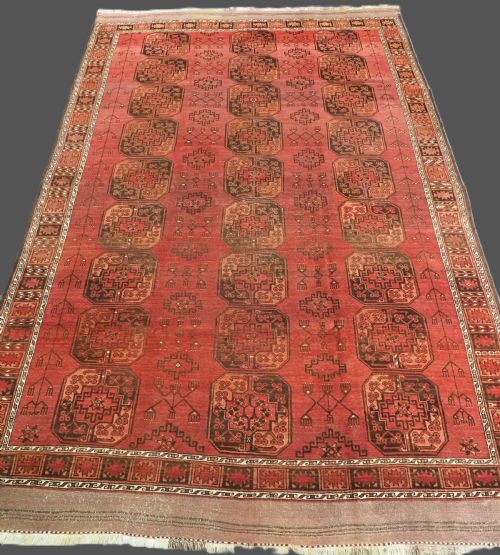
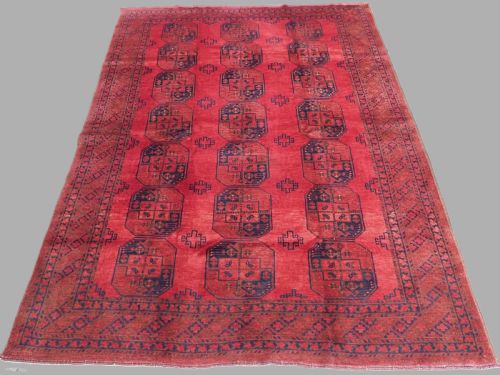
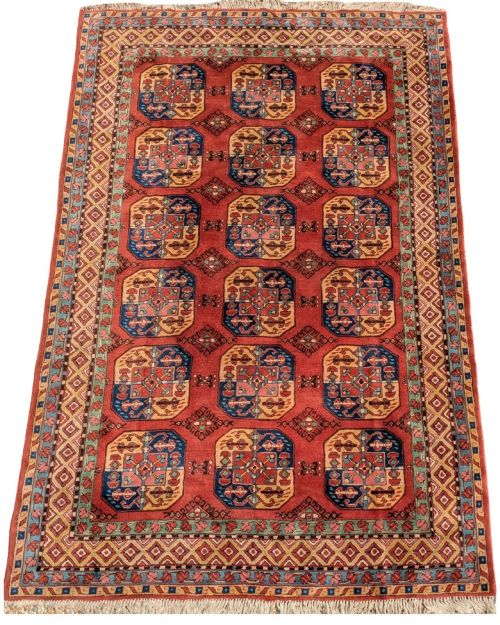
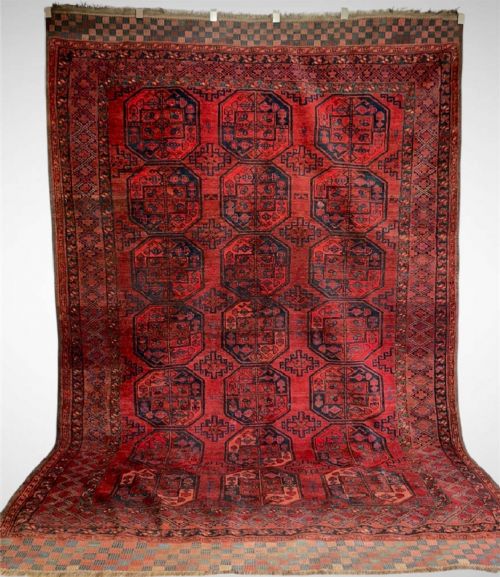
These large ersari carpet examples are substantial tribal textiles defined by deep red grounds and grand guls, offering centuries of nomadic character.
Large Ersari Carpet
A large ersari carpet represents the weaving tradition of Turkmen and Afghan tribes, typically encountered as main carpets or grand village floor coverings. These textiles frequently measure significant dimensions, often designed for country house proportions and substantial interior spaces.
The visual identity relies heavily on traditional guls, turreted motifs, and occasional ikat influences associated with the Beshir sub-group. Pieces originate across a timeline stretching from the mid nineteenth century into the early twentieth century.
Buyers encounter regional designations such as Northern Afghan alongside broader Turkmen tribal attributions. The aesthetic remains grounded in warm red hues, rose madder tones, and classic geometric layouts.
Materials and construction methods
Construction relies entirely on wool, utilising hand-spun fibres that yield a heavy-duty and hard-wearing pile. This dense wool foundation ensures the floor coverings withstand heavy domestic traffic.
Dye chemistry depends upon natural dyes to achieve the characteristic warm red and rose madder palettes seen across the corpus. Artisans processed these colourants by hand to secure deep, enduring saturation within the fleece.
Available pieces span production dates from the mid-nineteenth century up to 1930, constructed entirely from hand-spun wool and natural dyes.
Judging quality in tribal carpets
Quality reveals itself through the depth and clarity of the natural dyes, where rich rose madder tones and consistent warm reds separate superior examples from duller specimens. The scale and drawing of the guls also dictate visual hierarchy, with bolder, well-proportioned motifs elevating the piece.
The handling of the hand-spun wool and the integrity of the weave determine structural longevity. Tighter knots and heavier wool density deliver the durable character prized in large formats.
The Large Ersari Carpet Glossary
- Gul
- A repeating primary medallion or octagonal motif central to Turkmen and Ersari carpet design. These symbols often reflect specific tribal lineages and clan identities.
- Beshir
- A sub-group of Ersari weavers known for distinct formats and designs that occasionally incorporate ikat patterns or alternative prayer structures. They originated along the Amu Darya river valley.
- Torba
- A small wall-hanging bag or storage sack produced in tribal households, though the term also appears alongside larger format variants. They share the wool and natural dye palette of full-sized carpets.
- Main carpet
- The principal large-scale floor covering woven by a tribe for domestic use or ceremonial display. These examples command the largest dimensions in any collection.
- Rose madder
- A natural dye derived from the root of the madder plant, producing the characteristic warm red and pinkish hues found in these textiles. It forms the backbone of the traditional colour palette.
Large Ersari Carpet: Frequently Asked Questions
Where were large ersari carpets made?
These carpets were woven by Turkmen and Afghan tribes residing in Central Asia and Northern Afghanistan. Artisans produced them within village and nomadic communities.
The geographic origin spans the regions historically associated with the Ersari tribe along the Amu Darya basin. Production methods remained tied to traditional tribal workshops and domestic settings.
How do I care for a heavy wool carpet?
Maintenance requires gentle, regular vacuuming without rotating brush heads to protect the hand-spun wool pile. Professional cleaning suited to antique textiles preserves the natural dyes.
Positioning the carpet away from direct, harsh sunlight prevents the red and rose madder tones from fading over time. Using a quality underlay also reduces friction against hard floors.
What does gul mean in carpet designs?
A gul is an octagonal or medallion-like motif that serves as the focal point of Turkmen design. Different tribes developed distinct variations of these primary shapes.
On large carpets, these guls repeat in ordered rows across the red field. Their scale and execution help differentiate regional styles and weaving periods.
How can I tell the age of an antique carpet?
Dating relies on assessing the natural dye saturation, the regularity of the hand-spun wool, and structural wear patterns. Earlier nineteenth-century examples often display deeper patination and broader guls.
Comparative analysis against documented transition periods from 1850 through 1930 provides a reliable chronological framework. Construction traits and design evolution guide these estimates.