





Large Ebonised Cabinet
A large ebonised cabinet makes a striking centrepiece, bringing dark, dramatic wood and grand scale to a room.
Large Ebonised Cabinet
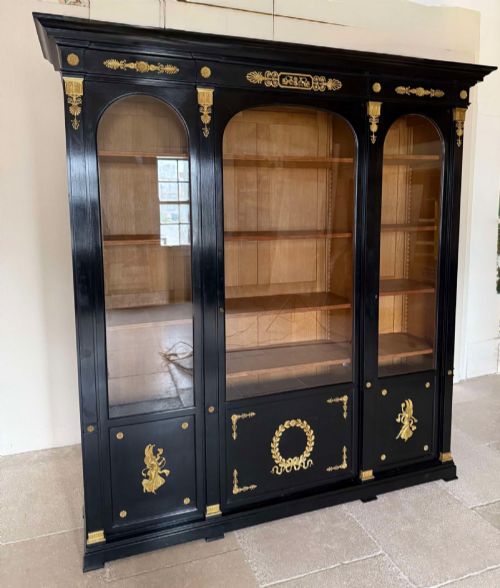
When you search for a large ebonised cabinet, you are looking at substantial storage and display pieces finished in dark, simulated ebony. These furniture items date predominantly from the nineteenth century, including the Victorian era and the Napoleon III period, constructed to command attention in large interiors.
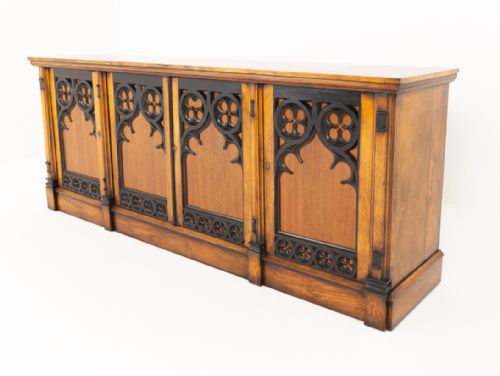
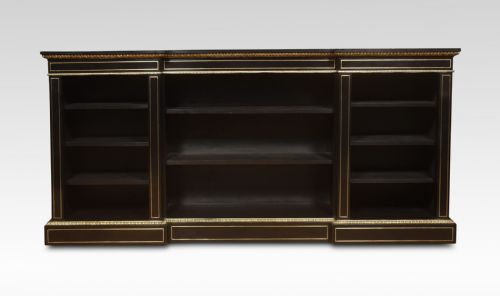
The pieces you are most likely to meet on this page include glazed vitrines, breakfront library bookcases, and open bookcases mounted with brass. Many examples incorporate glass panels for display, whilst others serve as credenzas or sideboards designed for formal entertaining and storage.
Origins span English workshops and French ateliers, often reflecting styles such as French Empire, Gothic Revival, and the Aesthetic Movement. They bring significant presence to a room through their dark surfaces and architectural proportions.
How they were made
Woodworkers typically used timber such as oak or walnut as a base, applying a dark stain or paint finish to imitate costly ebony wood. This ebonised surface was frequently polished to a deep sheen to create a striking contrast with other decorative elements.
Ornaments of cast or gilt brass, known as ormolu, were secured to mounts, cornices, and door frames to highlight the structural lines of the cabinet. Inlaid details using materials like amboyna, burr walnut, and tortoiseshell further enriched the facades of finer pieces.
Large Ebonised Cabinet Retail Price Guide 2026
Typical asking prices for large ebonised cabinet among the pieces listed under this phrase on Sellingantiques today, from the lower quarter to the upper quarter. They describe what is for sale here now, not the wider market.
Listings feature nineteenth-century pieces incorporating brass, burr walnut, and glass across bookcase and cabinet formats.
What varies in quality
The refinement of the cabinet work separates standard utility storage from ambitious salon furniture. Finer examples display meticulous joinery, balanced proportions, and carefully selected secondary timbers behind the ebonised finish.
The standard of metal mounts and inlay work dictates the overall grade of the piece. Crisp brass casting, parcel-gilt highlights, and well-executed marquetry indicate a higher workshop origin compared to plain, unadorned surfaces.
The Large Ebonised Cabinet Glossary
- Ebonised
- Wood treated with a black stain or finish to imitate true ebony. This technique was popular in nineteenth-century furniture to achieve a formal, dramatic appearance.
- Ormolu
- Gilded bronze or brass mounts applied to furniture for decoration. These metal details often accent the corners, cornices, and key escutcheons of cabinets.
- Vitrine
- A glass-fronted display cabinet used for showing porcelain, books, or curiosities. These pieces often feature glass on the sides as well as the doors to maximise light.
- Breakfront
- A piece of furniture where the central section projects forward from the flanking wings. This architectural form adds depth and shadow to large bookcases and sideboards.
- Marquetry
- Decorative veneer patterns applied to furniture surfaces using various woods and contrasting materials. Skilled artisans cut and fitted these pieces together to form geometric or floral designs.
Large Ebonised Cabinet: Frequently Asked Questions
Where should I place a large ebonised cabinet?
These substantial pieces need a wall with sufficient length and height to accommodate their proportions without dominating the room entirely.
They function well in high-ceilinged reception rooms, dining spaces, or libraries where their dark finish contrasts effectively against lighter walls.
How do I care for ebonised wood?
Dust the surface regularly with a soft, dry cloth to prevent accumulation in the carved details and around the brass mounts.
Avoid placing the cabinet in direct sunlight or near heat sources to protect the dark finish and any delicate timber veneers from drying out.
Can the shelves be adjusted?
Many nineteenth-century bookcases and cabinets feature adjustable wooden shelving supported by rack-and-pinion systems or traditional wooden battens.
This adaptability allows you to store books of varying heights or display large ceramic objects within the glazed sections.
What styles do these cabinets represent?
The selection includes pieces influenced by French Empire, Gothic Revival, Victorian tastes, and the Aesthetic Movement.
Each style dictates the choice of mounts, the presence of inlay, and the overall architectural severity or ornamentation of the cabinet.