



Ebonised Glazed Display Case
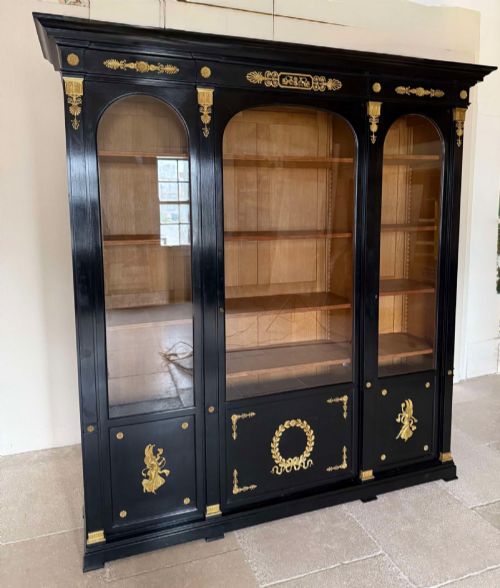
An ebonised glazed display case brings dark timber and clear glass together to frame treasured objects with Victorian or continental theatre.
Ebonised Glazed Display Case
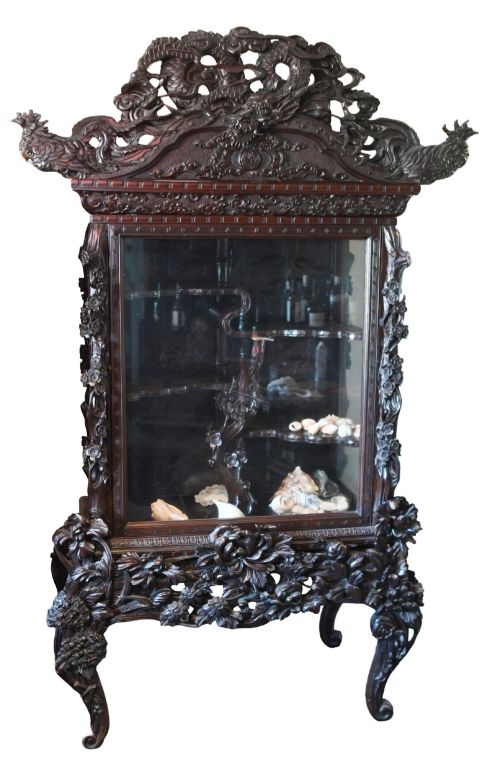
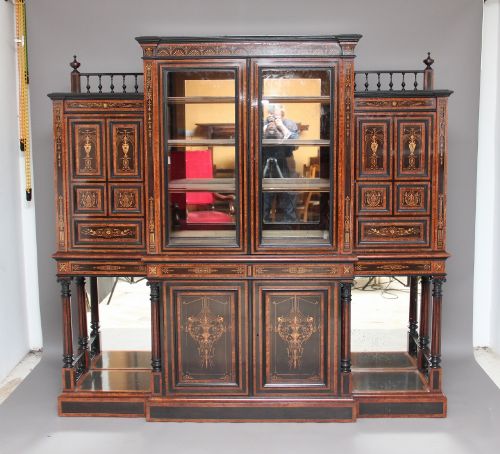
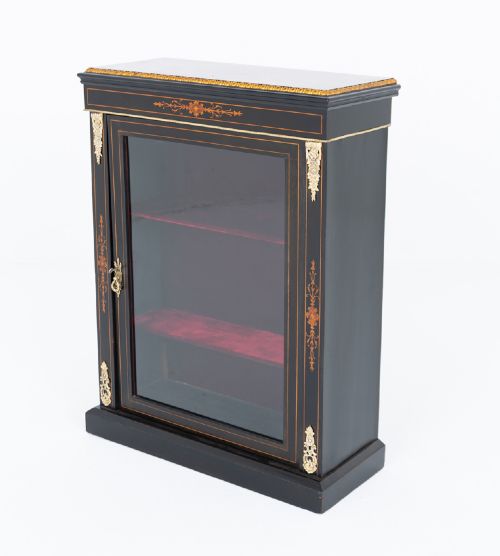
An ebonised glazed display case is a cabinet designed to showcase collections behind glass panels while using darkened or black-finished wood to create a strong visual contrast. The listings show forms ranging from compact pier cabinets and countertop cases to grand bookcases, vitrines, and tower cabinets.
Most examples originate from the nineteenth century, including Victorian and Napoleon III periods, alongside later Edwardian and Art Deco interpretations. Buyers encounter standard pier cabinets built for domestic parlours as well as specialised items such as key cupboards and shop display cases.
Materials and construction methods
Cabinet makers utilised hardwood timbers treated with black finishes to imitate ebony, often combining ebonised wood with walnut, amboyna, or burr walnut veneers. Metal mounts in brass and ormolu provide structural highlights and decorative framing around glass doors.
Inlay techniques such as Boulle work incorporating tortoiseshell and brass, alongside gold inlay and porcelain Sevres plaques, enrich the surface of finer pieces. Interior elements frequently include velvet linings to cushion displayed items.
Ebonised Glazed Display Case Retail Price Guide 2026
Typical asking prices for ebonised glazed display case among the pieces listed under this phrase on Sellingantiques today, from the lower quarter to the upper quarter. They describe what is for sale here now, not the wider market.
Listings span the nineteenth century through the 1920s, featuring materials such as brass, ormolu, tortoiseshell, and velvet.
Distinctions in quality
Quality rests upon the depth of the ebonisation and the precision of the underlying cabinet work, particularly where secondary timbers and veneers meet. Superior pieces display crisp carving, finely chased brass mounts, and well-fitted glass panes that close tightly within their frames.
The integration of complex decorative elements such as hand-cut Boulle inlay or hand-painted porcelain plaques separates standard utility cabinets from exceptional stylistic statements of the Victorian and French revival periods.
Lamb of Manchester
The Ebonised Glazed Display Case Glossary
- Ebonised
- Wood finished with a black stain or polish to resemble genuine ebony timber. This technique became popular during the nineteenth century for furniture mimicking more expensive exotic woods.
- Vitrine
- A glass-fronted cabinet or display case designed specifically for showing porcelain, figurines, or curiosities. These pieces often feature glass on the sides as well as the doors to maximise light.
- Pier Cabinet
- A low cabinet built to fit the narrow wall space between windows. Victorian examples frequently incorporate glazed doors and velvet-lined interiors.
- Boulle
- A form of marquetry utilising tortoiseshell and brass inlaid in elaborate scroll patterns. Named after the French cabinet maker André-Charles Boulle, it appears on nineteenth-century Napoleon III furniture.
- Ormolu
- Gilded bronze used for decorative mounts, feet, and key escutcheons on cabinets. The finish provides a bright metallic contrast against dark ebonised wood.
Ebonised Glazed Display Case: Frequently Asked Questions
What is an ebonised glazed display case?
An ebonised glazed display case is a piece of antique furniture featuring glass panels for viewing contents and dark, ebonised timber framing. These cabinets were built to protect and exhibit objects in domestic or retail settings.
They appear in various formats, from low pier cabinets to tall tower units, reflecting Victorian and early twentieth-century design preferences.
How do I date a cabinet?
Dating relies on stylistic clues, construction methods, and materials recorded in the specific piece. Victorian and nineteenth-century examples often feature elaborate Boulle inlay, ormolu mounts, or porcelain plaques.
Later pieces from the 1920s tend toward simpler countertop or tower forms with less ornamentation, emphasising the dark wood and glass.
Were these cabinets used in shops?
Certain examples served commercial rather than domestic purposes, functioning as shop display cases or countertop units for retail merchandise. Others were built as domestic pier cabinets or key cupboards for large households.
Interior linings such as velvet suggest their use for delicate or prized personal collections.
What styles are common?
The listings demonstrate strong representation of Victorian, Napoleon III, and Aesthetic Movement designs. French Empire Revival and Meiji period Japanese influences also appear among the ebonised items.
Each style employs distinct decorative details, from gold inlay to carved hardwood structures.