



Large Decorative Porcelain Urns
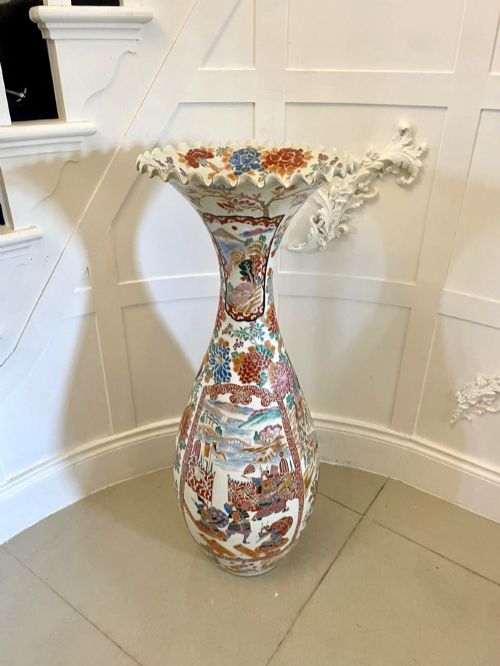
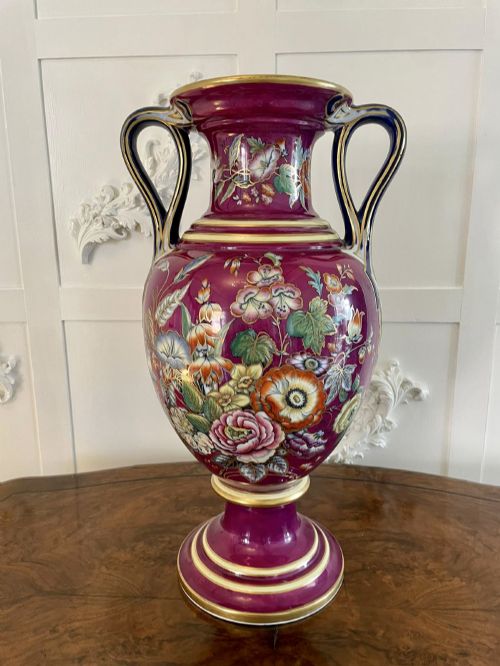
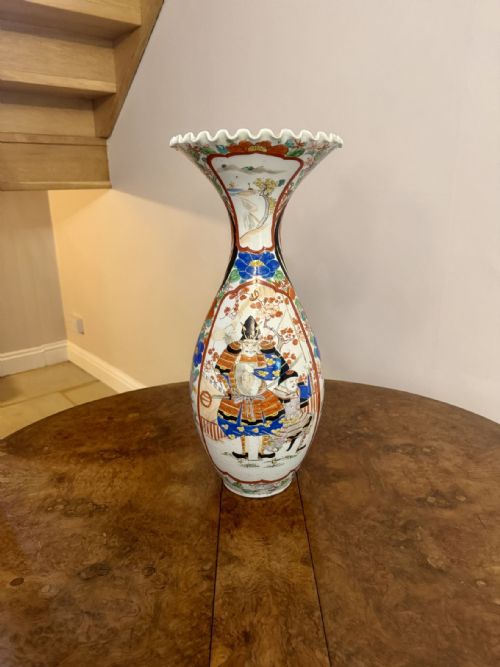
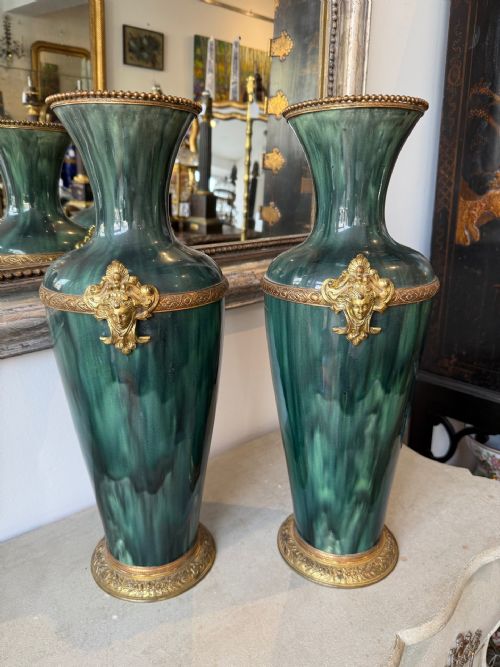
Large decorative porcelain urns bring scale and bold palettes to a room, ranging from Japanese Imari floor-standing pieces to French Rococo revival garnitures.
Large Decorative Porcelain Urns
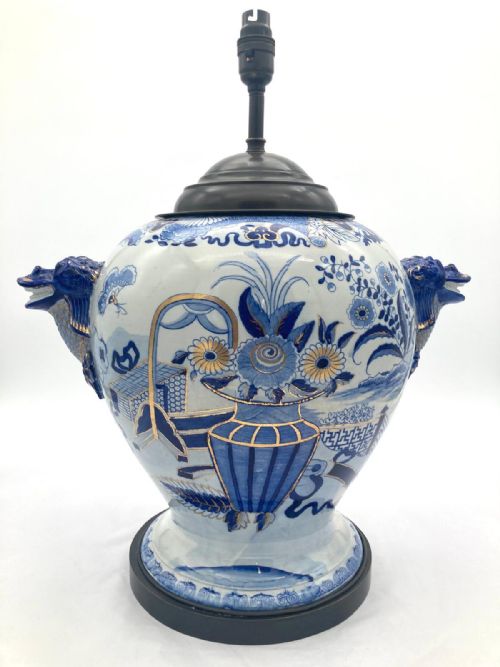
Large decorative porcelain urns encompass substantial floor vases, twin-handled vessels, lidded urns, and pieces converted into table lamps. These objects emerge predominantly from nineteenth-century production centres in Europe and Japan, reflecting diverse regional aesthetics.
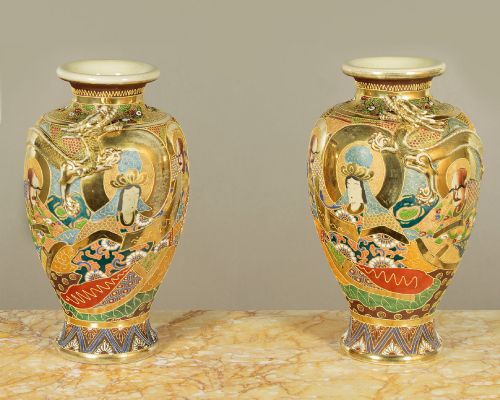
The most frequent examples on this page are Japanese export ceramics, particularly Imari and Satsuma styles dating from the late nineteenth and early twentieth centuries. Alongside these, buyers encounter European factory wares including Sevres style garnitures, Vienna porcelain, and Staffordshire ironstone.
Forms vary from monumental floor-standing vases exceeding fifty inches in height down to matched pairs designed for mantelpieces or side tables. Many incorporate covers, handles, or mounts in gilt bronze and ormolu.
How they were made
Makers shaped porcelain and ceramic bodies on the wheel or in moulds before firing at high temperatures to achieve vitrification. Potters then applied underglaze blue, enamel colours, and hand-painted motifs often finished with gilt leaf highlights.
European workshops frequently combined fired porcelain with cast gilt bronze or ormolu mounts, securing decorative panels and handles with mechanical fasteners. Japanese pieces utilised intricate hand-painted palettes, sometimes augmented with raised enamel work and lacquer panels.
Listings feature porcelain, earthenware, and ceramic bodies combined with enamel, gold leaf, and gilt bronze across the nineteenth and twentieth centuries.
What varies in quality
Quality rests upon the precision of the hand-painted brushwork and the complexity of the palette, where fine lines and rich enamels distinguish superior output. The crispness of moulded detail and the weight and finish of metal mounts also divide standard production from exceptional pieces.
Preservation of the original glaze, minimal rubbing to gold leaf, and intact matching covers or mounts determine the integrity of a pair or garniture. Original factory marks and consistent firing without major distortion separate premier examples from simpler commercial wares.
Royal Doulton·Falcon Ware·Hicks and Meigh
The Large Decorative Porcelain Urns Glossary
- Imari
- A style of Japanese export porcelain decorated in underglaze blue, iron red, and gold. This palette remained popular throughout the nineteenth century.
- Garniture
- A matched set of three or more vases or urns designed to be displayed together on a mantelpiece or sideboard. These sets often comprise a central lidded urn flanked by matching smaller vases.
- Satsuma
- A type of earthenware originating from Japan, typically featuring a fine crackle-glaze ivory body decorated with polychrome enamels and gilt. It gained massive popularity during the Meiji period.
- Ormolu
- Gilded bronze mounts applied to furniture, clocks, and porcelain urns to enhance their decorative impact. French and European makers utilised these metal fittings extensively during the nineteenth century.
- Famille Rose
- A Chinese porcelain palette introduced in the eighteenth century, dominated by opaque pink or rose enamel colours derived from colloidal gold. Nineteenth-century revival pieces continued this tradition.
Large Decorative Porcelain Urns: Frequently Asked Questions
How are large urns cleaned?
Dust surfaces gently with a soft, dry brush to protect delicate gilt and enamel decoration.
Avoid liquid cleaners and harsh chemicals, which can strip surface gilding from antique ceramic bodies.
Were these urns originally lamps?
Many large ceramic vessels were originally made as decorative vases or urns and converted into table lamps later in their lifespan.
Wiring is typically added through drilled bases or fitted mounts without necessarily damaging the primary ceramic body.
How do I identify Imari pottery?
Imari pieces feature a distinct colour scheme combining cobalt blue underglaze with iron red and gold overglaze.
Floral and brocade motifs dominate the surface design of these traditional Japanese export ceramics.
What is a porcelain garniture?
A garniture consists of a set of matching vases or urns intended to create a symmetrical display on a mantel or console.
Complete sets usually feature a central lidded vessel accompanied by matching side urns or beaker vases.