


19th Century Sevres Vase
A 19th century sevres vase brings decorative grandeur and rich French porcelain tradition into a room.
19th Century Sevres Vase
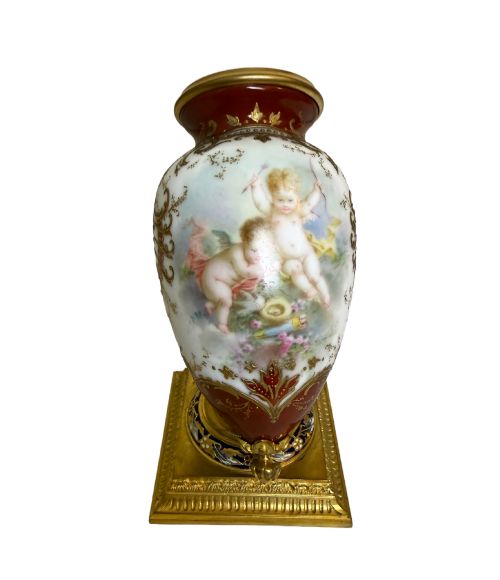
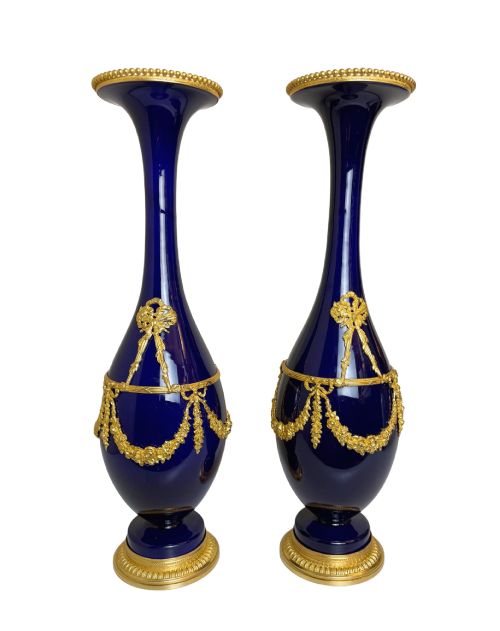
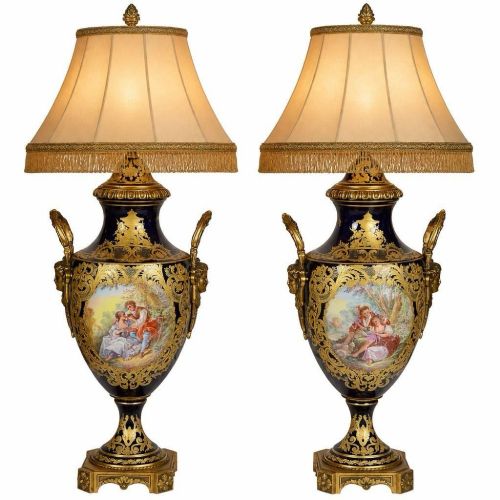
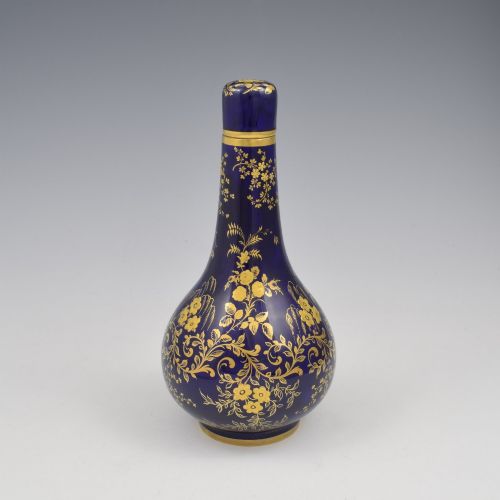
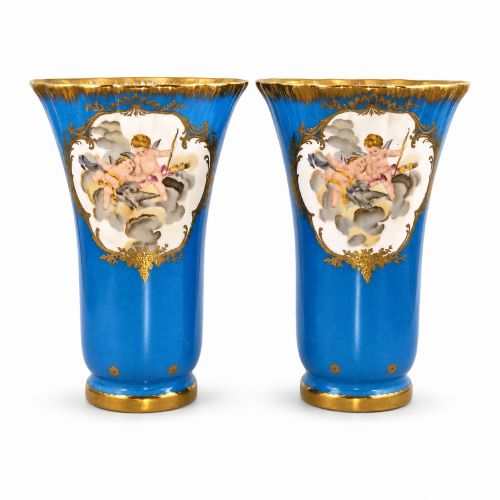
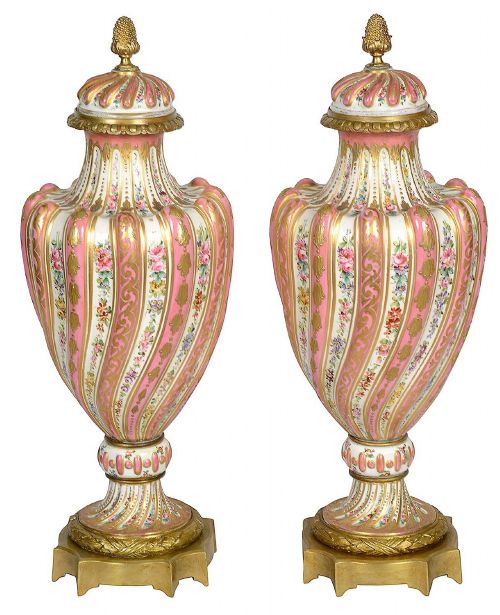
A 19th century sevres vase comprises porcelain vessels created during the nineteenth century in the stylistic tradition of the famous French manufactory, often appearing on this page as pairs, lidded urns, or converted table lamps. These ornamental objects draw directly from historical French aesthetics, spanning styles such as French Rococo Revival, French Chateau, Louis XVI Style, and French Neoclassical.
The objects take various forms including bottle vases, wide rim vases, ewers, and monumental lidded urns. Many examples incorporate specialised mountings in ormolu, gilt bronze, or gilt metal, elevating their decorative presence beyond simple ceramic vessels.
Most pieces encountered here date from the broader nineteenth century, with specific dates pointing to decades such as the 1880s and 1890s, alongside items produced in the wider French taste by alternative potteries like Samson Paris.
How They Were Made
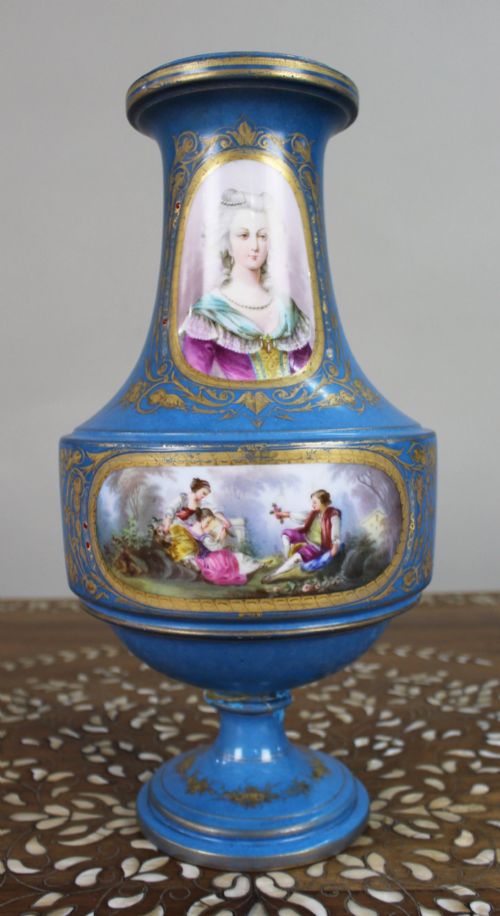
Makers utilised fired porcelain bodies, frequently glazed in distinctive tones such as bleu celeste, cobalt blue, pink, and sky blue, which provided a rich background for subsequent decoration. Gold leaf and gilt details were applied by hand to accentuate rims, handles, and painted panels.
Foundational structures relied heavily on metalworking techniques, integrating cast ormolu, gilt bronze, and gilt metal mounts that framed the porcelain bodies. Enamel and jewel-like details were often added to the ceramic surfaces to complete the ornate visual effect.
Listings feature nineteenth-century porcelain, ormolu, and gilt bronze combined in French Rococo Revival and Neoclassical styles.
What Varies in Quality
The precision and detail of the cast ormolu and gilt bronze mounts separate standard items from superior examples. Heavier, crisper metal castings demonstrate a higher grade of craftsmanship.
The depth of colour in the glaze and the refinement of the gilding dictate visual success. Superior specimens exhibit carefully controlled kiln firing and delicate, hand-applied gold leaf work that remains intact across the porcelain surface.
Samson Paris
The 19th Century Sevres Vase Glossary
- Ormolu
- Finely chased gilt bronze used for decorative mounts on furniture and porcelain. This technique provides a bright gold finish that frames the ceramic body.
- Bleu Celeste
- A bright sky-blue porcelain ground colour popularised by French ceramic design. It serves as a vibrant backdrop for gilding and painted scenes.
- Louis XVI Style
- A neoclassical design movement characterised by symmetry, straight lines, and classical motifs. Pieces in this style reflect the restrained elegance of the late eighteenth-century French court.
- Rococo Revival
- A nineteenth-century design style emulating the ornate asymmetry and scrollwork of the earlier French Rococo period. This aesthetic favours sweeping curves and naturalistic ornamentation.
- Ewer
- A large jug with a wide spout and elaborate handle, often produced purely for decorative display in pairs alongside matching vases.
19th Century Sevres Vase: Frequently Asked Questions
What styles define these vases?
These decorative objects follow historical French design movements, predominantly displaying Rococo Revival, Louis XVI, and Neoclassical characteristics. Such styles dictate the symmetry, handles, and overall silhouette of the vessels.
Makers frequently combined these classical frameworks with colourful porcelain grounds and ornate metal mounts to achieve a grand aesthetic.
Were these items used as lamps?
Many nineteenth-century ceramic vessels were adapted into table lamps, either during their original period or subsequently. This modification retained the decorative porcelain body while adding electrical components.
Such conversions allow these historic objects to function practically in modern domestic settings.
How are periods identified?
Dating relies on stylistic markers, manufacturing techniques, and specific glaze compositions characteristic of the nineteenth century. Details in the ormolu casting and porcelain body help place production within specific decades.
Comparative analysis with documented factory output clarifies whether a piece originated in France or from concurrent European workshops working in the same taste.
What materials are common?
Porcelain forms the core material, paired with metallic elements such as ormolu, gilt bronze, and gilt metal for mounts and handles. Enamel and gold leaf provide surface enrichment.
Certain examples also incorporate silk elements where shades were added for lamp conversions.