
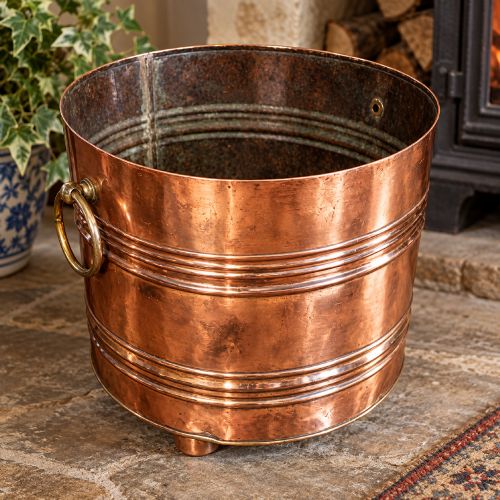
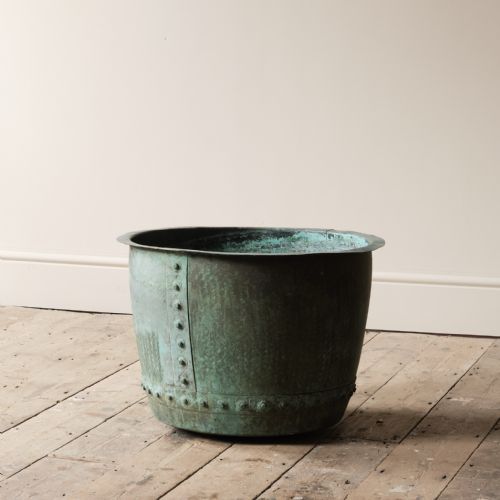
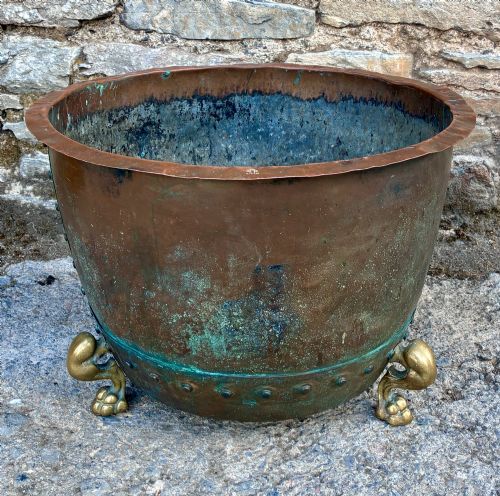
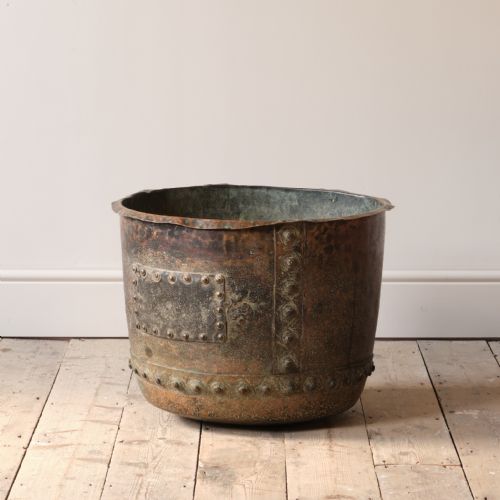
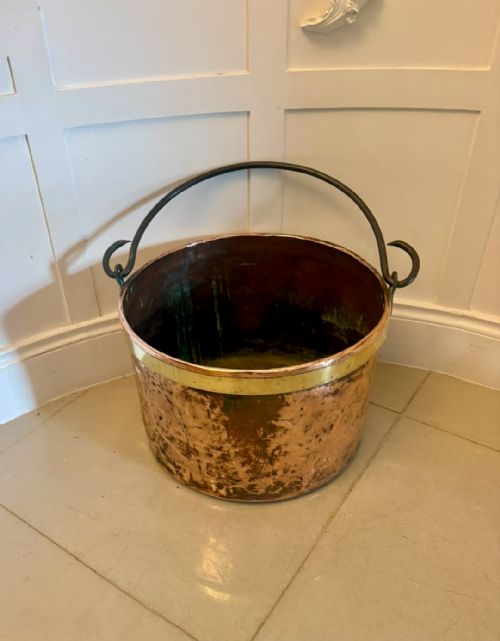
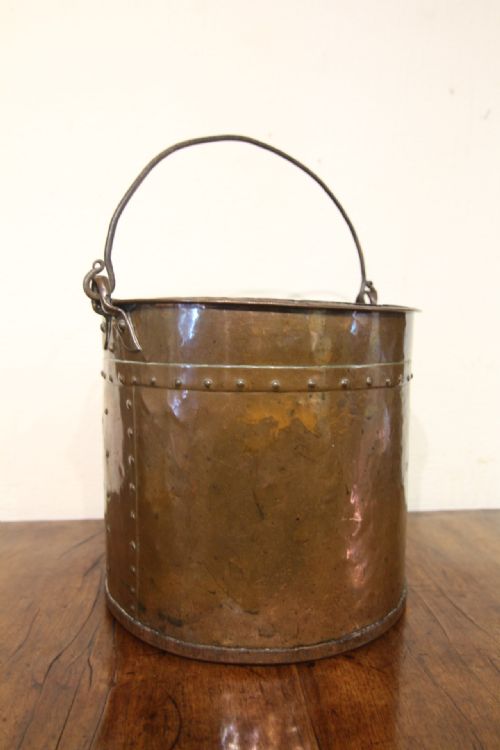


Large Copper Log Bucket
A large copper log bucket brings warmth and utility to a hearth, holding fuel while showing the heavy metalwork of past centuries.
Large Copper Log Bucket
A large copper log bucket serves primarily as a fireside receptacle for fuel, drawing on utilitarian forms produced across the nineteenth century and earlier. Buyers searching this phrase encounter heavy vessels originally designed as wash tubs, grain measures, cauldrons, or boilers that now find a second life by the hearth.
The pieces on this page span Georgian, Victorian, and later periods, often sharing space with French provincial and rustic farmhouse styles. Many items double as planters or jardinieres, reflecting their robust construction and generous proportions.
Materials and construction methods
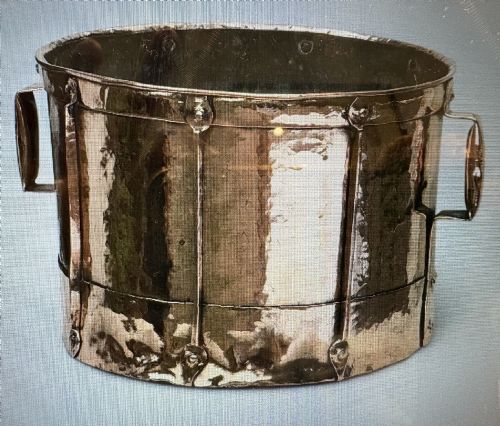
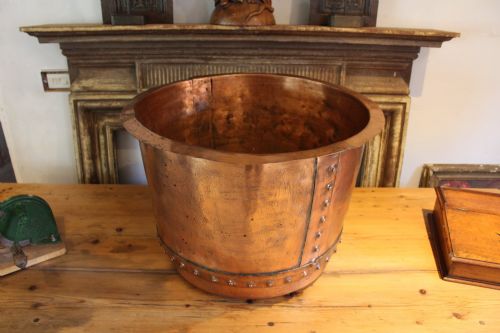
These vessels rely on sheet copper shaped by hand, often joined by visible rows of rivets that provide both structural strength and visual character. Smiths reinforced the upper rims and bases with iron or brass bands to withstand the heavy weight of wood and coal.
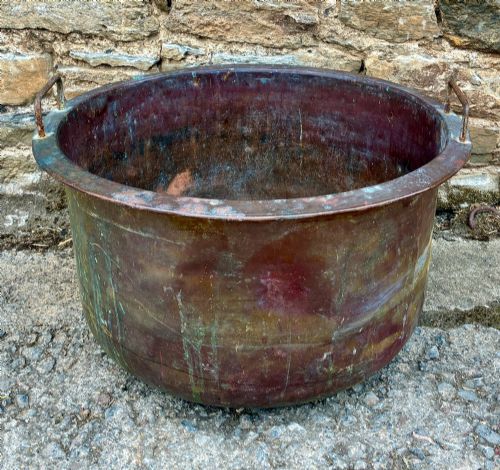
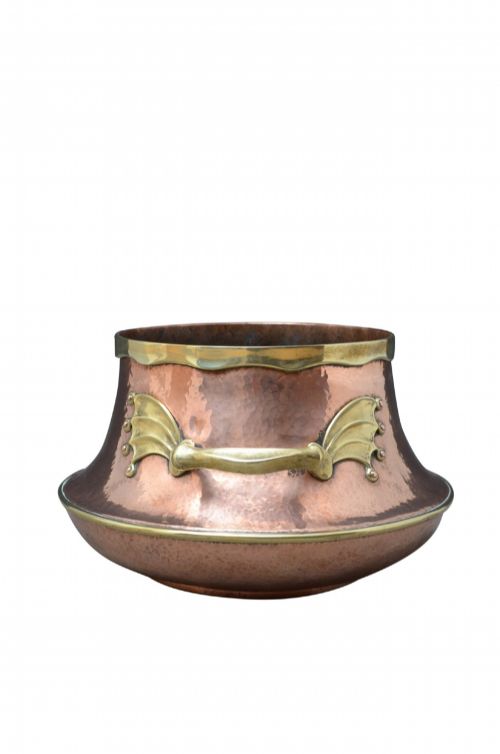
Handles forged from wrought iron or cast brass are securely attached with heavy brackets, allowing the containers to be lifted when loaded. Additional variations incorporate tin linings or distinct verdigris patinas accumulated over decades of use.
Listings span the Georgian and Victorian eras up to the nineteen-twenties, incorporating brass, iron, and wrought elements into heavy copper forms.
Evaluating the standard of manufacture
Quality rests in the weight of the metal gauge and the integrity of the original construction rather than decorative embellishment. Vessels with hand-beaten surfaces and tight, uniform riveting demonstrate superior craftsmanship by period coppersmiths.
The preservation of original iron frames, swing handles, and uncompromised bases separates standard utility pieces from those of finer proportion and distinction. Alterations or modern replacements of structural elements diminish the integrity of the piece.
The Large Copper Log Bucket Glossary
- Riveted
- Joined with metal pins hammered flat on either side to secure overlapping sheets of copper. This technique ensures durable construction for heavy-duty vessels.
- Cauldron
- A large rounded pot, typically fitted with a swing handle for suspension or lifting over a fire. Many examples originate from domestic or industrial kitchens.
- Ferrat
- A traditional French agricultural measure used for grain or dry goods. These deep cylindrical vessels translate well to holding logs beside a hearth.
- Jardiniere
- An ornamental pot or stand designed to hold live plants. Numerous examples share identical forms with fireside log buckets.
- Dinanderie
- Objects made of beaten brass, copper, or bronze originating from traditional European metalworking centres. The term often describes decorative vessels from the early twentieth century.
Large Copper Log Bucket: Frequently Asked Questions
Can I use these buckets for actual logs?
These vessels were originally manufactured to hold heavy fuel, making them entirely suitable for storing logs by a fireplace today.
Their robust copper walls and reinforced iron bases easily withstand the weight and friction of firewood.
How do I clean a antique copper bucket?
Gentle washing with warm soapy water removes accumulated dust without disturbing the historic surface. Avoid harsh chemical abrasives that strip away the aged patina built up over generations.
Many collectors prefer to leave the natural oxidation undisturbed to retain the character of the metal.
Are these buckets waterproof for plants?
Many of these containers were originally designed as wash tubs or grain measures and naturally hold water well. Their watertight properties make them practical choices for use as indoor planters.
Checking the base for historic repairs ensures moisture does not seep onto delicate flooring.
How do I date an old copper bucket?
Dating relies on observing construction details such as hand-cut dovetails, the shape of the riveted seams, and the style of the iron handles. Georgian and early nineteenth-century pieces often feature heavier hand-hammered bodies compared to later Victorian items.
Associated forms like grain measures and cauldrons also align with specific regional agricultural periods.