


Georgian Copper Coal Bin
A georgian copper coal bin brings proper fireside utility and rich metalwork into a room, spanning the eighteenth and nineteenth centuries.
Georgian Copper Coal Bin
When you search for a georgian copper coal bin, you encounter heavy hearth vessels designed to hold solid fuel or logs beside the fireplace. The material range stretches from the eighteenth century into the Victorian era, taking the form of bucket bins, helmet shaped scuttles, and fireside buckets.
Most examples you meet on this page date from around eighteen hundred or the broader Georgian and Victorian periods, often showing shaped bodies or riveted construction. Alongside traditional coal storage, these metal vessels frequently double as log bins or heavy planters.
How they were made
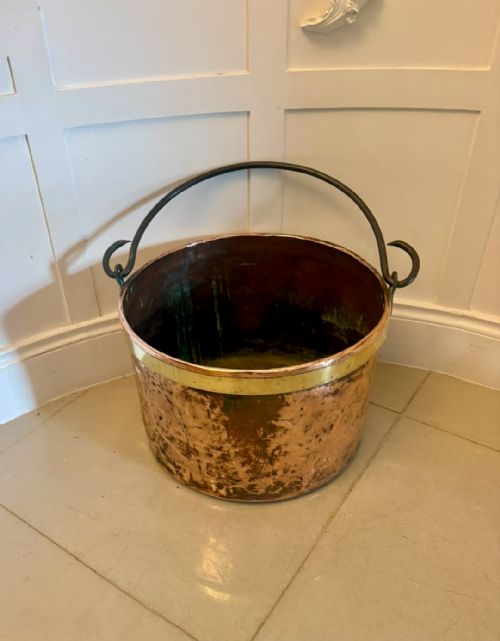
Makers shaped sheet copper into cylindrical or helmet forms, joining the seams with visible rivets and reinforcing the rims with sturdy brass banding. Iron handles and swing bails provided the necessary strength for carrying heavy loads of coal or logs from the cellar to the hearth.
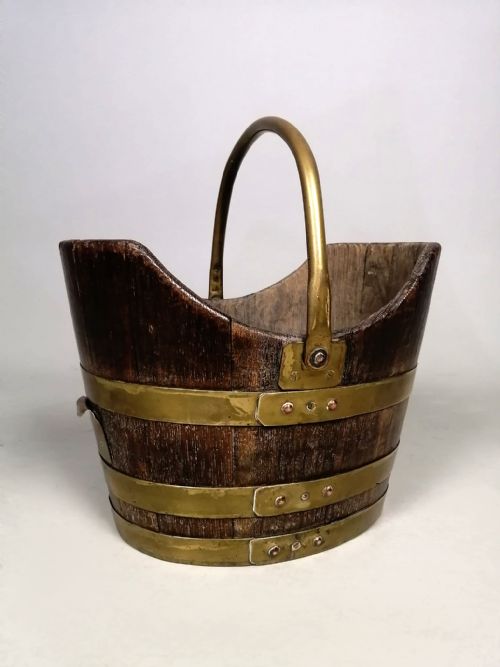
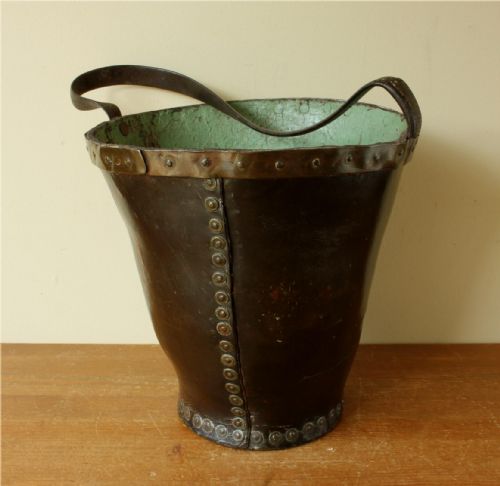
Some variations incorporate auxiliary materials such as oak framing, wrought iron mounts, or decorative leather bodies fastened with copper studs. This combination of base metals and durable hides reflects the practical demands placed on domestic fireside equipment.
Some sturdy waste paper baskets lead a double life as reclaimed fire buckets.
What varies in quality
The distinction between standard utility items and superior examples lies in the weight of the metal and the crispness of the hand-beaten seams. Finer pieces display careful attention to brass mounts, shaped rims, and well-fitted handles rather than purely functional assembly.
Age and period integrity also dictate the standing of a piece, with items dating firmly to the George III era commanding greater attention than later Victorian adaptations. The depth of the copper patina and the survival of original interior surfaces further separate ordinary vessels from distinguished ones.
The Georgian Copper Coal Bin Glossary
- Helmet Scuttle
- A coal container featuring a flared mouth and a peaked rim reminiscent of a classical helmet, designed for pouring fuel cleanly. This shape was popular throughout the Georgian period.
- Log Bin
- A large floor-standing vessel intended for storing firewood rather than small coal. These items often feature drop handles and substantial metal banding.
- Patina
- The deep surface sheen and colour developed by copper and brass over decades of exposure to air and handling. Collectors value a rich, undisturbed finish.
- Swing Bail
- A curved metal handle attached to opposite sides of a bucket or bin, allowing it to pivot upright for carrying. It is usually secured through reinforced side ears.
- Riveted
- Joined together using metal pins hammered flat to secure overlapping sheets of copper. This technique provides structural strength before modern welding.
Georgian Copper Coal Bin: Frequently Asked Questions
What is a georgian copper coal bin used for?
These vessels served initially to store and transport coal or logs to the fireplace in larger domestic households.
Today, buyers frequently utilise them beside active hearths or repurpose them as planters and waste paper baskets.
How do you date an antique copper bin?
Dating relies on examining the construction methods, such as hand-beaten copper sheets, heavy brass bands, and early riveted joints.
Stylistic cues like George III helmet shapes or simple eighteenth-century bucket forms also help establish the period.
Are these bins waterproof for plants?
Many copper vessels feature sealed seams and solid metal bases originally designed to contain coal dust and minor moisture.
When used as a planter, the material safely holds soil, though checking the base for historical wear is advisable.
What metals are combined on these pieces?
Copper forms the primary body of the bin, offering a warm metallic tone and pliable strength for shaping.
Brass banding, iron handles, and copper studs frequently appear as secondary metals to reinforce the structure.