
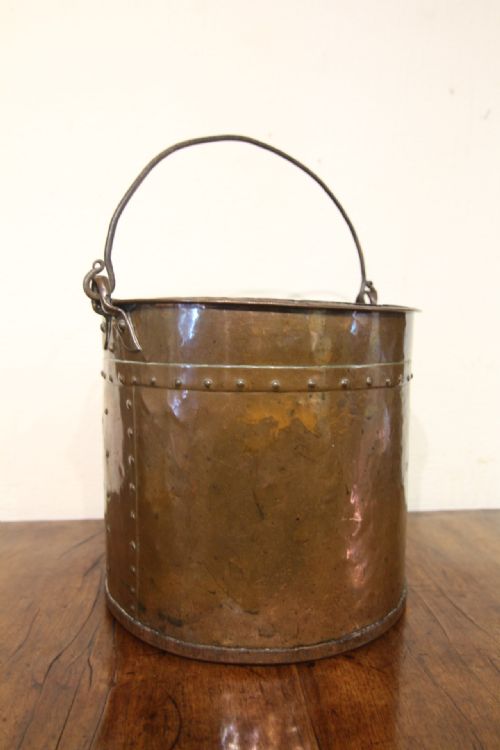


Vintage Copper Firewood Holder
A vintage copper firewood holder brings warmth and industrial weight to a hearth, combining practical fuel storage with rich metallic tone.
Vintage Copper Firewood Holder
When you search for a vintage copper firewood holder, you encounter heavy hearth vessels built to contain logs and coal beside open fires. These pieces serve as functional storage while adding significant visual presence to a room through their warm metallic surfaces.
The selections span distinct historical periods, most frequently appearing as nineteenth-century vessels or Victorian items alongside twentieth-century examples. Forms range from dedicated log bins and scuttles to cauldrons and coal buckets, occasionally doubling as garden planters.
Styles vary from ornate Victorian embossed designs and rustic farmhouse pieces to Arts and Crafts items and Art Deco dinanderie work. Buyers typically find cylindrical log bins framed in iron or robust riveted buckets with swing handles.
How they were made
Maker construction relies heavily on hammered or riveted copper sheets joined to form deep cylindrical and cauldron bodies. Wrought iron and brass elements provide structural reinforcement, handles, frames, and decorative banding.
Handles often utilise heavy iron or brass swings secured with robust rivets, ensuring the vessel could bear the weight of heavy timber or coal. Original frames and iron supports hold larger log bins steady against daily hearth use.
Several heavy copper cauldrons originally built for open fires now live a second life holding oversized houseplants instead of logs.
What varies in quality
Quality depends upon the thickness of the copper sheet and the integrity of the original joints and rivets. Thicker metal resists denting and maintains its structural shape under heavy loads of firewood.
The presence of intact original fittings, such as wrought iron swing handles and iron frames, separates standard utilitarian vessels from finer decorative examples. Surface patination also plays a role, with deep, undisturbed oxidation marking unpolished age.
The Vintage Copper Firewood Holder Glossary
- Dinanderie
- A French term for objects made of brass, copper, or other non-ferrous sheet metal, often associated with Art Deco production. These vessels show smooth, beaten surfaces.
- Coal scuttle
- A bucket or container specifically designed for carrying and storing coal near a fireplace. Many feature a shaped lip or helmet form for pouring fuel.
- Cauldron
- A large round vessel with a swing handle, traditionally used over open hearths. In this context, they serve as heavy log bins or planters.
- Riveted
- Joined together using metal bolts hammered flat at the ends. This technique provides both structural strength and visual texture on nineteenth-century vessels.
- Patina
- The natural surface transformation and colour shift developed on copper over decades of exposure to air and handling. Collectors value uncompromised aged surfaces.
Vintage Copper Firewood Holder: Frequently Asked Questions
How do I clean a copper log bin?
Maintenance depends entirely on whether you prefer a bright polished finish or a dark aged patina. Most collectors choose to leave the natural oxidation undisturbed to preserve the historical appearance.
If cleaning is necessary, use a mild soapy cloth rather than harsh metal polishes that strip away decades of character. Avoid abrasive pads that scratch the soft copper surface.
Can these holders be used outdoors?
Many of these vessels function successfully as garden planters due to their durable metal construction. The heavy copper and iron materials withstand outdoor exposure well.
Ensure that proper drainage is managed if planting directly into the vessel. Galvanised steel and copper elements will continue to weather naturally in the garden.
What is the difference between a log bin and a coal bucket?
Log bins are typically wider, straight-sided cylindrical vessels designed to hold stacked firewood logs. They often feature iron frames or sturdy bases.
Coal buckets and scuttles tend to be deeper or feature specific pouring spouts and helmet shapes designed for scooping smaller fuel. Both share similar heavy copper and brass construction methods.
How can I tell a Victorian copper piece apart?
Victorian examples often display specific decorative techniques such as embossing or applied brass banding around the rim. They frequently feature heavy riveted seams and robust wrought iron swing handles.
Examining the construction methods and fastener types helps distinguish nineteenth-century production from later twentieth-century interpretations.