

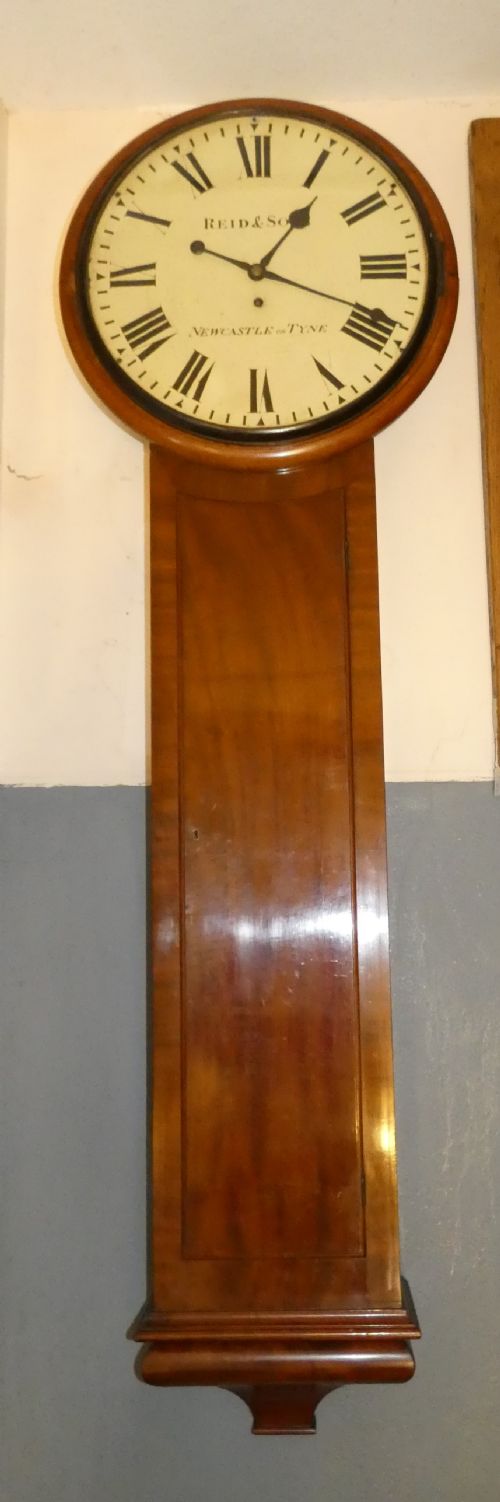


Large Circular Wall Clock
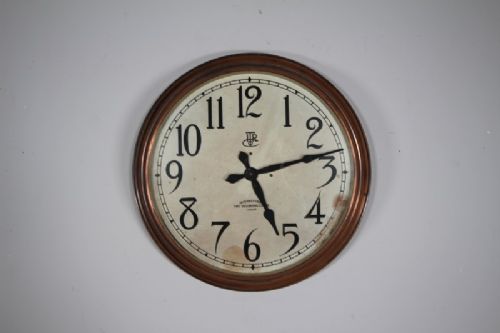
These large circular wall clock examples combine heavy timber and clear dials to command a room with utilitarian grace.
Large Circular Wall Clock
A large circular wall clock serves as a commanding focal point in domestic and institutional settings alike. When buyers search for a large circular wall clock, they encounter sturdy timepieces originating from the Victorian, Edwardian, and mid-twentieth-century periods. These pieces span classic English station and dial designs as well as Japanese Meiji examples.
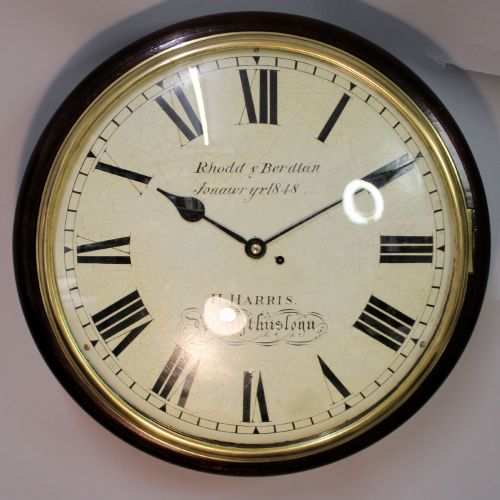
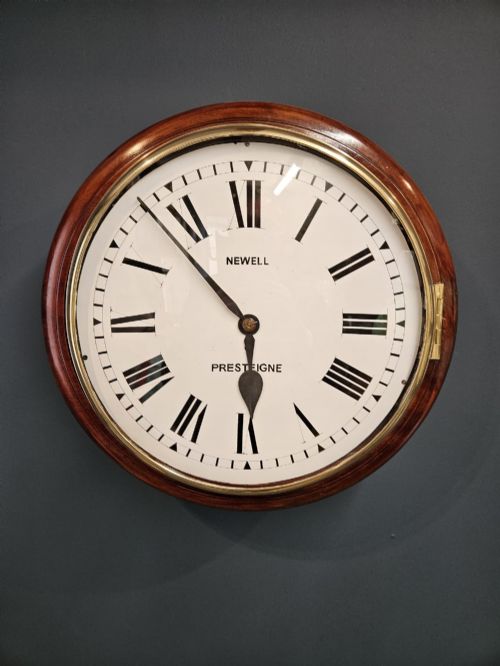
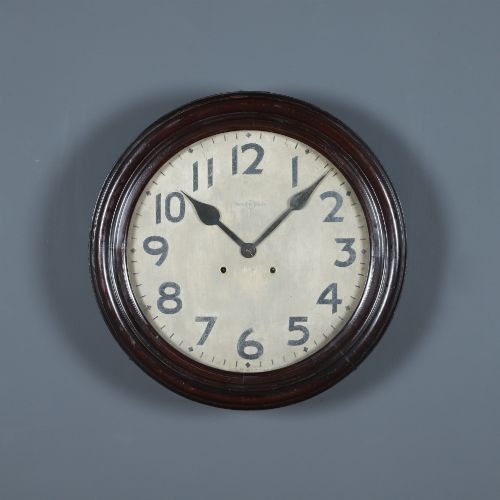
The dominant forms on this page include fusee wall clocks, drop-dial variants, and railway station or school clocks. Mahogany frames and glass covers predominate, housing clear painted steel dials designed for effortless legibility across large spaces.
Materials and construction
Craftsmen built these heavy timepieces using robust timbers such as mahogany to house intricate fusee movements. Brass and copper components work alongside iron and metal to support the reliable mechanical operation of each dial.
Protection comes from fitted glass bezels that shield the painted steel faces from dust and damage. Casing designs balance the weight of large movements while maintaining clean circular silhouettes for wall mounting.
Large Circular Wall Clock Retail Price Guide 2026
Typical asking prices for large circular wall clock among the pieces listed under this phrase on Sellingantiques today, from the lower quarter to the upper quarter. They describe what is for sale here now, not the wider market.
Railway and school clocks spent decades supervising bustling platforms and restless classrooms before finding quiet retirement on domestic walls.
Distinctions in quality
Superior examples exhibit refined timber selection and crisp dial typography executed by notable makers. The sophistication of the internal movement, particularly fusee systems, separates standard utility pieces from finer salon or railway clocks.
Condition of the original glass, dial paint, and timber casing dictates the overall integrity of the piece. Subtle details in brass bezels and drop-dial carvings further distinguish higher-tier pieces from simpler utilitarian wall clocks.
Henry Harris of Monythusloyn·Palmer and Co
The Large Circular Wall Clock Glossary
- Fusee
- A conical pulley used in clock movements to maintain even driving force as the mainspring unwinds. This mechanism ensures consistent timekeeping across the duration of the wind.
- Dial clock
- A wall clock featuring a prominent circular face and a simple housing for the movement. These were widely used in public spaces, offices, and railway stations.
- Drop-dial
- A clock design where the circular dial sits above an extended wooden case, often used to accommodate a longer pendulum or weight drop.
- Meiji
- A period in Japanese history spanning the late nineteenth and early twentieth centuries. Pieces from this era reflect distinct craftsmanship traditions adapted to clockmaking.
Large Circular Wall Clock: Frequently Asked Questions
Where should I hang a large wall clock?
These clocks demand substantial wall space to balance their visual weight and proportions properly. Hallways, kitchens, and living rooms provide ideal backdrops where the large dial remains easily readable from a distance.
Ensure the wall construction safely supports the considerable combined weight of the timber case, glass, and mechanical movement.
How do fusee movements work?
A fusee movement uses a specially shaped conical pulley to equalise the diminishing power of the mainspring as it unwinds. This clever mechanical arrangement helps the clock maintain steady accuracy throughout its running cycle.
Clockmakers favoured this system in higher-quality English dial clocks for dependable timekeeping performance.
Are these clocks suitable for daily use?
Most mechanical wall clocks function reliably for daily timekeeping provided they receive correct setup and periodic professional maintenance. Regular winding keeps the movement functioning smoothly according to its specific power reserve.
Keeping the clock away from excessive temperature fluctuations and damp walls preserves both the timber case and the internal brass components.
How do I date a dial clock?
Stylistic clues such as bezel design, timber choice, and dial typography help establish the period of manufacture. Victorian and Edwardian examples often display specific lettering styles and casework proportions characteristic of their decade.
Maker signatures inscribed on the dial or movement backplate offer the most direct evidence for precise attribution.