

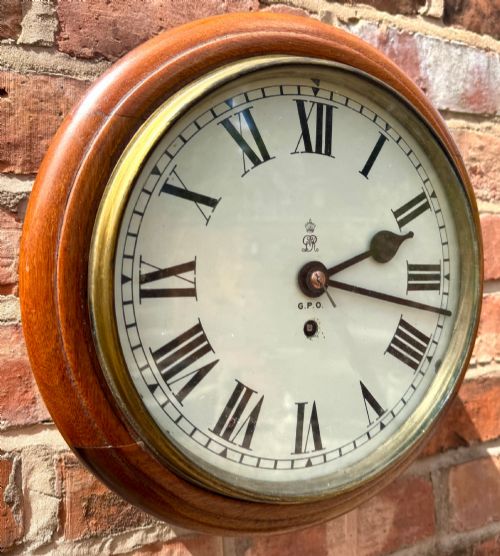
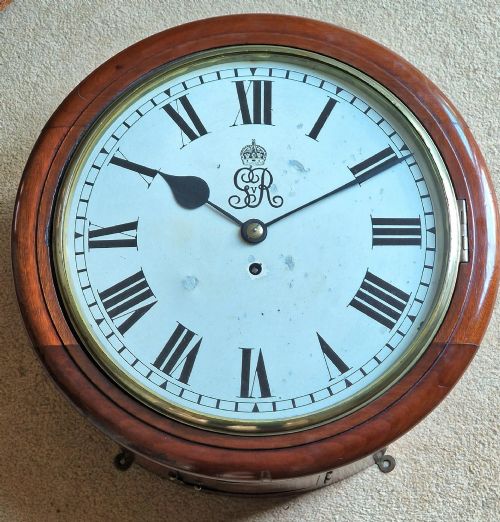


Edwardian School Clock
An Edwardian school clock is a robust timekeeper built for public rooms, combining honest utility with classic dial work.
Edwardian School Clock
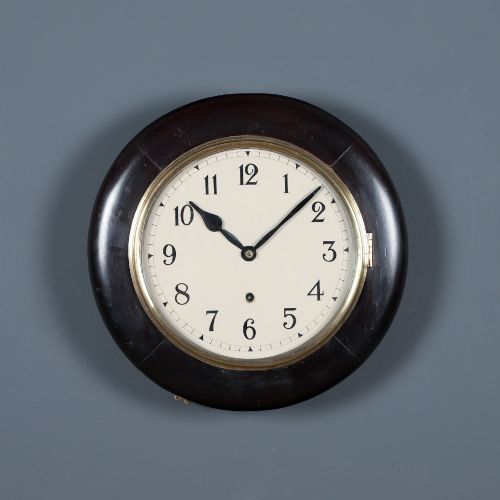
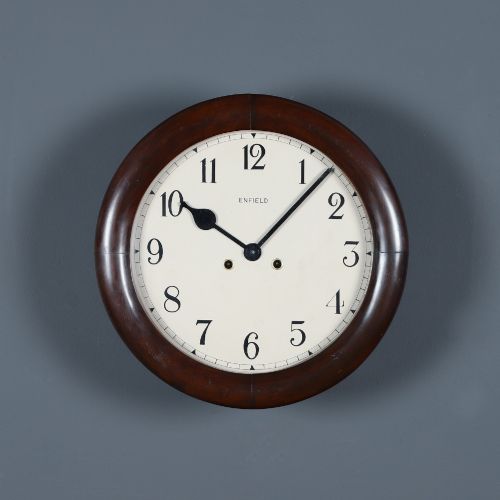
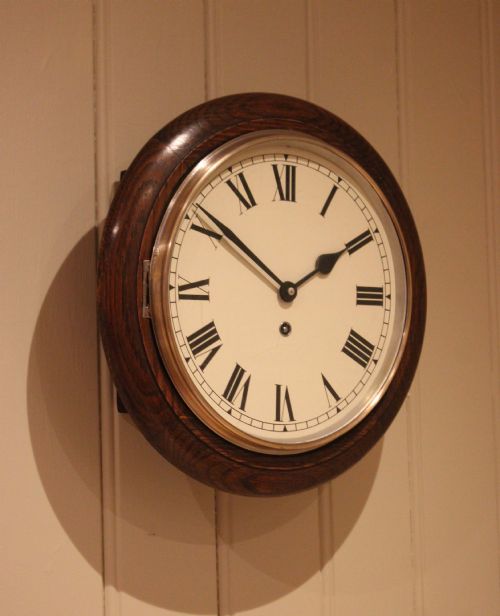
An edwardian school clock is primarily a wall-mounted timepiece designed for clarity and durability in public spaces. These round dial clocks appear across periods from the nineteenth century into the interwar years, styled in oak, mahogany, and beech.
Beyond standard institutional models, the selection includes related regional and military variants sharing the same practical architecture. Pieces span diverse eras including Victorian, Edwardian, George V, and Interwar British Military.
Materials and construction
Casework relies on solid timbers such as mahogany, oak, beech, and walnut, shaped into round or drop-dial configurations. Brass and copper components appear in bezels and movement parts, while heavy glass protects the face.
Movements often employ fusee mechanisms to maintain steady tension as the mainspring unwinds. Cases frequently incorporate hinged side doors and bottom access boxes for routine winding and regulation.
Edwardian School Clock Retail Price Guide 2026
Typical asking prices for edwardian school clock among the pieces listed under this phrase on Sellingantiques today, from the lower quarter to the upper quarter. They describe what is for sale here now, not the wider market.
Listings feature wall clocks spanning the nineteenth century, Edwardian era, and interwar period, housed in oak, mahogany, beech, and walnut.
What separates examples
Quality rests in the precision of the timber framing and the integrity of the original dial face. Crisply carved wooden surrounds and well-preserved lettering on the dial distinguish superior examples.
The sophistication of the internal movement dictates worth, particularly the presence of an authentic fusee mechanism rather than a later conversion. Original stamped cases and documented maker signatures add tangible merit.
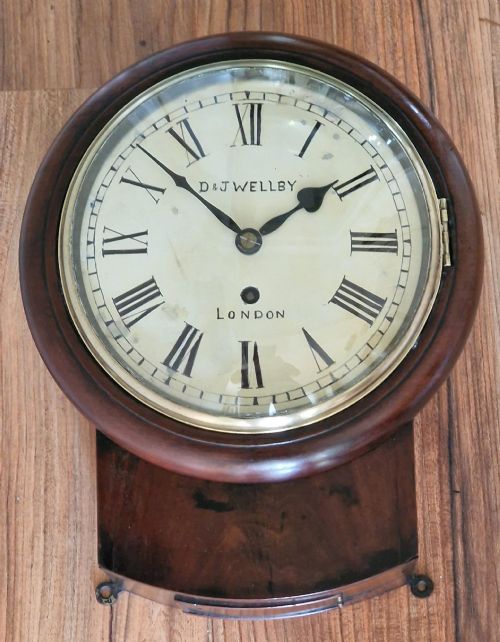
D and J Wellby London·Anglo Swiss Watch Co·Camerer Cuss and Co·Balbiani Brookley
The Edwardian School Clock Glossary
- Fusee
- A conical pulley connected to the mainspring by a chain or cord, designed to equalise the force of the spring as it runs down. This mechanism helps the clock maintain a consistent rate throughout its winding cycle.
- Drop dial
- A clock case featuring a circular head above a trunk or box that drops down below. This extended lower section often accommodates a longer pendulum or simply provides visual balance.
- Convex dial
- A clock face that curves outward toward the viewer rather than sitting completely flat. This shape reduces glare from overhead light sources in large rooms.
- Dial clock
- A wall clock consisting primarily of a prominent face set within a simple wooden surround. They were standard fixtures in institutional and commercial interiors.
Edwardian School Clock: Frequently Asked Questions
How do I wind an edwardian school clock?
Use the designated winding key inserted into the dial face to turn the arbor clockwise until resistance is felt. Care must be taken not to overwind the mainspring.
Most fusee movements require weekly attention to keep time accurately. Ensure the pendulum hangs freely before setting the hands.
Where should I hang a wall clock?
Mount the clock on a sturdy interior wall capable of supporting the weight of solid hardwood and heavy glass. Height should allow comfortable access for weekly winding.
Keep the piece away from damp areas and direct sunlight to protect the wood finish and paper or painted dials.
Are these clocks loud?
Timepieces without striking mechanisms produce only a steady ticking sound suited to quiet rooms. Models with chiming or striking trains will sound the hours or quarters.
Audibility depends on the size of the case and the acoustics of the room where it hangs.
How do I date a dial clock?
Examine the timber species, case construction details, and the style of the numerals on the dial. Mahogany and oak dominate different decades alongside distinct lettering conventions.
Maker signatures and stamped case numbers often provide clues to the exact decade of manufacture.