


Large Chinese Enamel Vases
Large Chinese enamel vases bring vibrant colour and monumental presence to a room, offering the bold floral palettes and intricate gilding that collectors prize.
Large Chinese Enamel Vases
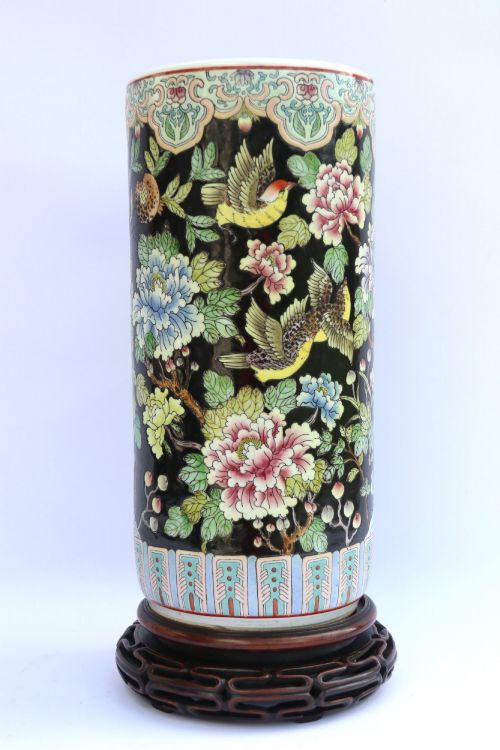
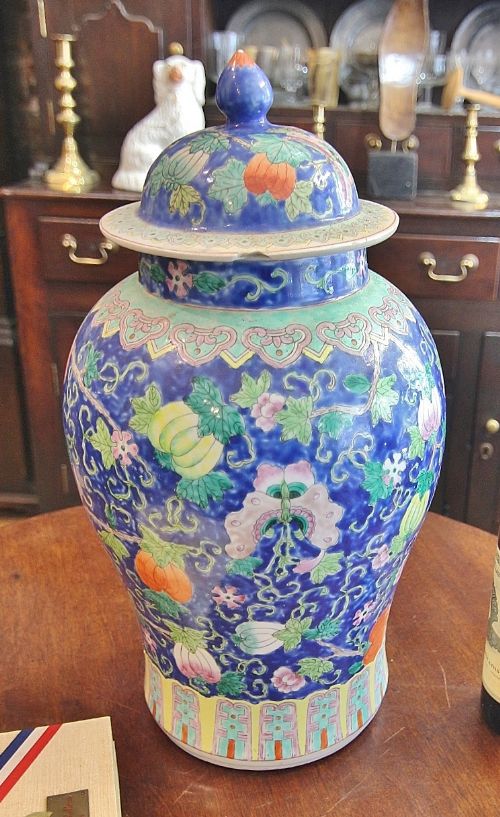
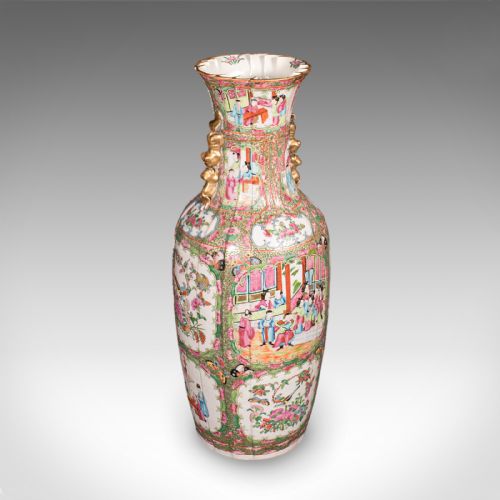
Large Chinese enamel vases include towering floor pieces, monumental baluster forms, and moon flasks originating from the nineteenth and twentieth centuries. These vessels display distinct decorative traditions such as Cantonese Rose Medallion, Rose Mandarin, and famille rose or famille verte palettes.
The pieces on this page span the Victorian era, the Qing Dynasty, and mid-twentieth-century workshop production. Alongside standard ceramic bodies decorated in enamels, the selection encompasses metalwork cloisonné creations and items adapted into table lamps.
Many of these large vessels retain original hardwood stands or matching covers, while others have been fitted with gilt bronze or brass mounts. Their considerable scale makes them natural centrepieces for principal reception rooms and entrance halls.
Materials and construction
The foundation bodies of these vases are constructed from porcelain, ceramic, or metal substrates such as copper and brass. Artisans then applied colourful enamel pigments, glaze, and occasional gold leaf accents across the surface.
Cloisonné pieces utilise soldered metal wires to create cellular compartments that hold the coloured enamel pastes before firing and polishing. Other examples employ overglaze enamelling techniques on porcelain, sometimes complemented by later gilt bronze or brass mounts.
Several towering floor vases are so monumental they require their own dedicated hardwood pedestal just to keep polite company in the hallway.
Assessing quality and execution
Quality rests in the crispness of the enamel work, the complexity of the figural or floral panels, and the depth of the gilding. Superior examples show meticulous hand-painted detail without blurring across the colour boundaries.
Proportion and structural integrity matter greatly in pieces of this scale, particularly where covers, original hardwood stands, or metal mounts are present. Uniformity in the glaze and stability in the metal or ceramic body distinguish finer workshop output.
The Large Chinese Enamel Vases Glossary
- Famille rose
- A prominent palette of opaque pink and rose enamels introduced during the Qing Dynasty. It allowed for subtle tonal gradations in floral and figural motifs.
- Cloisonné
- A metalworking technique where flat wires are soldered to a metal base to form compartments filled with enamel paste. The surface is subsequently fired and ground smooth.
- Moon flask
- A flattened circular ceramic vessel with a narrow neck and small loop handles, often supported on an oval foot. This distinctive shape provides a broad canvas for pictorial enamel decoration.
- Rose Medallion
- A Cantonese decorative style characterised by panels alternating between figures in court scenes and birds, butterflies, and flowers. The design is framed by dense borders of gilding and green foliage.
Large Chinese Enamel Vases: Frequently Asked Questions
How do I clean large enamel vases safely?
Dust the surface gently with a soft, dry ostrich feather duster or a clean microfibre cloth.
Avoid using water, chemical cleaning agents, or abrasive cloths, as these can damage delicate enamel pigments and historical gilding.
Can these heavy vases be used as lamps?
Several pieces in this category are found with historic gilt mounts or lamp fittings.
Ensure any conversion work respects the body of the vessel and does not permanently damage the original ceramic or enamel structure.
How do I tell Qing Dynasty pieces apart?
Examine the palette, the density of the enamelling, and the style of the figurative or floral panels.
Nineteenth-century examples frequently display rich Cantonese Rose Medallion or famille rose schemes, reflecting the export and domestic tastes of the period.
Where should I display a monumental floor vase?
Position them in spacious hallways, landings, or reception rooms where their height and vibrant palettes can be appreciated safely.
Keep them away from direct sunlight and high-traffic corners to protect the enamel surface from accidental knocks.