





Large Ceramic Display Urn
A large ceramic display urn makes an immediate interior statement, bringing historical presence and scale to a room.
Large Ceramic Display Urn
A large ceramic display urn stands out through its imposing scale and decorative ambition, often taking the form of a floor-standing vessel or a prominent mantelpiece centrepiece. These large pieces were designed primarily for visual impact in grand rooms, utilising generous proportions to showcase intricate surface patterns.
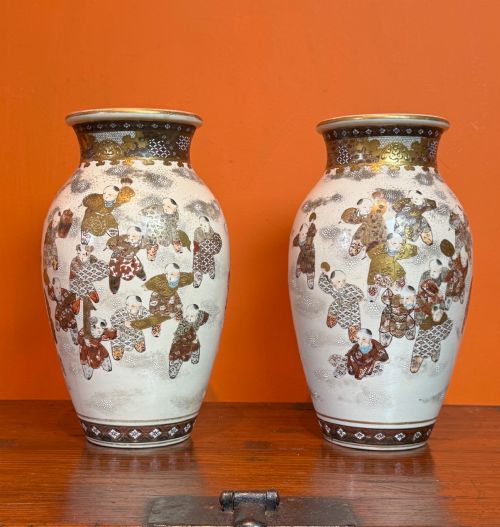
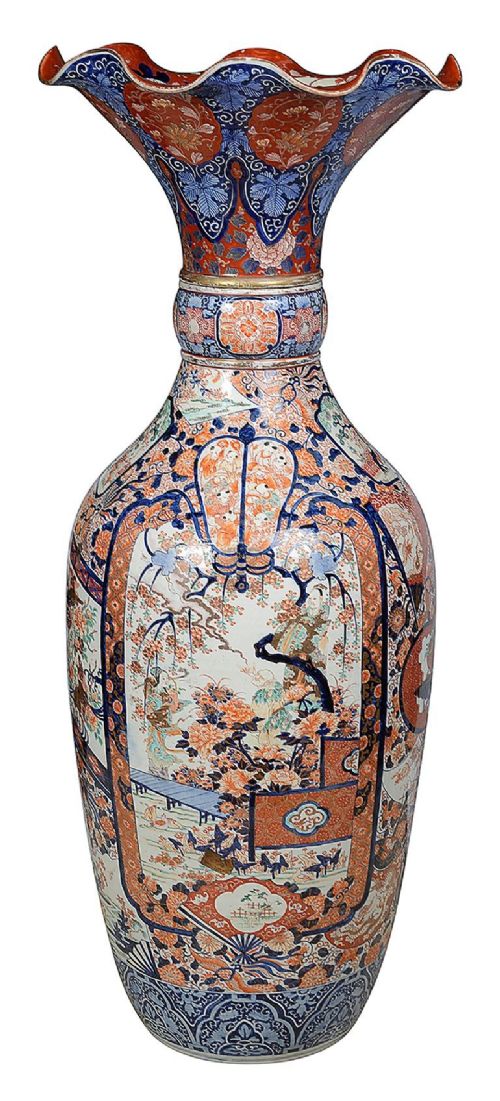
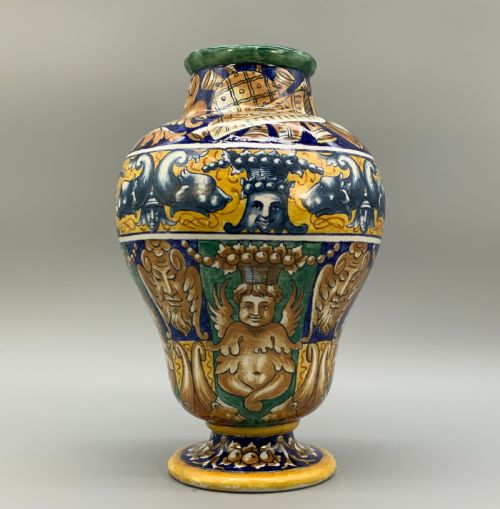
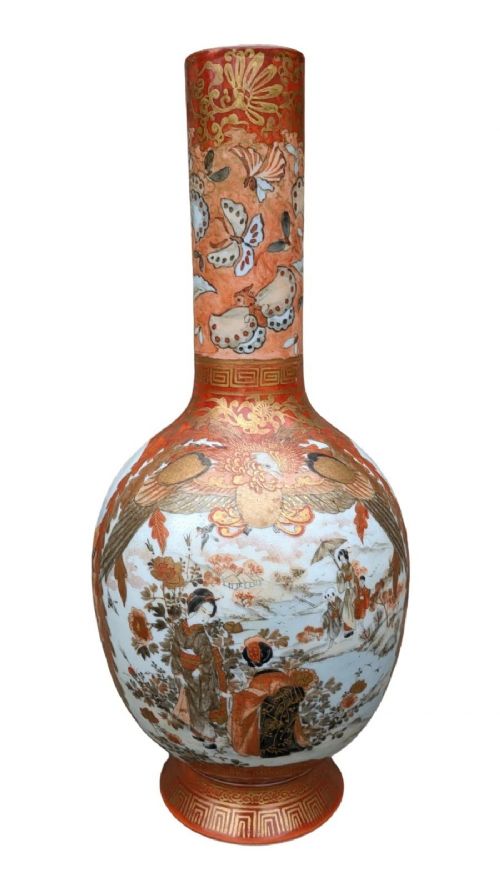
The selections available here span diverse cultural traditions, with Japanese Imari, Satsuma, and Kutani wares appearing alongside European interpretations including Dutch Delft, French faience, and English Regency porcelain. Buyers frequently encounter nineteenth-century Japanese floor vases and eighteenth-century revivals among these listings.
Forms range from tall flare-neck vases and lidded vessels to moon flasks and ribbed beaker vases. Such objects function as focal points in domestic interiors, carrying substantial weight and commanding presence wherever they are positioned.
Indicators of quality
Quality reveals itself in the crispness and complexity of the painted details, where superior pieces exhibit refined brushwork and balanced compositions across a massive surface. The depth of the glaze and the precise application of gold leaf separate ordinary production from exceptional craftsmanship.
The structural integrity of large vessels is paramount, involving successful firing without distortion despite the immense weight and height of the ceramic body. Signed works and well-preserved historical pairs command particular attention from discerning collectors.
Large Ceramic Display Urn Retail Price Guide 2026
Typical asking prices for large ceramic display urn among the pieces listed under this phrase on Sellingantiques today, from the lower quarter to the upper quarter. They describe what is for sale here now, not the wider market.
Seiko en Chokei
The Large Ceramic Display Urn Glossary
- Imari
- A traditional Japanese style of porcelain featuring underglaze blue and overglaze red, gold, and other colours. This distinctive palette became highly popular in European export markets during the nineteenth century.
- Satsuma
- A type of earthenware originating in Japan, characterised by an ivory crackle-glaze and elaborate polychrome and gilt decoration. These pieces frequently depict figural scenes and natural motifs.
- Faience
- Tin-glazed earthenware produced in Europe, particularly in France, the Netherlands, and England. The technique imitates the appearance of high-value Chinese porcelain through an opaque white glaze.
- Kutani
- A style of Japanese coloured porcelain and pottery known for bold designs and rich palettes. These works often incorporate deep greens, blues, and substantial gold embellishment.
- Moon flask
- A flattened circular ceramic vessel with a narrow neck and small handles, standing on a distinct base. This traditional Chinese form was frequently reinterpreted in nineteenth-century European ceramics.
Large Ceramic Display Urn: Frequently Asked Questions
Where should I place a large urn?
These sizeable vessels suit placement on the floor in hallways, empty corners, or flanking a fireplace where their height can be fully appreciated. Smaller versions sit comfortably on sturdy side tables or pedestals.
Ensure the location offers adequate clearance to prevent accidental knocks, as the substantial ceramic and porcelain bodies require stable ground.
How do I clean a ceramic urn?
Dust the surface gently with a soft, dry cloth or a feather duster to prevent particulate buildup on delicate enamel and gilt areas. Avoid chemical cleaners and excessive water.
If deeper cleaning is necessary, use a barely damp cloth on glazed sections only, taking care around any unglazed or fragile historical surfaces.
Were these urns used for flowers?
Many large historical vessels were created primarily for decorative display in country houses and formal reception rooms rather than practical utility. Their grand scale and intricate painted surfaces meant they functioned as standalone works of art.
While some forms can hold water, checking the interior for old repairs or porous materials is advisable before introducing moisture.
How can I date an antique urn?
Dating relies on examining the characteristics of the ceramic body, the style of the hand-painted decoration, and any visible maker marks or signatures on the base. Stylistic cues often point to specific periods like the Meiji era or the Regency.
Comparing the glaze texture and crackle patterns with established historical examples helps narrow down the decade of production.