



Relief Decorated Vase
A relief decorated vase brings tactile depth and sculptural form to any room, offering surface ornamentation that catches the light.
Relief Decorated Vase
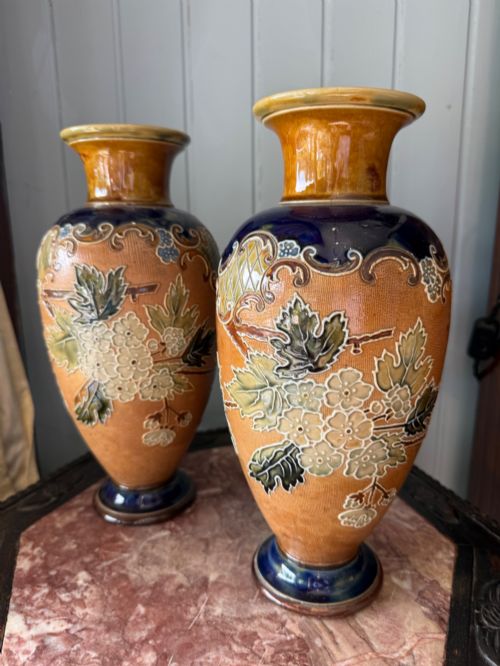
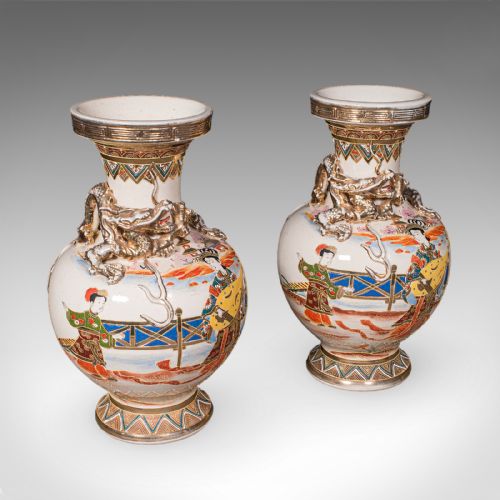
The pieces listed on this page span several distinct periods including the nineteenth century, Victorian era, Regency, and early twentieth century. You are most likely to meet ceramic, stoneware, and porcelain examples featuring applied or moulded motifs.
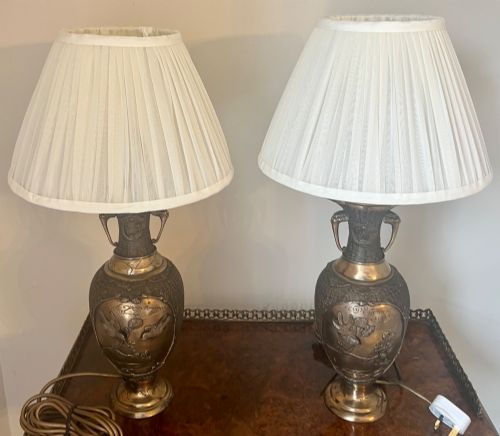
Makers and factories represented in these selections include Royal Doulton, Doulton Lambeth, Makuzu Kozan II, Bernhard Bloch, Burmantofts Faience, Royal Worcester, and Mason's. Alongside traditional vases, the listings include jardinières, table lamps, jugs, and pitchers.
Materials and construction
Makers utilised ceramic, stoneware, earthenware, and porcelain as the primary foundational bodies for their vessels. These materials provided sturdy bases capable of supporting complex surface textures and glazes.
Relief decoration was achieved through various methods such as cream sprigging, salt glazing, enamelling, and mixed metal application. Gold leaf and bronze details were frequently added to highlight the raised motifs and add richness to the finished piece.
Relief Decorated Vase Retail Price Guide 2026
Typical asking prices for relief decorated vase among the pieces listed under this phrase on Sellingantiques today, from the lower quarter to the upper quarter. They describe what is for sale here now, not the wider market.
Emma Shute signed her Doulton Lambeth jugs with such verve that the clay practically hums with nineteenth-century pride.
Assessing quality and execution
Quality in these pieces rests upon the crispness of the moulded or applied relief work and how cleanly it integrates with the body of the vessel. Superior examples display precise detailing in every raised motif without blurring or loss of definition in the glaze.
The sophistication of the palette and the finesse of secondary embellishments, such as gilding or mixed metal work, separate standard production items from exhibition-grade pieces. Balance in form and the confident handling of complex materials indicate higher craftsmanship.
Royal Doulton·Makuzu Kozan II·Emma Shute·Bernhard Bloch·Burmantofts Faience·Royal Worcester
The Relief Decorated Vase Glossary
- Sprigged
- A technique where moulded clay reliefs are separately formed and applied to the unfired body of a vessel using slip as an adhesive. This method creates sharp, defined ornamentation without carving into the main wall.
- Salt glaze
- A finish achieved by throwing common salt into the kiln during high-temperature firing, reacting with the silica in the clay to produce an orange-peel texture. It provides a durable, vitreous coating.
- Baluster
- A traditional vertical architectural form with a rounded lower body tapering to a narrow neck and flared rim, commonly adapted for ceramic vases.
- Jardiniere
- An ornamental ceramic or metal pot or stand designed to hold a large plant or floral arrangement, often matching the decorative style of accompanying vases.
Relief Decorated Vase: Frequently Asked Questions
What is a relief decorated vase?
A relief decorated vase is a vessel featuring raised surface designs that project outward from the main body rather than sitting flat beneath the glaze.
These raised elements can be moulded directly into the clay, applied separately as sprigged pieces, or cast in bronze and metal.
How do I style a large ceramic vase?
Large ceramic and stoneware vessels work well placed on heavy wooden furniture, sideboards, or directly on the floor in traditional rooms.
Their substantial physical presence and tactile surfaces mean they often stand alone successfully without needing floral arrangements.
How do I identify a Victorian ceramic?
Victorian ceramics often display a combination of historical revival styles, heavy gilt work, or naturalistic floral motifs characteristic of nineteenth-century taste.
Examining the base for maker's marks, factory stamps, or registration numbers helps confirm the period of manufacture.
Can these antique lamps be used safely?
Many antique pieces adapted into table lamps retain their original ceramic or bronze bodies while incorporating updated internal wiring.
It is advisable to have any vintage lighting component checked by a qualified professional before daily use in the home.