
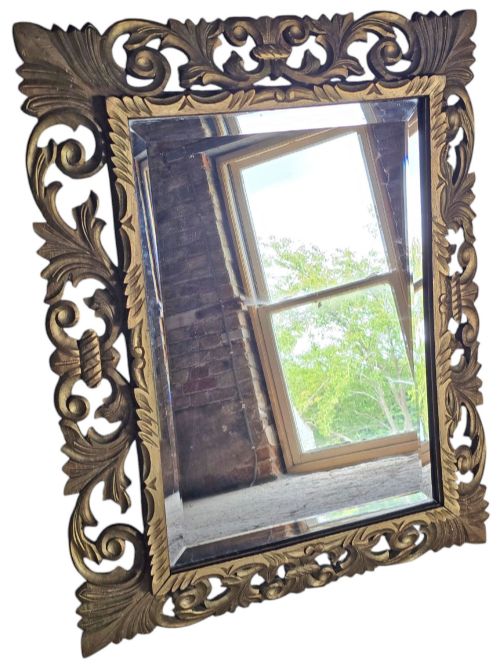
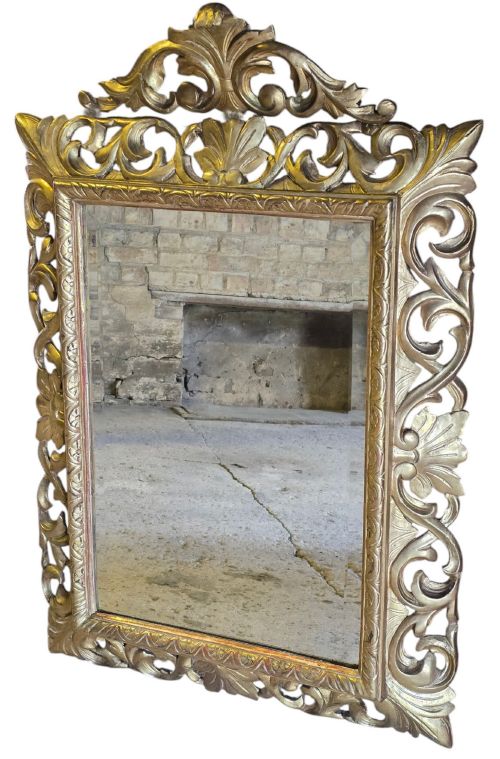
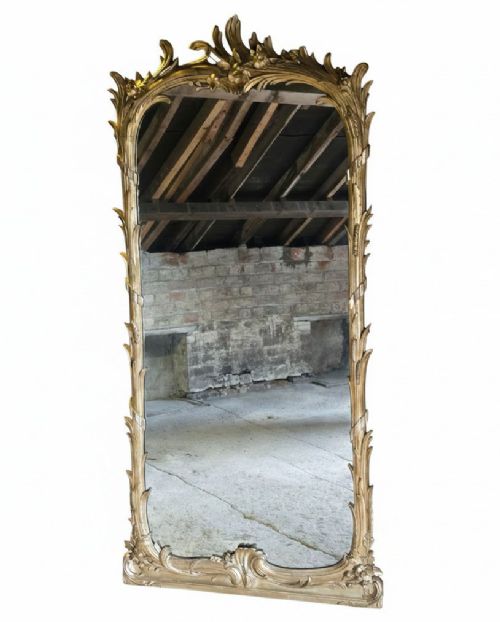
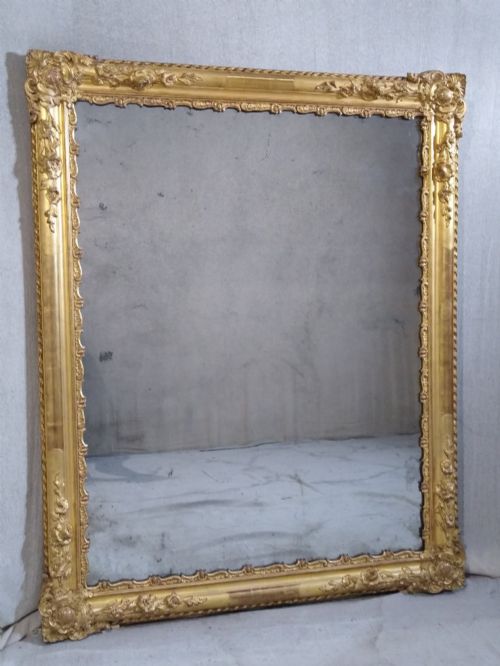


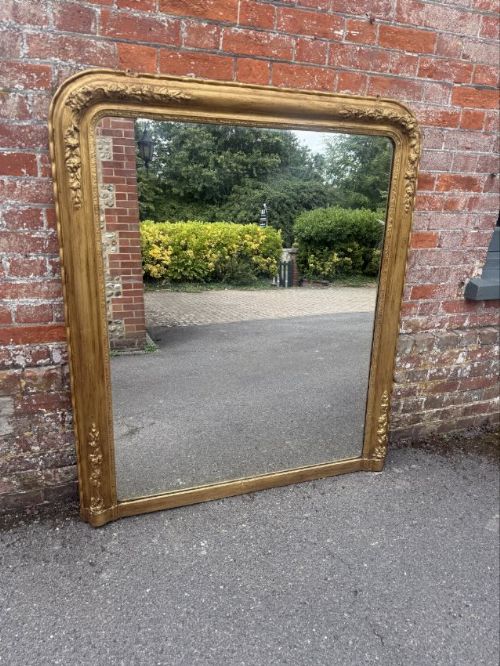
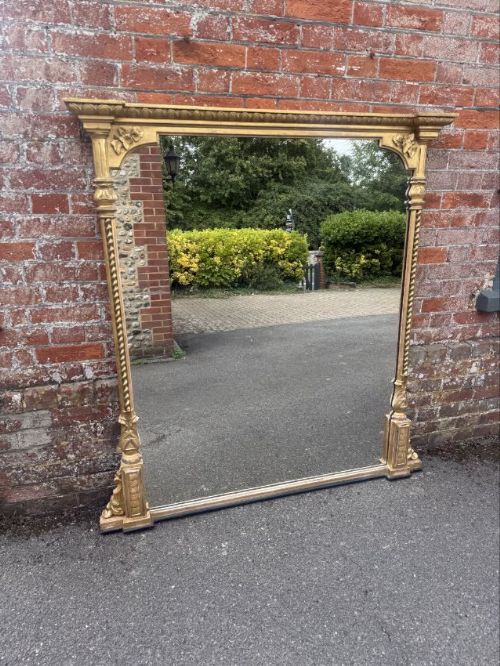
Large Carved Gilt Mirror
A large carved gilt mirror brings height and reflected light to a room, anchoring a chimney breast or opening up a narrow hall.
Large Carved Gilt Mirror
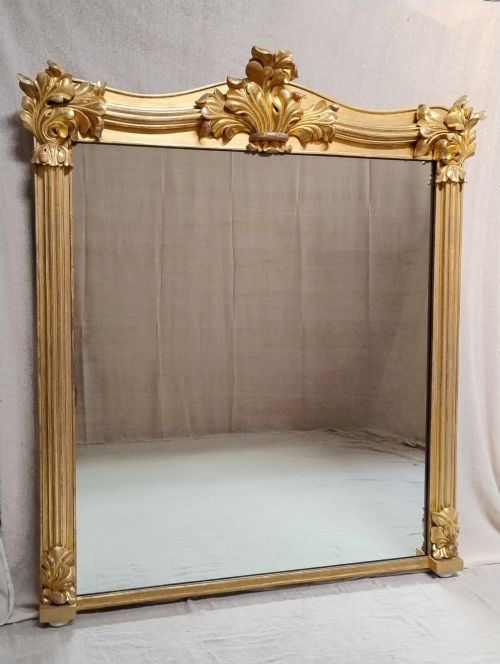
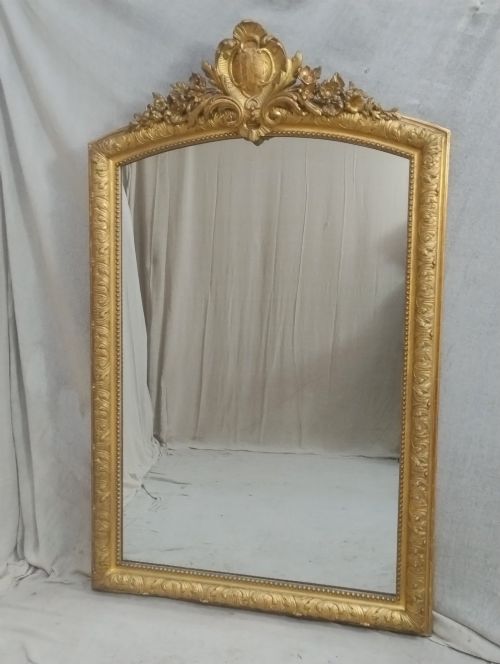
A large carved gilt mirror functions as a dominant architectural focal point, historically designed to hang above a fireplace mantelpiece or serve as a full-length leaner mirror in grand reception rooms. These pieces originate primarily from the nineteenth and eighteenth centuries, embracing periods such as the Georgian, Victorian, Regency, and Napoleon III eras.
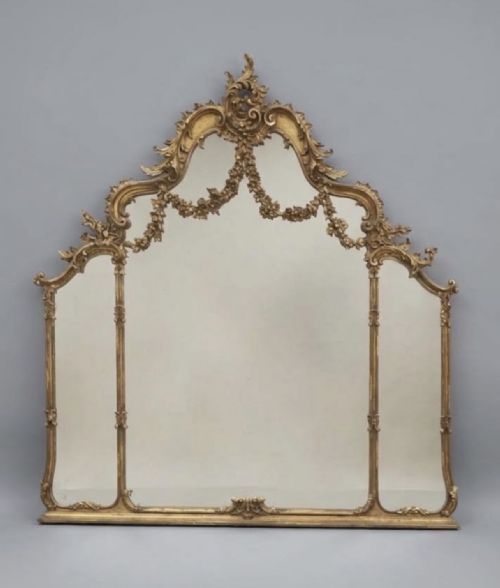
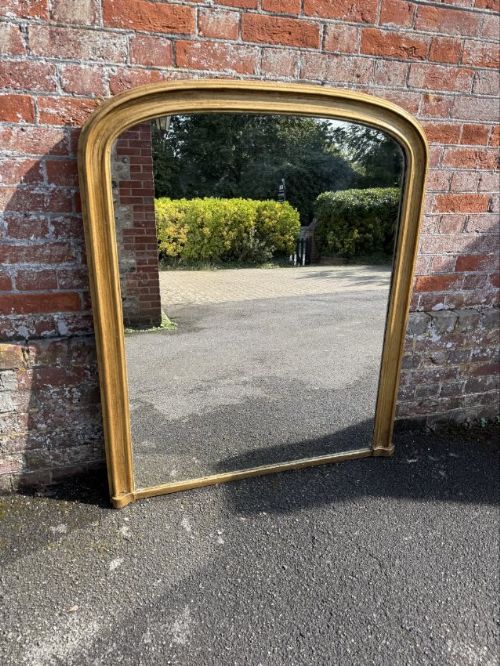
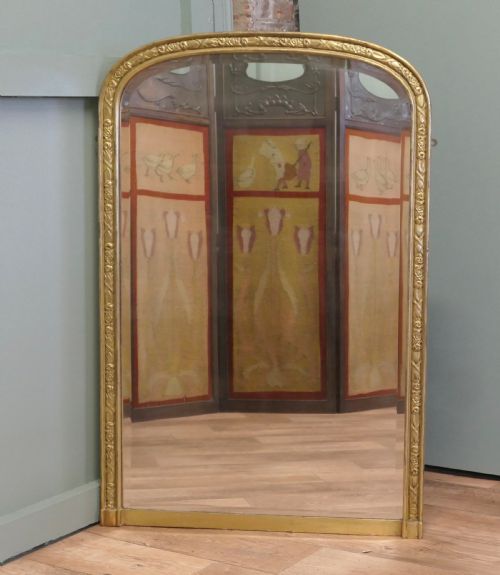
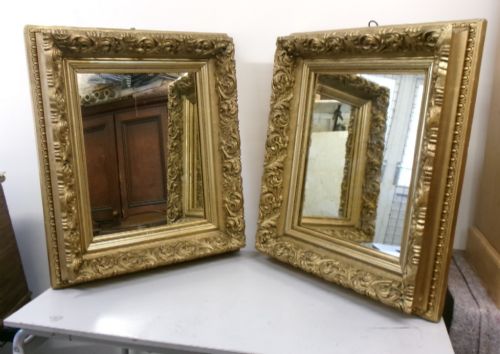
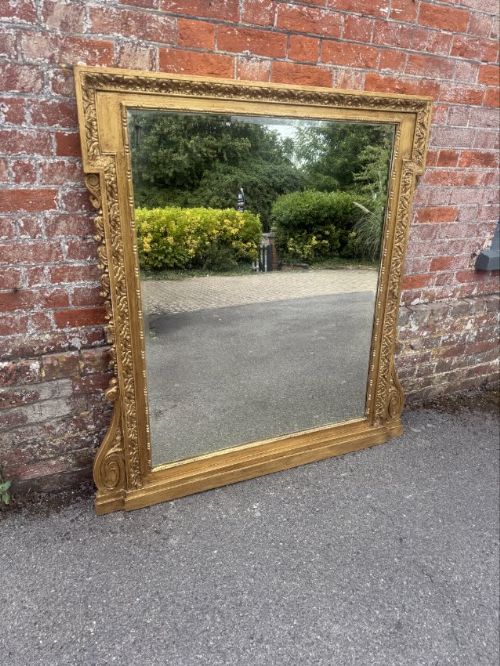
The inventory on this page consists predominantly of nineteenth-century overmantel mirrors and architectural wall mirrors from English and French workshops. Forms range from arched-top and shaped-top designs to rectangular pier glasses and oval frames.
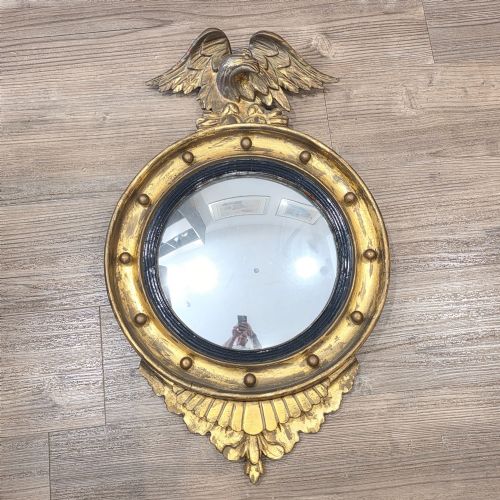
Stylistic influences span from French Rococo Revival and Louis Philippe to Florentine and Chinese Chippendale, showing intricate carvings of ribbon crests, rope twists, and eagles.
How They Were Made
Craftsmen built the structural foundations using timber or wood, applying layers of gesso - a chalk and glue mixture - to the carved wooden base in order to create a smooth, responsive surface for fine detailing and relief work.
Gold leaf or composition metal was then meticulously applied over the prepared gesso surfaces, frequently accompanied by areas of ebonised wood or silver-gilt detailing to provide contrast.
Mirrored glass plates, including traditional mirror glass and historical mercury glass, were set within the frames, sometimes secured with heavy timber backing boards.
Listings feature eighteenth-century, nineteenth-century, and twentieth-century periods, spanning Georgian, Victorian, Regency, and Edwardian eras.
What Varies in Quality
The depth, crispness, and hand-carved precision of the wooden ornament separate standard production from exceptional examples, as deep undercut relief work requires master joinery and carving skill.
The integrity of the original gilding and gesso layers dictates the historical authenticity of a piece, distinguishing untouched gold leaf surfaces from later or heavy-handed overpainting.
Proportion and scale play vital roles, where balanced framing, original mirror glass plates, and harmonious architectural proportions elevate a statement piece above standard domestic mirrors.
The Large Carved Gilt Mirror Glossary
- Gesso
- A preparation mixture consisting of a binder mixed with chalk, gypsum, or pigment, applied to wood frames to create a smooth surface for gilding. This layer holds the intricate relief details.
- Giltwood
- Timber that has been coated with gold leaf or a gold-coloured metallic finish. It provides the characteristic warm reflective brilliance of antique frames.
- Overmantel Mirror
- A large mirror specifically proportioned to hang on the wall directly above a fireplace mantel. These pieces traditionally reflect the hearth and distribute light across the room.
- Pier Glass
- A tall, narrow mirror designed to hang on the wall space between two windows, often placed above a matching pier table. They maximise natural light in formal rooms.
- Mercury Glass
- An early type of double-walled silvered glass manufactured by pouring a mercury amalgam between two glass layers. It creates a cloudy, mottled reflection highly prized by collectors.
Large Carved Gilt Mirror: Frequently Asked Questions
Where should I hang a large overmantel mirror?
These mirrors were historically designed to sit centrally above a fireplace mantelpiece, where they anchor the room and reflect light from opposing windows. Ensure the wall structure and fixings can support the substantial weight of the timber and glass.
Alternatively, large leaner mirrors can be positioned directly on the floor against a living room or hallway wall to create an illusion of expanded space.
How do I identify a nineteenth-century gilt mirror?
Look closely at the construction materials, construction joints, and the composition of the frame beneath the surface. Nineteenth-century examples frequently combine carved wood foundations with thick gesso layers and hand-applied gold leaf.
Details such as original mirror glass, historic backing boards, and traditional period styles like Rococo Revival or Louis Philippe further confirm the era of production.
Can I lean these mirrors against a wall instead of hanging them?
Large architectural mirrors, particularly French chateau leaner formats, are structurally designed to rest securely against a wall surface. This placement offers flexibility in room layout without requiring heavy wall fixings.
When choosing this option, ensure the base rests evenly and the top is safely secured to prevent accidental tipping.
What is the difference between giltwood and composition ornamentation?
Giltwood frames feature hand-carved wooden details directly gilded with gold leaf, showcasing sharp relief work and individual chisel marks. Composition ornaments are moulded from a paste of putty, resin, and glue, then pressed and applied to the wooden frame.
Many antique pieces utilise a hybrid approach, combining carved wooden structural elements with moulded composition decorative motifs.