


Large Brass Candle Stands
Large brass candle stands bring weight and warm reflection to a room, offering substantial presence through heavy metal and tall proportions.
Large Brass Candle Stands
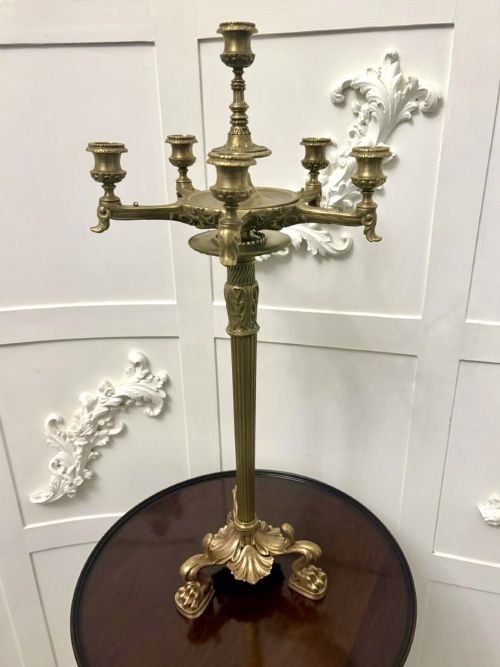
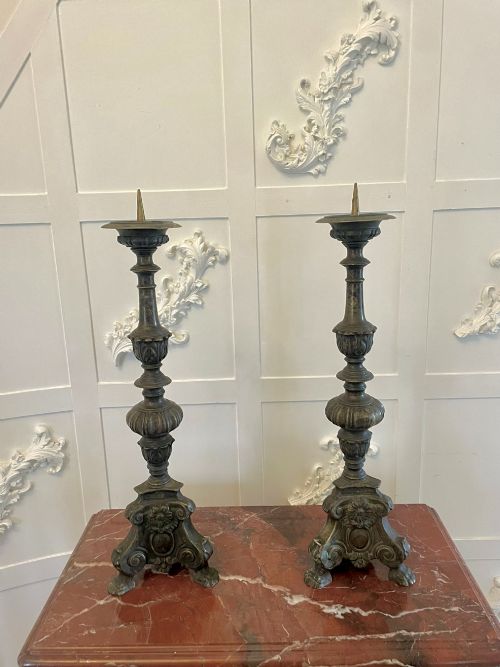
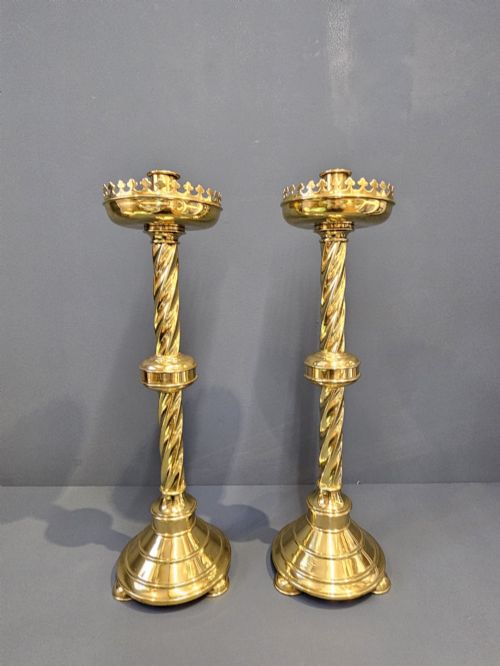
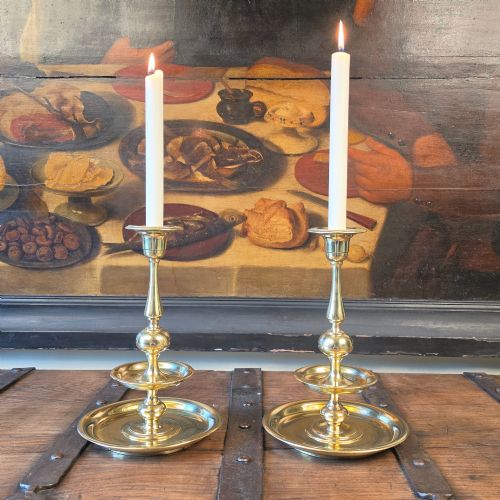
Large brass candle stands encompass tall floor-standing holders, heavy church prickets, and matched pairs designed for significant interiors. When searching for large brass candle stands, a buyer typically encounters Victorian ecclesiastical pieces and nineteenth-century domestic designs.
How they were made
Constructed primarily from cast and turned brass, many pieces incorporate complementary materials such as wrought iron, copper, bronze, and gilt bronze elements. Wooden components in oak and mahogany occasionally support brass sconces.
Manufacturing methods rely on traditional foundry casting, hand-engraving, and turning on lathes to achieve the heavy stems, stepped bases, and decorated drip pans recorded across the period.
One set of graduated Masonic candlesticks proves that even Freemasons enjoyed a good game of proportional stacking.
What varies in quality
Quality rests in the crispness of the casting detail, the weight of the metal, and the integrity of the construction across heavy bases and stems. Finer examples display deep hand-engraving, substantial gauge brass, and well-balanced proportions without modern repairs.
The distinction between standard domestic items and high-end ecclesiastical or signed school pieces lies in the complexity of the ornamentation, such as corinthian column detailing or complex pricket assemblies.
The Large Brass Candle Stands Glossary
- Pricket
- A sharp metal spike on a candlestick designed to hold a candle with a hollow base.
- Candelabrum
- A large branched candlestick holder designed to support multiple candles simultaneously.
- Gilt bronze
- Metal cast in bronze and treated with a gold-coloured surface finish, often termed ormolu.
- Knop
- A prominent rounded swelling or decorative knob on the stem of a candlestick.
Large Brass Candle Stands: Frequently Asked Questions
How do I clean large brass candle stands?
Maintenance requires gentle dusting and occasional cleaning with appropriate metal care products to preserve the historical surface without removing patination.
Avoid harsh abrasives that strip away the aged character accumulated over decades of use.
Were these stands used in churches?
Many large pieces originate from ecclesiastical settings, functioning as heavy church candlesticks or altar prickets for tall wax tapers.
Others served grand domestic interiors during the Victorian period and earlier centuries.
Can I use standard candles on pricket stands?
Pricket stands require candles with a pierced base to sit securely upon the upward-facing metal spike.
Standard flat-bottomed candles will not balance correctly without a suitable adapter or a properly prepared candle base.
How do I date a brass candlestick?
Dating relies on observing manufacturing marks, casting techniques, base construction, and stylistic clues typical of periods like the Victorian era or nineteenth century.
Turned profiles and assembly methods often reveal the era of production more accurately than surface appearance alone.