
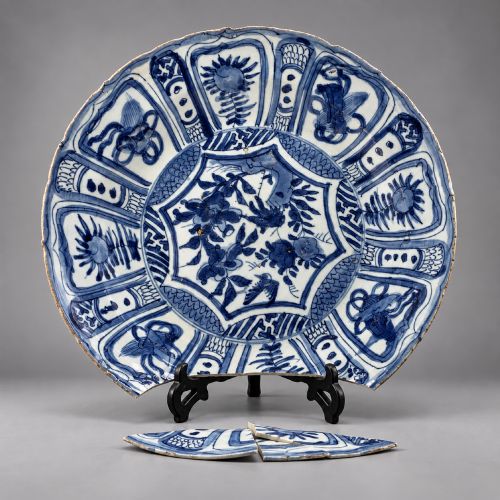





Large Arita Porcelain Dish
These large arita porcelain dish examples bring remarkable scale and traditional hand-painted detail to any room.
Large Arita Porcelain Dish
A large arita porcelain dish sits among the most striking decorative achievements from Japan, spanning centuries of kiln production. When searching for a large arita porcelain dish, collectors encounter expansive chargers, wide shallow bowls, and generous display plates designed to command attention.
The pieces available here stretch across the Edo and Meiji periods, alongside Victorian-era imports and early twentieth-century examples. Forms range from deep blue and white seventeenth-century chargers to vibrant nineteenth-century Japanese Imari square plates and scalloped bowls.
Originating primarily from the Arita kilns, these items served historically both as utilitarian vessels and high-status decorative objects for export and domestic display. Buyers typically find substantial circular chargers featuring scrolling foliate borders, koi carp motifs, and intricate cobalt designs.
How they were made
Potters shaped fine porcelain clay on the wheel or pressed it into moulds to create generous diameters before applying cobalt pigment beneath a clear glaze. This cobalt underglaze work provides the deep, permanent blue tones seen on seventeenth-century and blue and white pieces.
Overglaze enamel colours and gold leaf or gold gilt were frequently added in a second firing to create the rich palettes characteristic of Japanese Imari wares. Artisans utilised precise brushwork to paint complex geometric patterns, floral sprays, and figurative subjects across the wide surfaces.
What varies in quality
The strength and clarity of the cobalt underglaze define the visual impact of early blue and white pieces, where crisp lines distinguish superior work from muddy execution. In Imari examples, the richness and saturation of the enamel colours against the white porcelain ground dictate overall desirability.
The fineness of the potting and the stability of large plates during high-temperature firing separate standard export items from exceptional studio output. Superior pieces maintain a balanced form without warping, paired with confident, unrestrained brushwork in the scrolling foliate borders.
The Large Arita Porcelain Dish Glossary
- Arita
- The historic Japanese town and surrounding region in Hizen province where porcelain production began in the early seventeenth century.
- Imari
- A style of Japanese export porcelain decorated in underglaze blue, iron red, and gold, named after the port from which the wares were shipped.
- Charger
- A large decorative plate or shallow dish traditionally used for presentation rather than for serving food at the table.
- Edo Period
- The period in Japanese history spanning from sixteen hundred and three to eighteen hundred and sixty-eight, noted for economic growth and stability.
- Meiji Period
- The era from eighteen hundred and sixty-eight to nineteen hundred and twelve, characterised by the opening of Japan to Western trade and significant artistic output.
Large Arita Porcelain Dish: Frequently Asked Questions
How do I date an Arita dish?
Dating relies on stylistic shifts, potting characteristics, and the depth of the underglaze cobalt pigment. Early pieces often show coarser potting and looser brushwork compared to later nineteenth-century output.
Examining the foot ring and glaze pooling provides further clues to the period of manufacture. Comparing motifs with established museum examples helps narrow the decade.
Can these large dishes be hung on walls?
Many large chargers and plates were manufactured with display in mind, featuring substantial diameters that suit vertical presentation. Specialist wall fixings designed for heavy porcelain must be utilised to ensure secure support.
Weight distribution is key when mounting pieces that exceed forty or fifty centimetres across. Professional framing or specialist spring clips protect the rim from pressure damage.
How should I clean antique porcelain?
Dusting with a soft, dry microfibre cloth is generally sufficient for regular maintenance of display pieces. Moisture should be avoided, particularly on items with gold leaf or overglaze enamel highlights that might lift.
Harsh chemical cleaners and immersion in water must be avoided at all times. Professional conservation advice should be sought if deeper cleaning is required.