
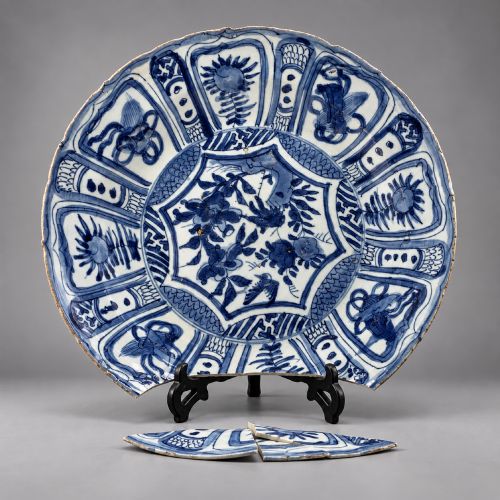
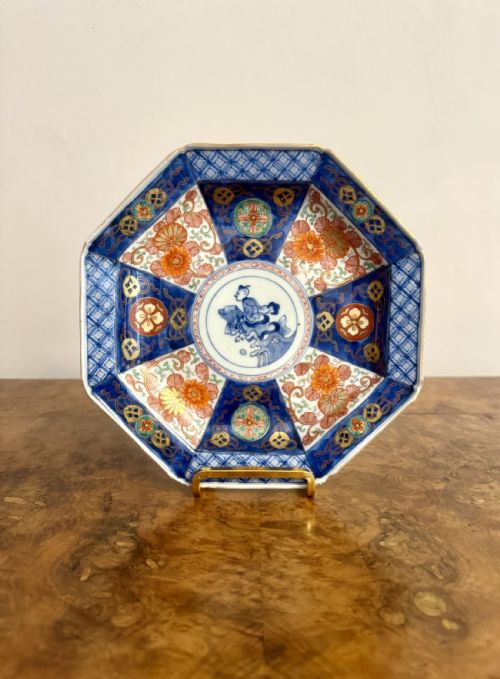


Edo Period Arita Charger
These edo period arita charger pieces are robust ceramic tablewares and decorative chargers that bring vibrant painted colour and pattern to a room.
Edo Period Arita Charger
When you search for an edo period arita charger, you encounter large ceramic plates, dishes, bowls, and chargers originating from Japan across the seventeenth, eighteenth, nineteenth, and early twentieth centuries. These forms include hexagonal, octagonal, square, fan-shaped, and scalloped edges alongside traditional circular chargers.
The versions most common on this page span the Edo period through to later nineteenth and early twentieth century interpretations. They arrive in various groupings, from single display plates to pairs and larger collections featuring cranes and foliate borders.
How they were made
These pieces are constructed from porcelain and ceramic, shaped into plates, chargers, and bowls. Artisans applied cobalt underglaze, enamel, and gold leaf to decorate the surfaces.
Makers utilised hand painted techniques, glaze, and gilt detailing, sometimes finishing pieces with wooden presentation boxes.
Cranes make regular appearances across these chargers, standing quietly among scrolling foliage while waiting for someone to admire their painted feathers.
What varies in quality
The standard of an edo period arita charger rests on the precision of the hand painted brushwork and the clarity of the cobalt underglaze and enamel colours. Stronger pieces display deliberate control within scrolling foliate borders and detailed motifs such as cranes.
Form complexity also separates examples, with unusual shapes like hexagonal, octagonal, fan-shaped, and scalloped edges demanding greater skill from the potter than simple circular bowls and plates.
The Edo Period Arita Charger Glossary
- Arita
- A town in Japan renowned for its porcelain production centre. Pieces from this region often bear characteristic blue and white or coloured designs.
- Imari
- A style of Japanese porcelain exported from European trade ports, typically featuring cobalt underglaze blue, iron red enamel, and gold highlights.
- Charger
- A large decorative plate utilised historically for service or display rather than everyday dining.
- Edo Period
- The historical era in Japan lasting from 1603 to 1867, characterised by economic growth and flourishing arts including ceramics.
- Cobalt Underglaze
- A blue pigment applied to ceramic bodies before glazing and firing, producing durable decoration beneath a glassy surface.
Edo Period Arita Charger: Frequently Asked Questions
How are edo period arita chargers displayed?
These large ceramic chargers and plates suit wall mounting or placement on sturdy stands to showcase their detailed painted surfaces. Collectors often position them within cabinets or on tabletops where adequate support handles their weight.
Pairing matching plates or grouping collections together creates a balanced visual impact in a room. Ensuring stable placement protects the porcelain edges from accidental knocks.
What designs appear on these chargers?
The surface decoration frequently incorporates scrolling foliate borders and natural motifs like cranes painted in cobalt underglaze and enamel. Gold leaf and gilt details often highlight specific areas of the pattern.
Geometric formats such as square, hexagonal, octagonal, and fan shapes provide alternative canvases for these traditional Japanese designs.
How do I care for antique porcelain?
Dusting gently with a soft, dry cloth keeps the glazed and gilded surfaces clean without risking abrasion. Avoiding harsh cleaning agents preserves the delicate enamel and gold leaf applied over the ceramic body.
Keeping pieces away from direct sunlight and areas prone to sudden temperature changes protects the glaze and structural integrity over time.