



Japanese Blue White Platter
These japanese blue white platter pieces are striking porcelain serving vessels that anchor a dining table or illuminate a wall.
Japanese Blue White Platter
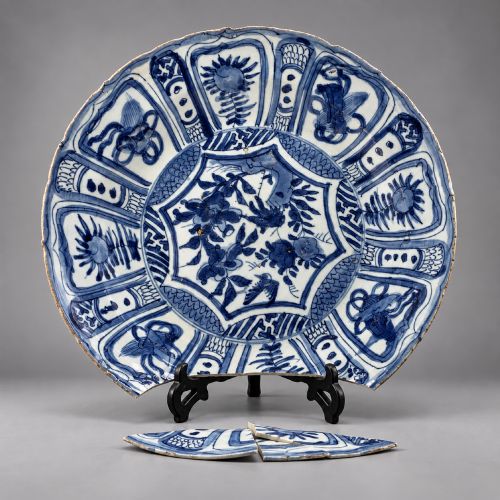
A japanese blue white platter encompasses large chargers, decorative plates, and wide dishes spanning several centuries of East Asian ceramic production. Buyers examining this page encounter pieces ranging from the robust forms of the Edo period to later Meiji examples.
Materials and methods
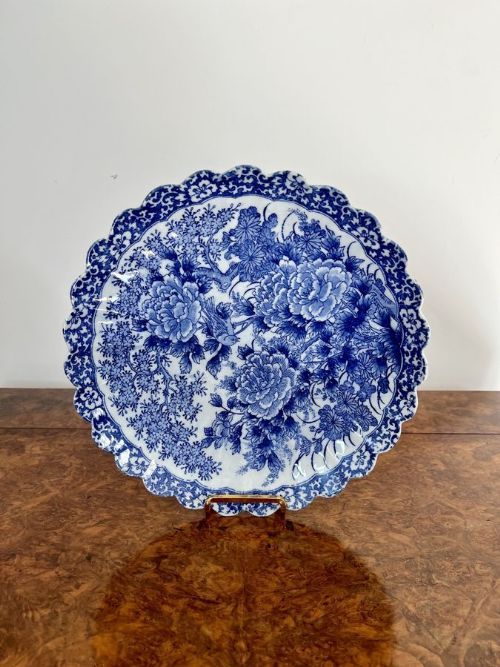
Potters shaped fine porcelain clay into heavy chargers and wide plates before applying cobalt pigment beneath a clear glaze. Firing at high temperatures fused the cobalt pigment into the porcelain body, producing deep blue designs that endure without fading.
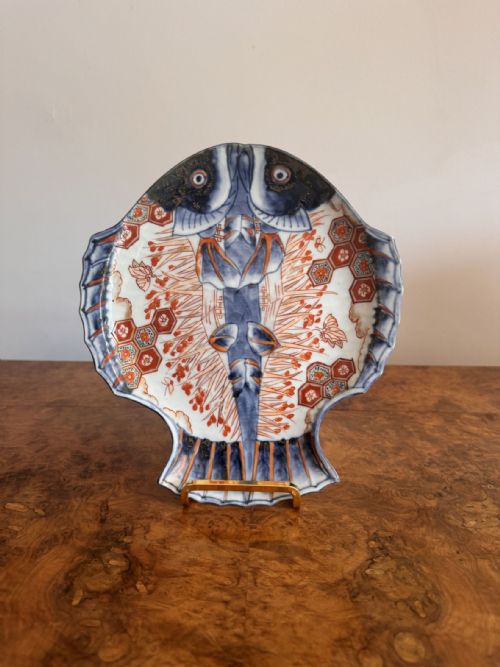
Many examples incorporate supplementary enamels and gold gilt or gold leaf applied over the glaze during subsequent firings. This technique combined cobalt underglaze painting with rich surface colour, particularly in Imari traditions.
Listings span seventeenth-century Edo pieces through to nineteenth-century Meiji examples, utilising porcelain, cobalt glaze, and gold leaf.
Markers of distinction
The skill of the brushwork defines the upper tiers of these ceramics, separating hurried commercial output from carefully executed painterly scenes of cranes, koi carp, and scrolling foliage. Precision in the cobalt pigment application ensures crisp outlines and balanced compositions across the porcelain surface.
Form and proportion also distinguish the finer examples, particularly where octagonal shapes, fish forms, or scalloped edges maintain structural symmetry. The depth and clarity of the glaze further elevate the visual impact of the porcelain body.
The Japanese Blue White Platter Glossary
- Arita
- A Japanese town famous for its porcelain production, serving as the historical centre for many chargers and plates seen on this page.
- Imari
- A style of Japanese porcelain decorated in underglaze blue and overglaze colours, frequently featuring iron red and gold.
- Charger
- A large decorative plate or platter traditionally used for serving food or displayed upright on furniture and walls.
- Cobalt Underglaze
- A blue pigment applied to pottery beneath a transparent glaze before the final high-temperature kiln firing.
- Edo Period
- A historical epoch in Japan spanning from sixteen hundred and three to eighteen hundred and sixty-eight, noted for distinct ceramic traditions.
Japanese Blue White Platter: Frequently Asked Questions
How do I hang a heavy charger?
Large porcelain chargers require dedicated wall-mounting hardware that distributes weight securely across the base and rim without causing stress fractures.
Professional framing shops or specialist ceramic display fixings provide padded steel springs that grip the outer edge safely.
Are these chargers safe for food?
Historic porcelain pieces from seventeenth to nineteenth-century kilns are generally recommended for display rather than active daily dining service.
Surface enamels and older glazes can be sensitive to modern detergents and abrasive cleaning implements found in contemporary kitchens.
How do I date Arita porcelain?
Dating relies on stylistic shifts in brushwork, the purity of the white porcelain body, and characteristic blue tones used during specific imperial reigns.
Comparison with documented pieces from the Edo and Meiji periods helps establish the likely decade of manufacture.
What is the difference between Imari and Arita?
Arita refers to the geographic production region where the porcelain clay was mined and fired, while Imari describes the distinct decorative aesthetic.
Imari pieces typically layer underglaze blue with iron red and gold accents over the foundational Arita porcelain structure.