



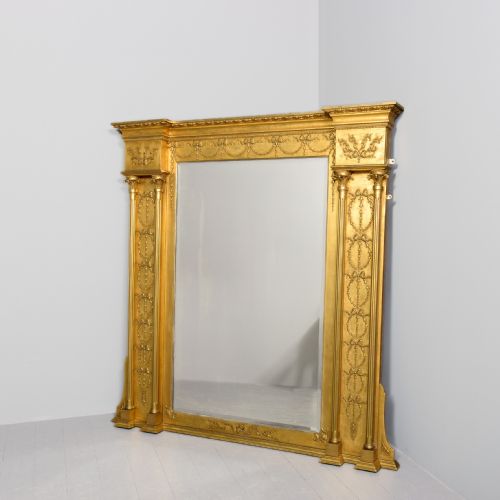

Large Architectural Mirror
A large architectural mirror brings scale and reflection to a room, drawing on centuries of design from the nineteenth century.
Large Architectural Mirror
A large architectural mirror is a substantial looking-glass designed to anchor a room, drawing heavily on classical building forms and proportions. These pieces appear primarily as overmantel mirrors, pier mirrors, and wall mirrors originating from the nineteenth century.
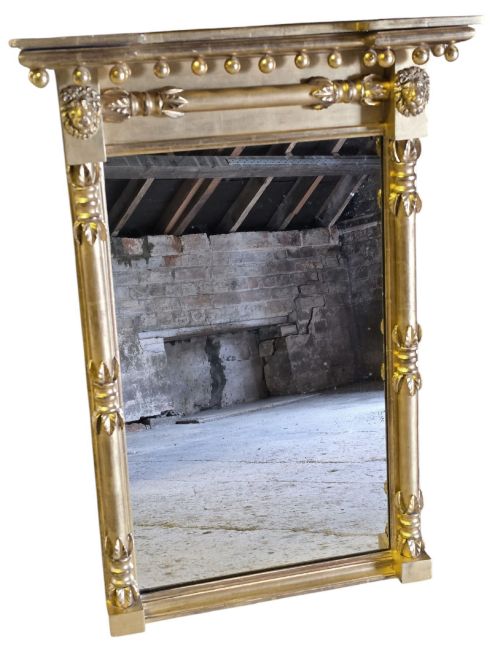
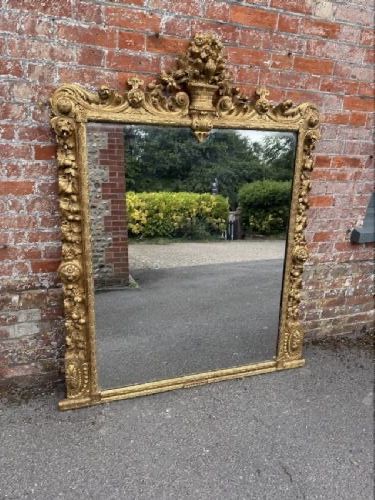
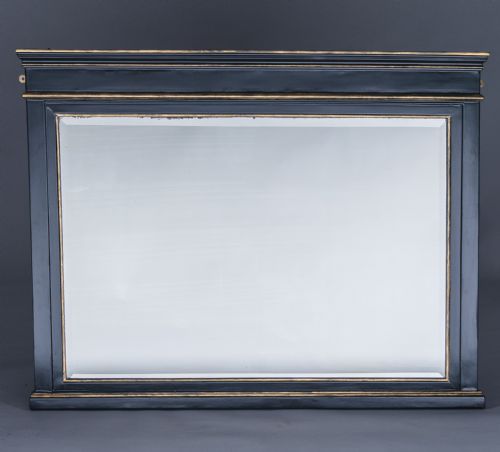
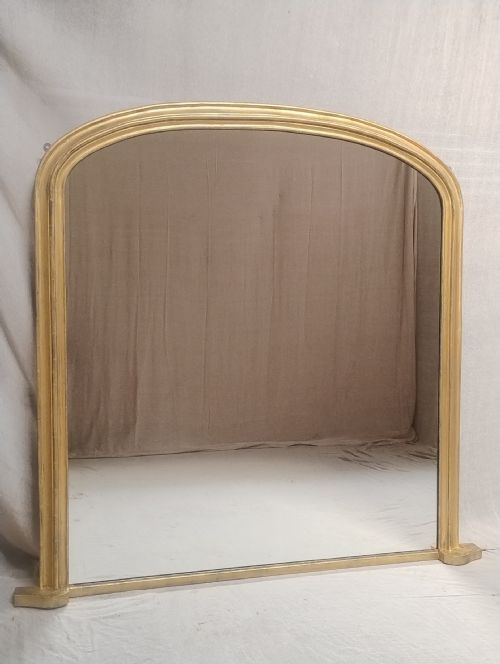
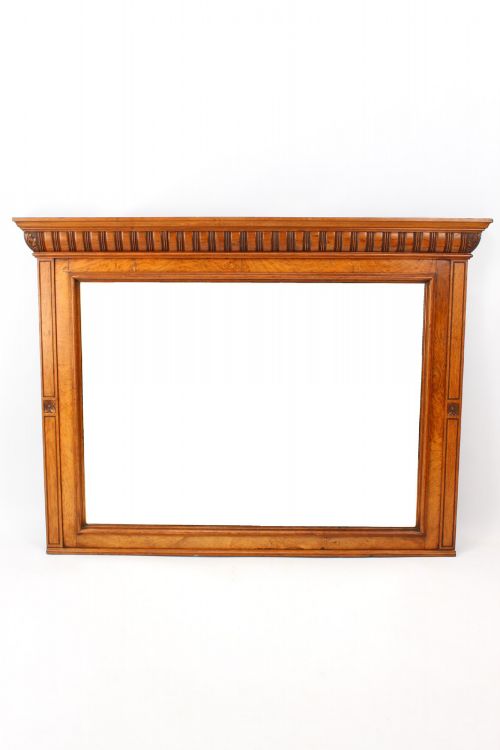
The version most commonly met on this page is the nineteenth-century overmantel mirror, constructed to sit above a fireplace and reflect light across the floor. Such pieces often incorporate gesso, giltwood, and carved wood frames with arched tops or column details.
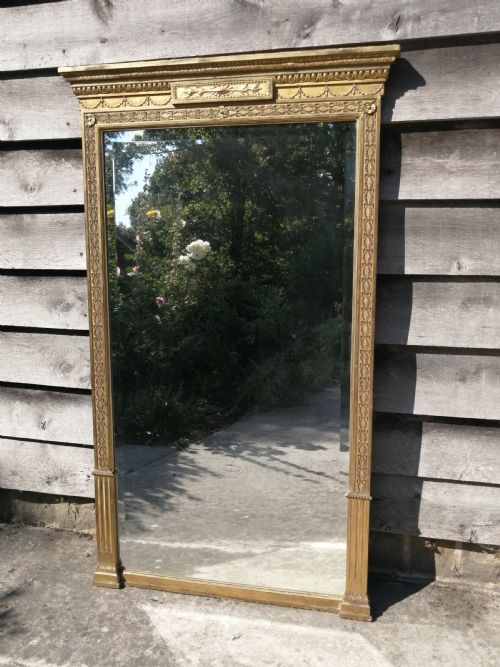
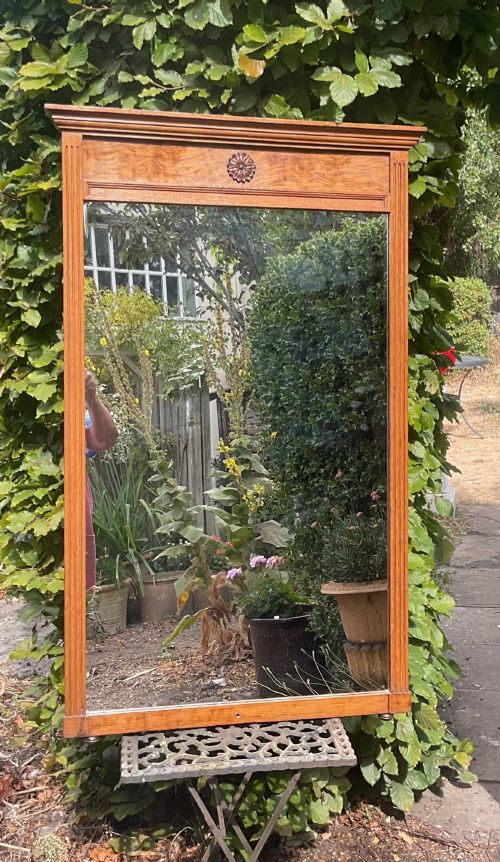
Beyond the standard overmantel, buyers encounter floor mirrors, dressing mirrors, and wall-hanging examples shaped by Victorian, Regency, and Gothic Revival aesthetics. These functional items double as decorative centerpieces that mimic window proportions or stone cornices.
How they were made
Makers built these frames using solid timbers such as oak, walnut, and mahogany, often applying layers of gesso to carve intricate surface details. Artisans then finished these wooden bases with gold leaf, parcel gilt, or paint to achieve a polished or gilded appearance.
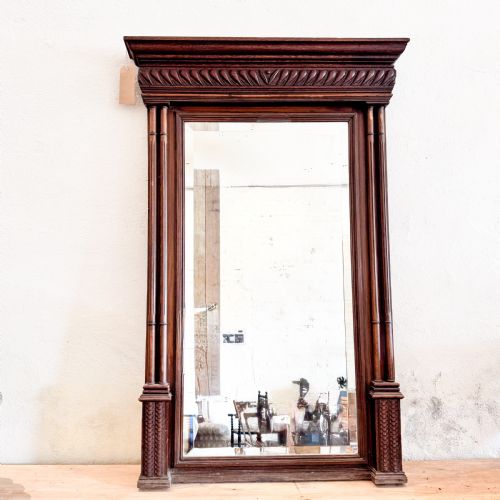
Mirror plates were set into the carved wooden and gesso housings, sometimes retaining original glass alongside robust backing boards. Architectural framing elements like side columns, pediments, and scrollwork were joined by hand to support the heavy weight of the glass.
Overmantel mirrors dominate the selection, accompanied by pier, dressing, and wall mirrors.
What varies in quality
Quality rests in the depth and crispness of the hand-carved wood and gesso ornamentation, separating sharp architectural mouldings from softer, blurred casts. The integrity of the original gilding or paint finish further dictates the visual success of the piece.
The presence of the original mirror plate and the structural stability of the heavy wooden frame distinguish superior examples. Pieces demonstrating thoughtful proportions and intact architectural elements like columns or arched tops represent the upper tier of the range.
Nosotti's
The Large Architectural Mirror Glossary
- Gesso
- A plaster-like mixture applied to wood frames to provide a smooth surface for carving and gilding. This material allows artisans to create crisp relief decorations.
- Giltwood
- Timber coated with gold leaf or metallic powder. It provides a bright, reflective surface popular in nineteenth-century formal interiors.
- Overmantel Mirror
- A large mirror specifically proportioned to hang on the wall above a fireplace mantel. These pieces often feature horizontal formats to match the width of the hearth.
- Pier Mirror
- A tall looking-glass designed to fit the narrow wall space between two windows. They frequently rest on console tables or floor brackets.
- Trumeau Mirror
- A decorative wall mirror that incorporates a painted panel or carved artwork above the glass plate. Originating in French interior design, it mimics wood-panelled wall sections.
Large Architectural Mirror: Frequently Asked Questions
Where should a large architectural mirror hang?
These mirrors traditionally anchor reception spaces, sitting securely above a fireplace mantel to bounce daylight through the room. They also function effectively on main walls where their substantial height creates an illusion of extended space.
Because of their considerable weight, they require solid wall fixings or proper floor support when used as leaner mirrors. Positioning them opposite a window maximises the natural light they capture and distribute.
How do I identify a Victorian mirror?
Victorian examples often feature dark woods like oak and walnut, alongside ebonised finishes and heavy gesso decorations. They lean toward robust proportions and eclectic historicism, drawing on classical and Gothic revival styles.
Examining the construction of the frame and the backing boards helps confirm the nineteenth-century origin. The presence of characteristic Victorian decorative motifs, such as Vitruvian scrolls, further clarifies the period.
What is a pier mirror?
A pier mirror is a tall, narrow looking-glass historically manufactured to hang on the solid wall between two windows. This placement maximised interior illumination in nineteenth-century parlours.
They frequently feature matching consoles or column supports that integrate with the architectural trim of the room. Their vertical format distinguishes them from wide overmantel mirrors.
Are original mirror plates common?
Original glass plates do survive in nineteenth-century frames, offering a softer, undulating reflection compared to modern float glass. They often show gentle foxing and age spots.
When a piece retains its original plate, it adds historical integrity to the object. Replacements do occur during routine maintenance over the lifespan of the frame.