

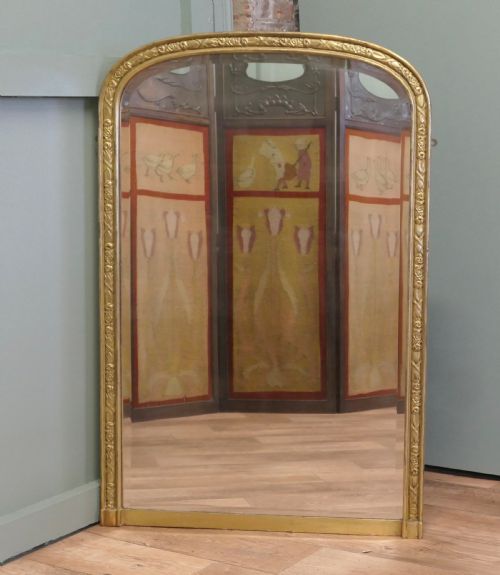

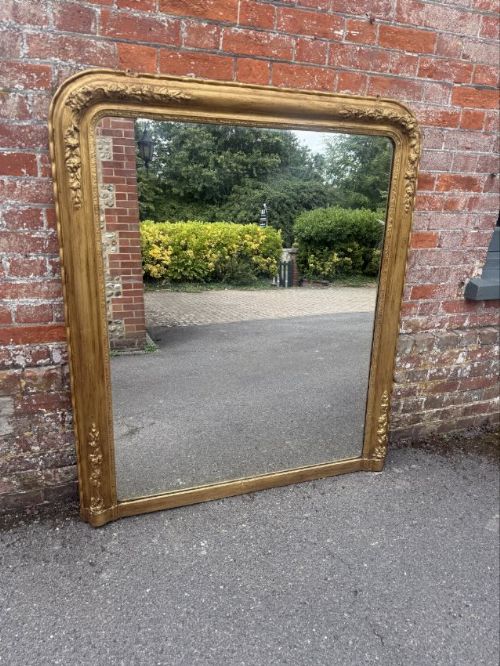
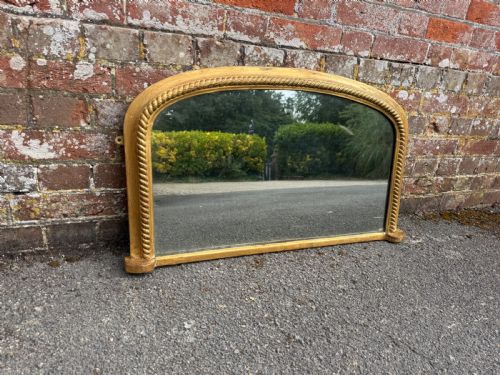
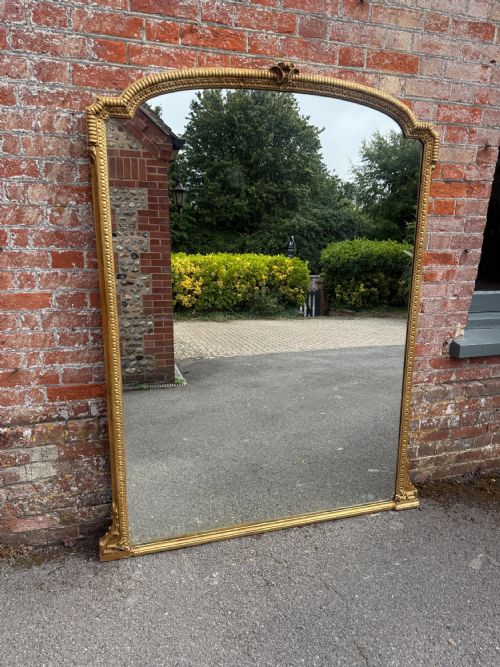
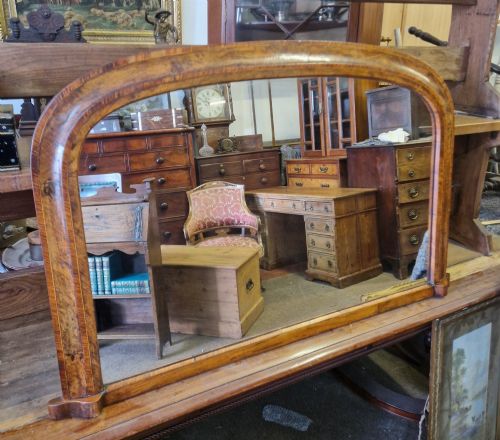
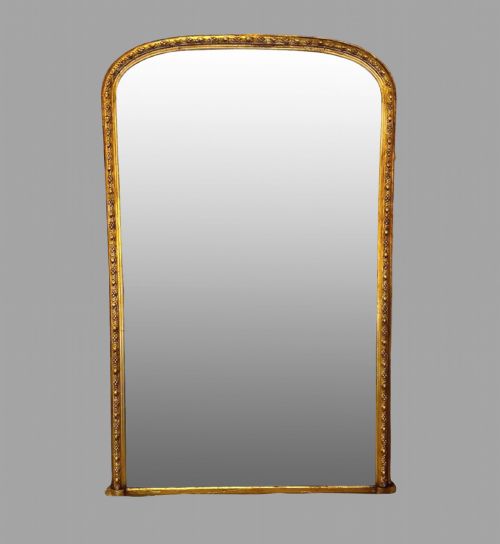
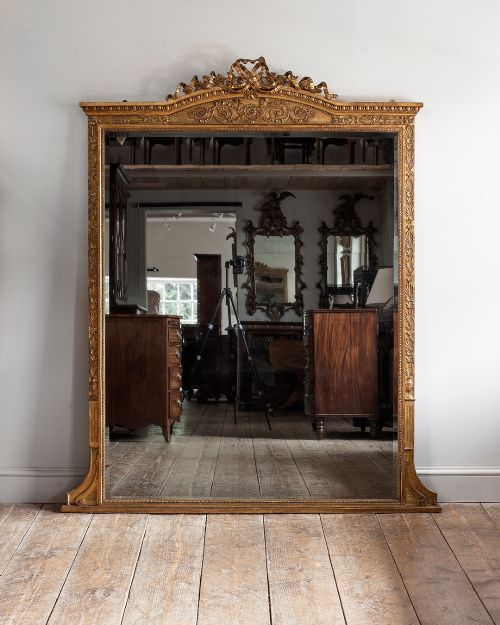
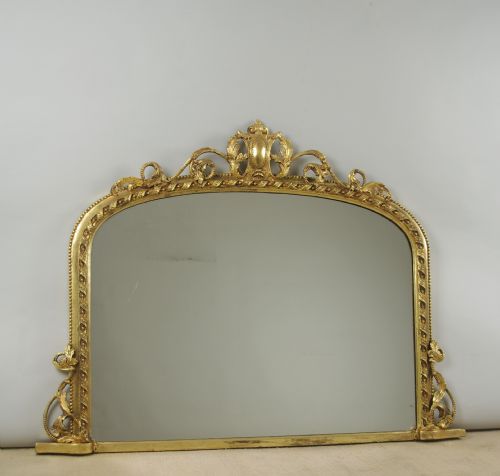


Large Arch Top Mirror
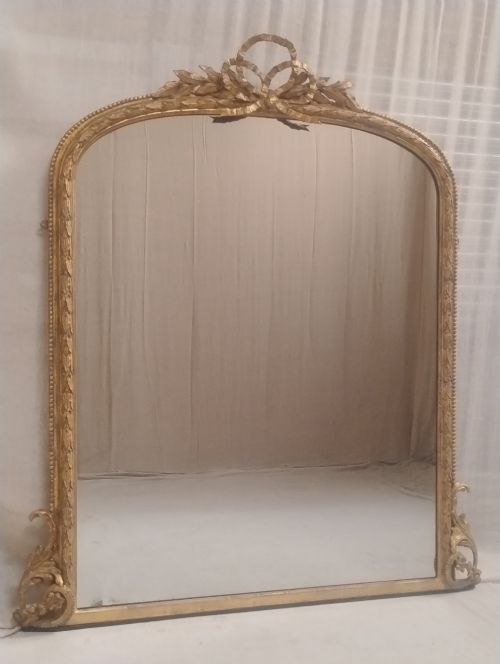
A large arch top mirror commands attention above a fireplace or along a grand wall, bringing light and nineteenth-century presence into a room.

Large Arch Top Mirror
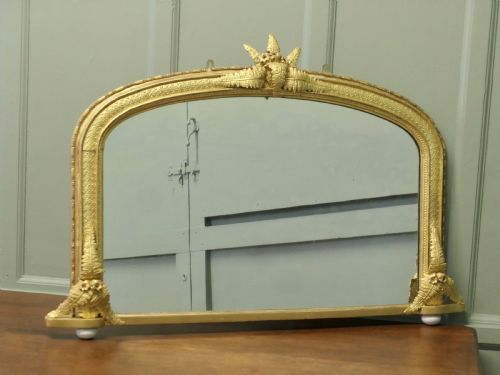
Buyers seeking a large arch top mirror encounter substantial nineteenth-century pieces designed to anchor principal rooms. English overmantel mirrors dominate the selection, shaped specifically to hang above drawing-room mantelpieces.
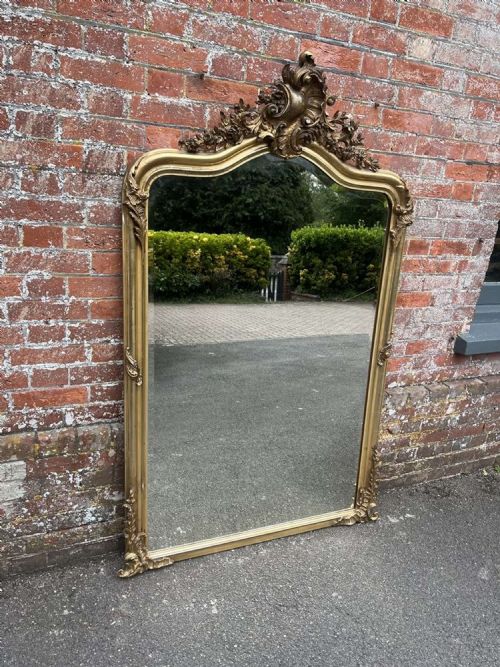
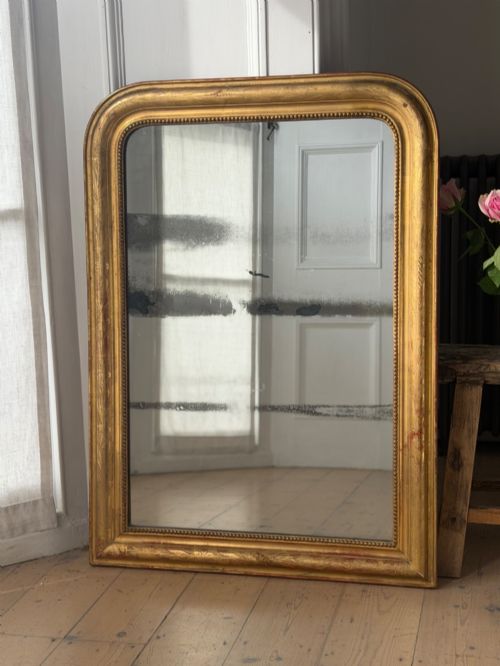
Originating predominantly from Victorian England and nineteenth-century France, these pieces bridge the gap between architectural fittings and decorative art. French Louis Philippe and Rococo examples sit alongside robust English carved wood designs.
The primary forms include horizontal overmantels and taller wall-hanging mirrors featuring curved crests. Many retain their original proportions intended to reflect light and expand the perceived space of period interiors.
How They Were Made
Craftsmen built the foundations of carved wood, applying layers of gesso to create smooth surfaces for intricate ornamentation. Gold leaf and liquid gilding were then applied over the prepared ground to achieve a brilliant metallic finish.
Glass plates were historically silvered using mercury techniques or early chemical processes, which frequently result in characteristic foxing over time. Frames incorporate detailed decorative elements such as tulip motifs, rope twists, and ribbed moulding.
The listings span from Georgian and Victorian eras through to the late nineteenth century, predominantly utilising wood, gesso, and gold leaf.
What Varies In Quality
The crispness of the carved wooden ornament and the depth of the gesso detailing distinguish superior examples from simpler ones. Hand-carved elements display a fluidity and precision that moulded compositions fail to replicate.
Originality of the gilding and the mirror glass heavily influences the character and standing of a piece. Retaining the authentic reflective plate and undisturbed gilt surfaces preserves the historical integrity desired by collectors.
The Large Arch Top Mirror Glossary
- Gesso
- A plaster-like mixture applied to wooden frames to provide a smooth base for gilding. This material allows artisans to carve intricate relief decoration before applying gold leaf.
- Overmantel
- A large mirror specifically proportioned to hang on the wall above a fireplace mantel. These horizontal formats were central to nineteenth-century interior arrangement.
- Foxing
- Age-related spots and discoloration appearing within the reflective silvering of older mirror glass. It serves as an indicator of historical authenticity in antique plates.
- Cartouche
- An ornamental carved frame resembling a scroll or shield, often placed at the apex of an arch top mirror. It acts as a focal point for the decorative scheme.
Large Arch Top Mirror: Frequently Asked Questions
Where should I hang an overmantel mirror?
These large mirrors traditionally hang directly above a fireplace mantel where they reflect light across the room. They also function effectively along main living room walls to anchor a space.
Ensure the wall construction supports the substantial weight of carved wood and glass before mounting.
How do I identify a Victorian mirror?
Victorian examples often feature heavy carved wood and gesso construction with distinctive motifs like rope twists or ribbed framing. English pieces from this era frequently take the wide overmantel format.
Checking the backing boards, fixings, and construction methods helps confirm the mid to late nineteenth-century period.
What is Louis Philippe style?
Louis Philippe mirrors originate from nineteenth-century France and are known for their elegant, understated arched tops. They typically feature clean frames with subtle decorative elements rather than heavy carving.
This refined aesthetic suits both traditional interiors and modern minimalist spaces.
Can antique mirror glass be replaced?
While original glass with foxing is prized by collectors, mirrors can be reglazed if the historic plate is damaged. Many pieces retain their original mercury or early silvered glass.
Consulting a specialist helps determine whether preserving the existing plate is possible.