




Large Sofa
When you search for a large antique sofa, you encounter substantial nineteenth-century seating designed for generous reception rooms and country house drawing rooms.
Large Sofa
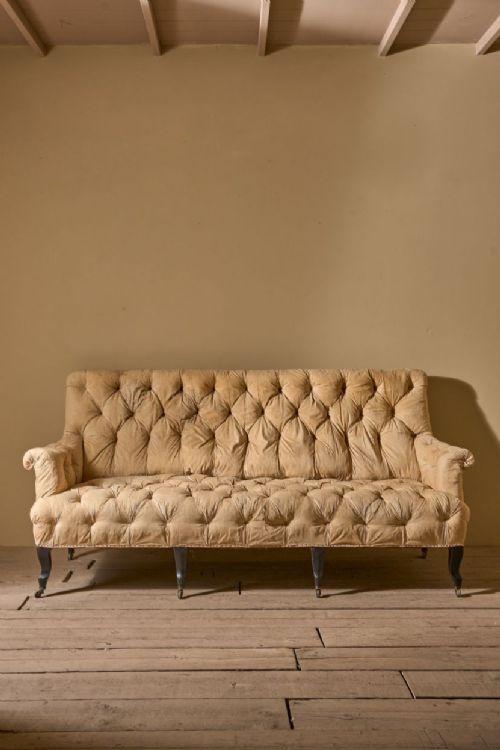
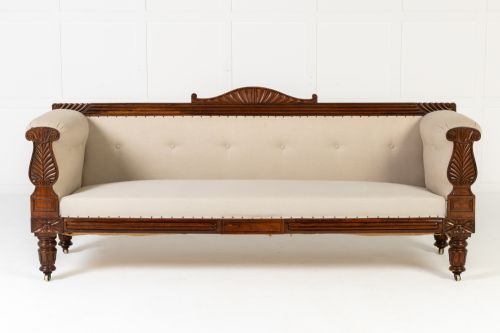
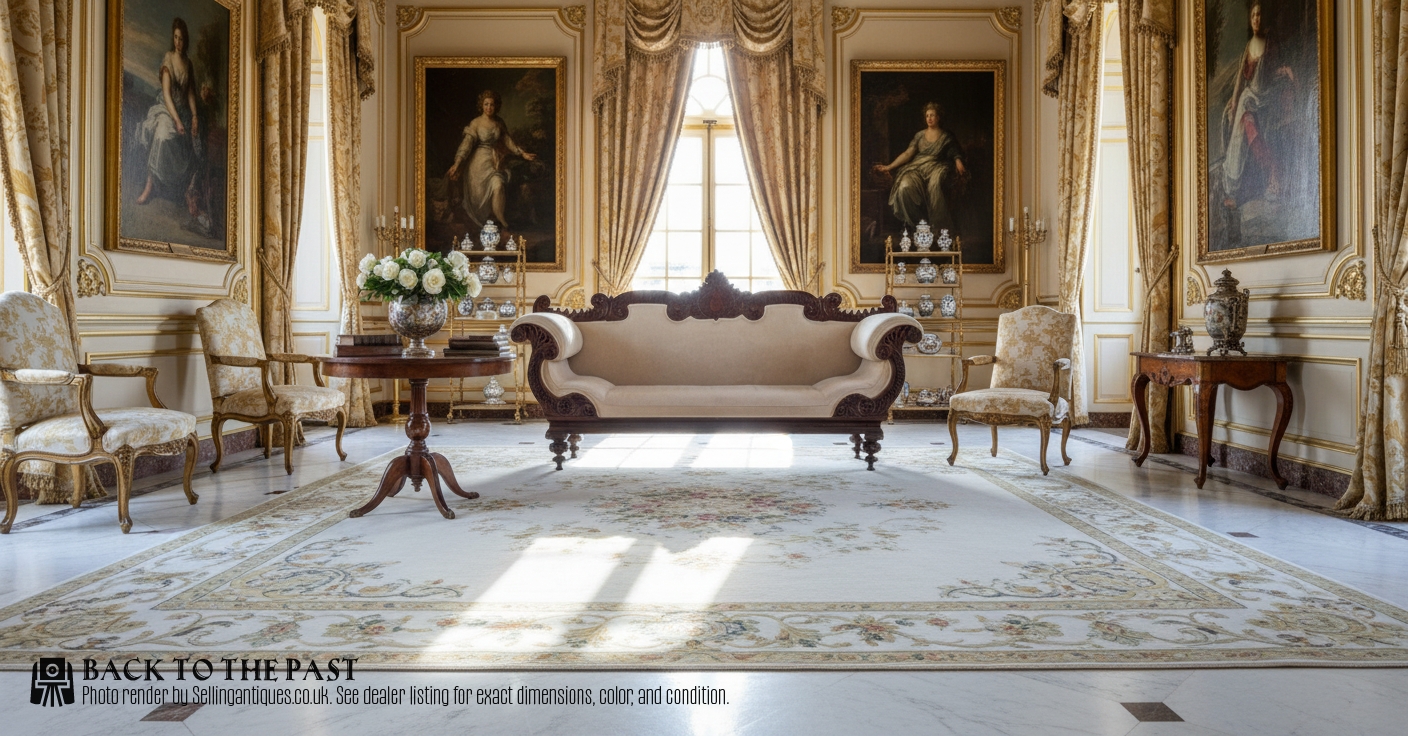
A large antique sofa provides expansive seating built during periods spanning the Georgian, Regency, William IV, and Victorian eras. These pieces frequently manifest as deep-seated country house Chesterfields, scroll-ended mahogany frames, or elaborately carved giltwood settees.
Buyers meet variations ranging from button-backed Napoleon III frames to raw leather Chesterpieces awaiting custom dyeing. The forms encompass heavy show-wood structures and expansive upholstered frameworks designed for formal entertaining.
Origins stretch from English workshops to French salons and Swedish domestic spaces. The consistent element remains an impressive scale intended to anchor substantial drawing rooms or reception halls.
How they were made
Carpenters and cabinetmakers utilised dense timbers like mahogany, rosewood, and walnut to construct the foundational frames. These woods were often hand-carved, inlaid, or polished to display deep figuring.
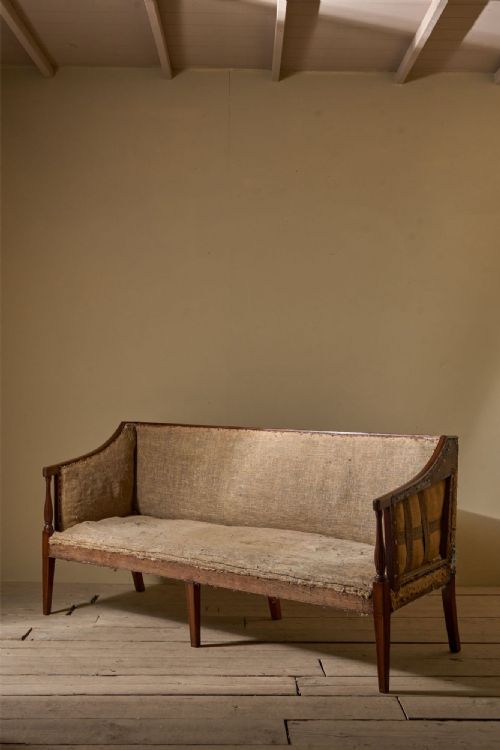
Upholstery techniques relied on natural stuffing materials held within hessian support, frequently finished with leather hides or patterned fabric. Brass castors and tacks provided functional detailing and mobility to heavy wooden bases.
Listings feature pieces spanning the 1800s through the 1960s, constructed from mahogany, rosewood, leather, and giltwood.
What varies in quality
The treatment of materials dictates enduring value, from finely figured mahogany veneers to intact original leather patination. Pieces retaining their traditional stuffing and primary show-frame finish command higher regard among collectors.
Gillows·Howard And Sons·Liberty London·William Barrow
The Large Sofa Glossary
- Chesterfield
- A deep-tufted, upholstered sofa traditionally featuring arms and back of the same height. This form relies on buttoning to secure the dense interior padding.
- Giltwood
- Timber coated with a thin layer of gold leaf or gold paint. This finish appears frequently on decorative French and English salon frames.
- Show-frame
- A wooden structural framework left visible around the upholstered portions of a seat. These exposed areas often feature elaborate carving or polished mahogany.
- Scroll end
- An architectural furniture arm that curves outward and downward in a tight spiral. This profile characterises many Regency and William IV designs.
- Hessian
- A coarse woven fabric utilised as a foundational lining beneath outer upholstery layers. It provides breathable support for traditional stuffing materials.
Large Sofa: Frequently Asked Questions
How do I date a large antique sofa?
Dating relies on observing structural transitions in the wooden frame and upholstery methods. Regency and William IV pieces often display bold mahogany scrolls, while Victorian examples introduce buttoned leather upholstery and heavy walnut frames.
Examining secondary timbers beneath the upholstery and checking for tool marks provides further clarity regarding the exact period of manufacture.
Where were large antique sofas placed?
These substantial seats were positioned in primary reception rooms, formal drawing rooms, and extensive country house libraries. Their grand scale required open floor plans found in large domestic estates.
They served both as formal seating for gatherings and as daybeds for daytime resting within private family quarters.
How do I maintain leather upholstery?
Leather surfaces require regular dusting with a dry cloth and occasional application of traditional wax or conditioner to prevent drying. Avoiding direct sunlight preserves the original tone and prevents the hide from cracking over decades.
Unaltered leather patination benefits from gentle treatment that retains historical wear without stripping the surface grain.
What is a country house sofa?
Country house sofas are exceptionally deep, generously proportioned seating designed for comfort in large English estate homes. They prioritize relaxed proportions over rigid formal posture.
These pieces frequently feature soft feather or down stuffing paired with heavy fabric or worn leather hides accumulated through generations of domestic use.