


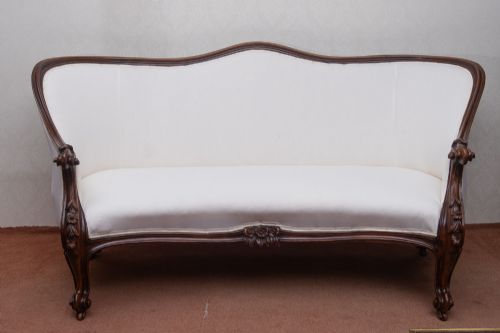


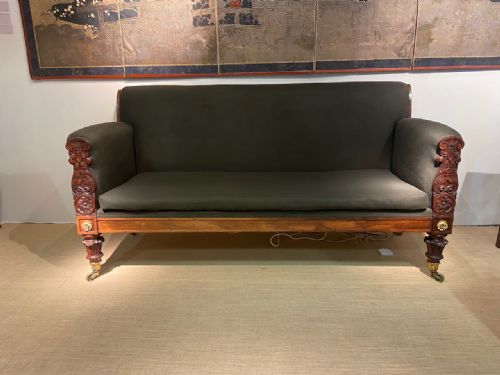

Dark Mahogany Couch
A dark mahogany couch brings warmth and substance to a room, drawing on centuries of cabinet-making skill.
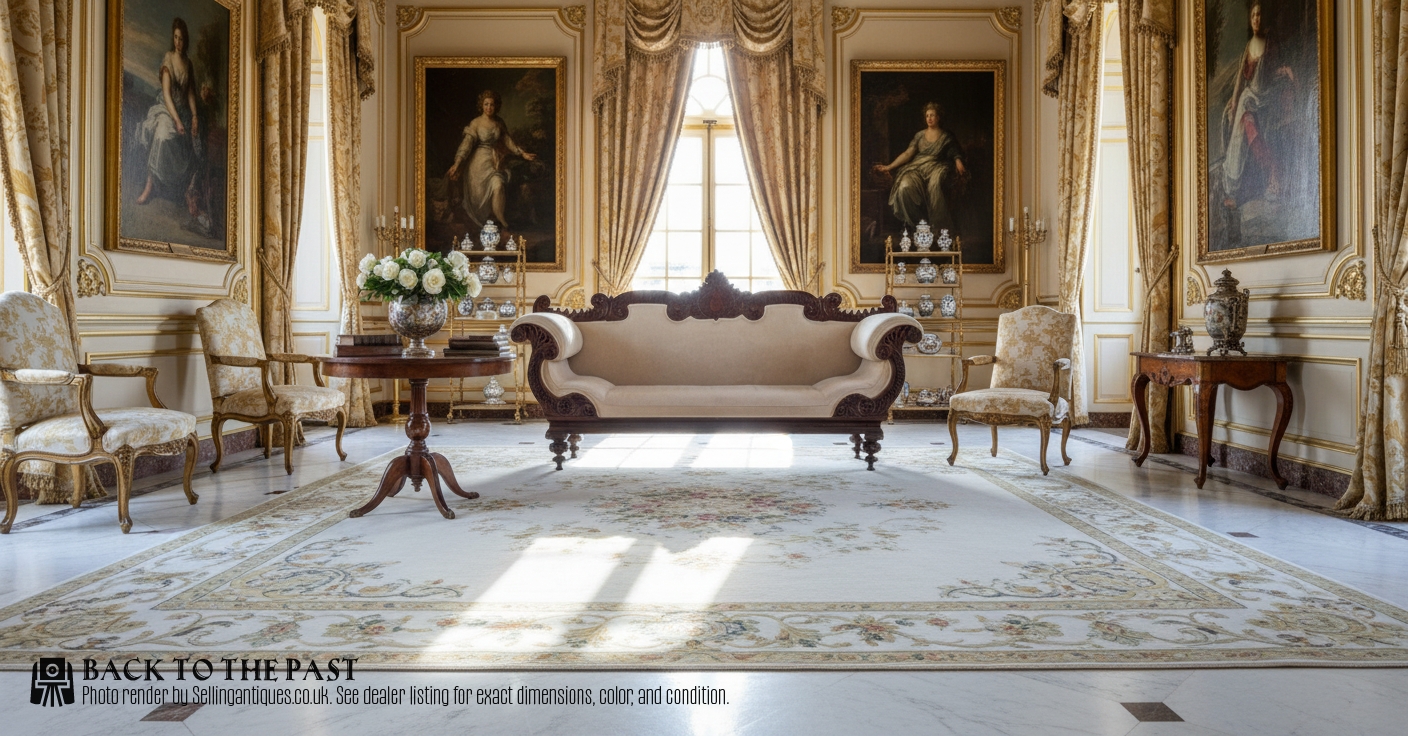
Dark Mahogany Couch
A dark mahogany couch encompasses substantial seating from the eighteenth, nineteenth, and early twentieth centuries, covering George III, Regency, William IV, and Victorian periods. Buyers seeking a dark mahogany couch will find forms ranging from serpentine front camel back sofas to large country house settees and carved chaise longues.
The selection here includes pieces influenced by Chippendale and Rococo Revival styles alongside simple framed couches and window seats. Construction types vary from large four-seater settees down to smaller Victorian inlaid couches.
Most examples date from the nineteenth century, particularly the William IV and Victorian eras, though earlier eighteenth-century George III pieces also appear.
How they were made
Makers utilised solid timbers and veneers, building frames primarily in mahogany alongside rosewood and satinwood. Brass details and intricate carving defined the decorative elements of these seating pieces.
Traditional upholstery methods relied on materials such as hessian, fabric, and damask upholstery to pad and cover the seats. Frame construction often involved heavy timber supports designed to carry multiple seated occupants.
Listings span the eighteenth to early twentieth centuries, featuring mahogany, rosewood, satinwood, brass, and traditional upholstery fabrics.
What varies in quality
Quality rests in the crispness of the carved details and the depth of the timber grain visible across the mahogany frame. Pieces with extensive hand-carving or distinct stylistic influences like Rococo Revival stand apart from simpler framed versions.
The integrity of the underlying timber frame and the proportion of the sofa shape determine the success of the piece. Later reproductions lack the specific handling of mahogany seen in eighteenth-century and nineteenth-century examples.
The Dark Mahogany Couch Glossary
- Mahogany
- A durable tropical hardwood prized for its rich dark colour and stability in furniture construction. It takes a high polish and accepts intricate carving without splintering.
- Camel back
- A sofa or settee back featuring a characteristic undulating, humped curve resembling a camel spine. This shape originated in the eighteenth century.
- Settee
- A long upholstered seat with a back and arms, designed for more than one person. It shares many forms with the sofa.
Dark Mahogany Couch: Frequently Asked Questions
How do I date a mahogany sofa?
Dating relies on identifying stylistic markers, timber choices, and construction methods characteristic of periods like Regency or Victorian.
Changes in carving styles and upholstery foundations provide further clues to the decade of manufacture.
Are these sofas comfortable for daily use?
Many historical sofas offer firm support, though older sprung or stuffed interiors may feel different from modern seating.
Buyers often retain or renew traditional padding materials like hessian and horsehair during restoration.
What is the difference between a sofa and a settee?
The terms often overlap in historical listings, though settee frequently describes a formal, upholstered seat with a wooden frame.
Sofas in older periods tended toward larger, fully upholstered proportions.
How do I care for antique mahogany wood?
Maintenance involves keeping the timber away from direct heat sources and sudden humidity changes to prevent wood splitting.
Regular dusting with a dry cloth protects the polished surface without building up heavy wax layers.