

Large Portrait Canvas
A large antique portrait canvas brings the presence of earlier centuries into a room through oil paint applied to woven support.
Large Portrait Canvas
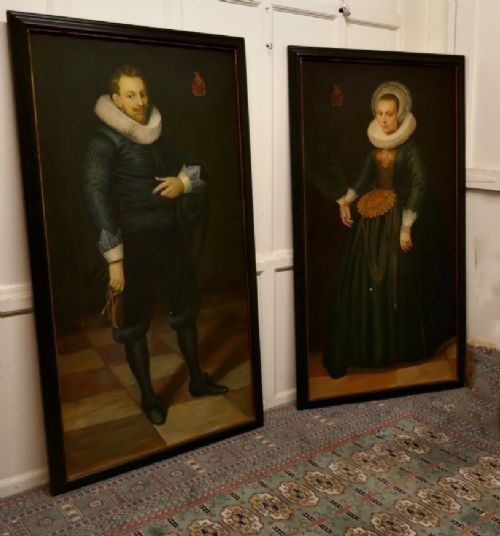
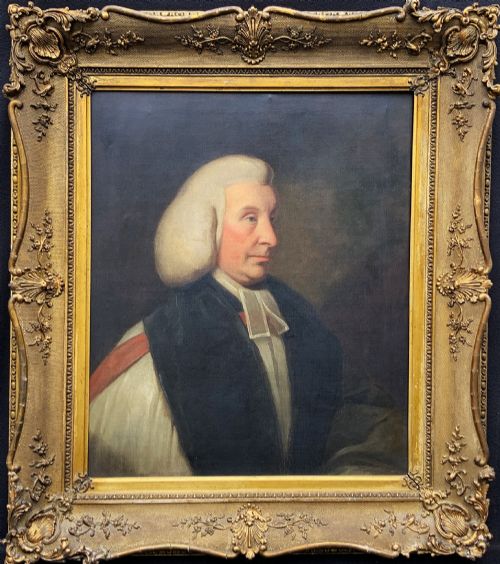
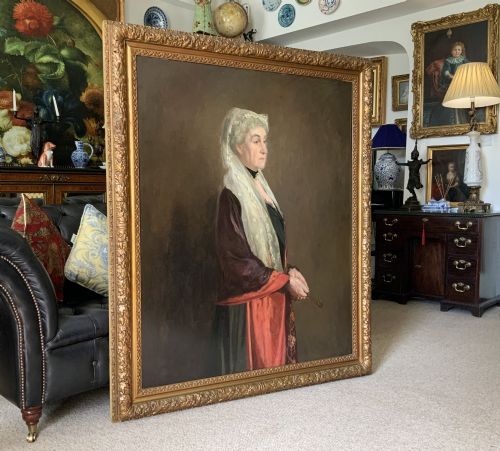
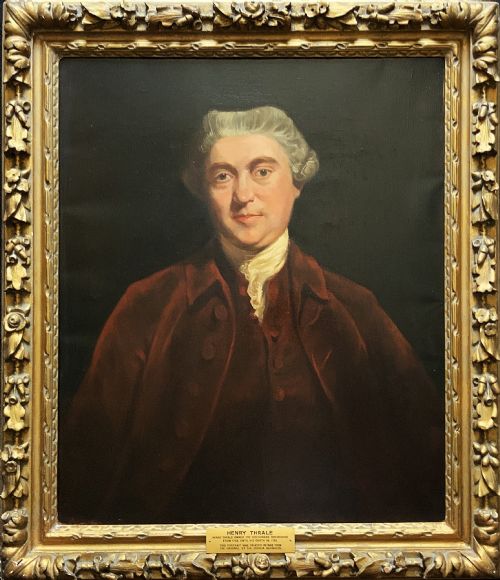
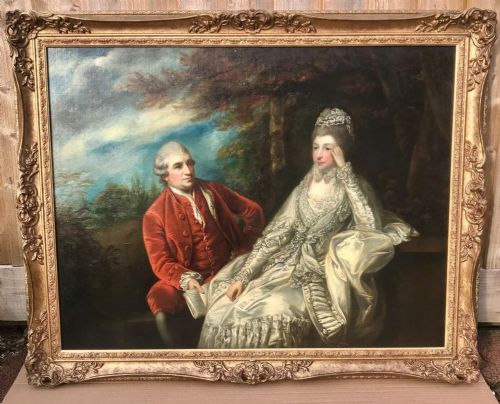
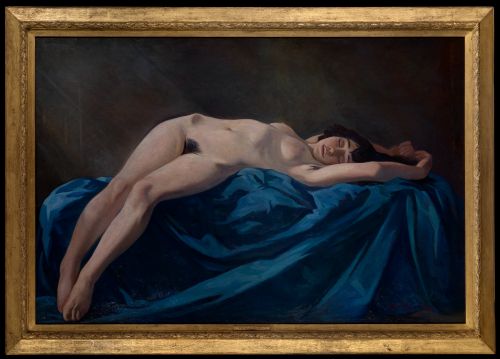
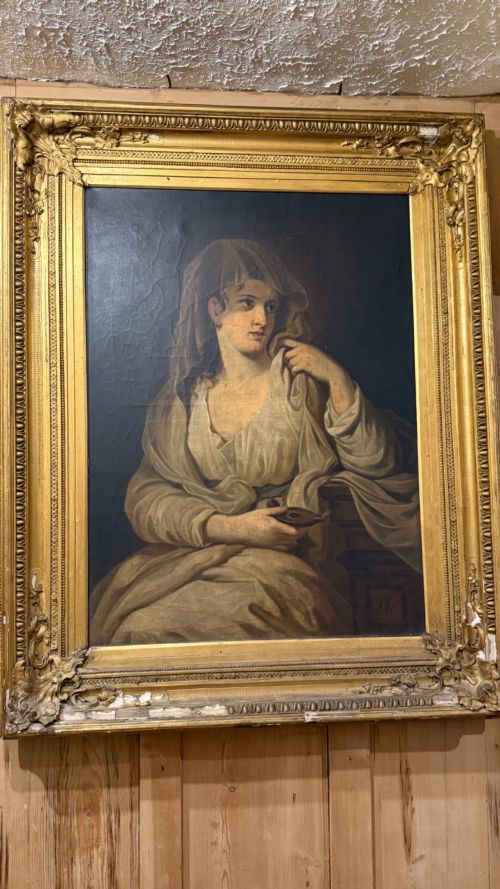
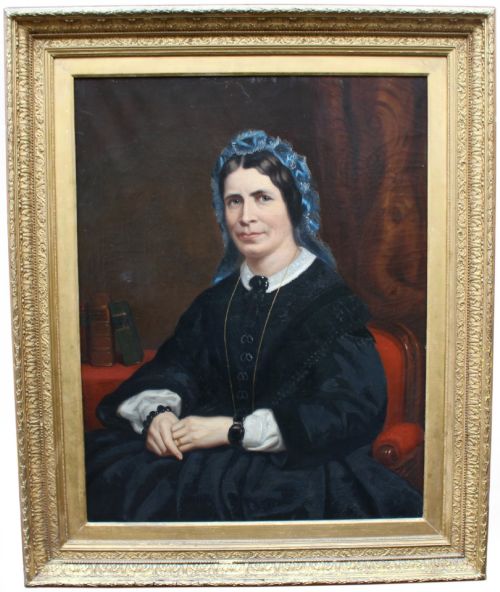
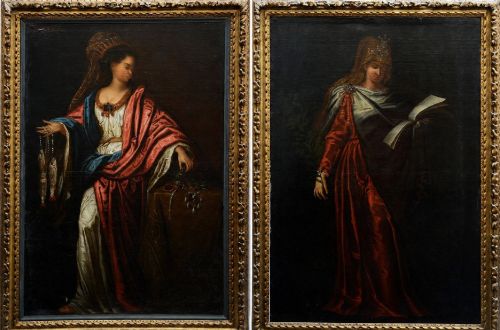
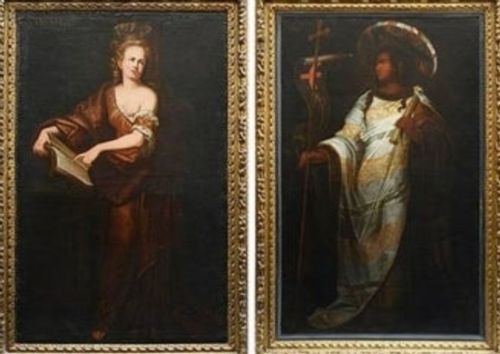
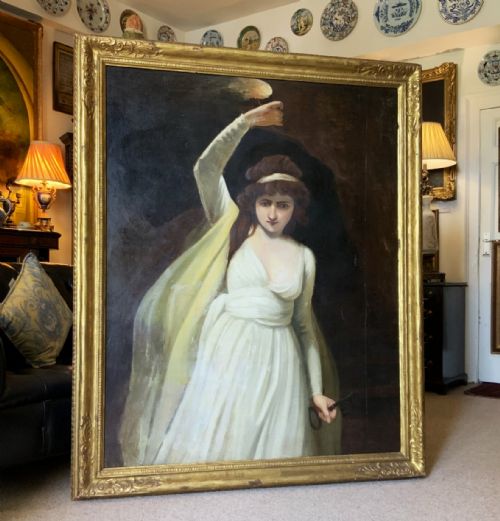
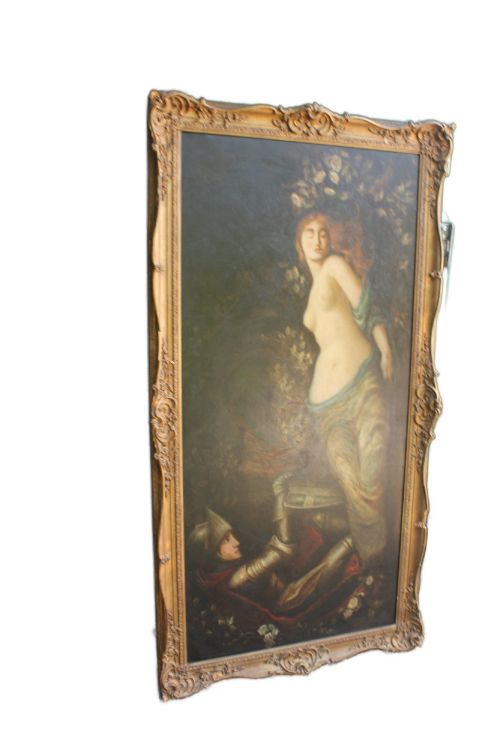
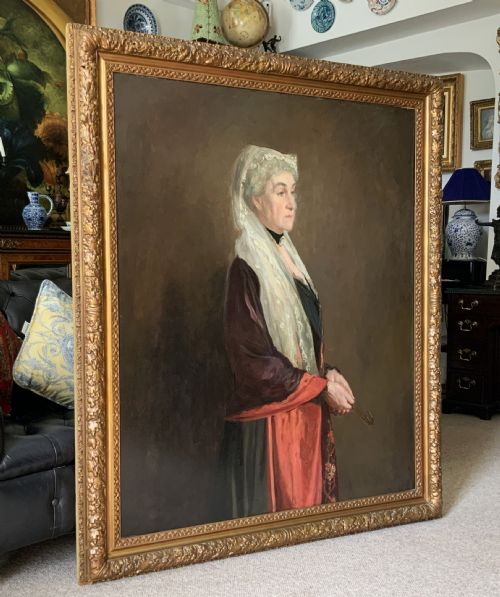
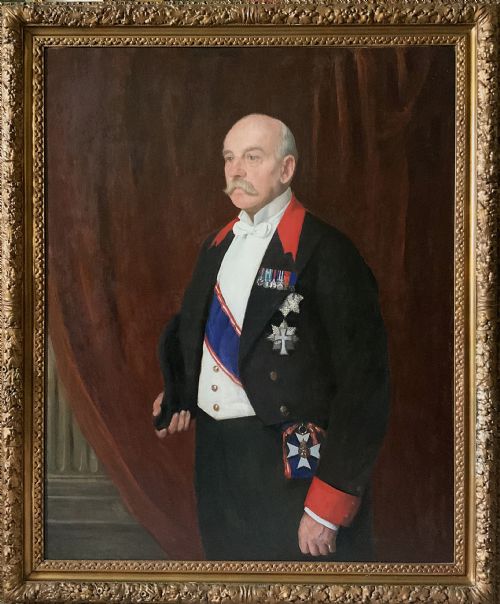
A large antique portrait canvas presents historical figures, nobility, family groups, and religious subjects rendered in oil paints across expansive surfaces.
The pieces appearing most frequently span the eighteenth and nineteenth centuries, alongside Edwardian and later interpretations of earlier masters.
These works often arrive framed in heavy moulded timber, sometimes retaining original gesso and gold leaf ornamentation.
How they were made
Artists built these images using oil paint applied to stretched canvas supported by wooden strainer frames.
Decorative framing relied on carved wood finished with layers of gesso and gold leaf or gilt.
Preparatory grounds and pigment layering varied according to the specific British, Dutch, or French school traditions of the period.
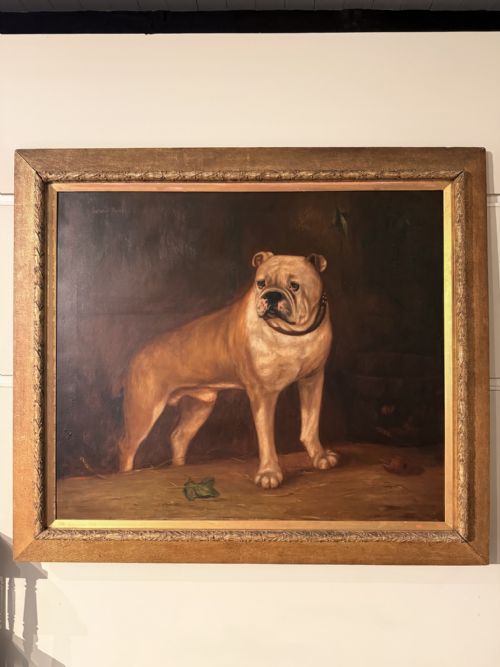
Several canvases record not just human aristocracy, but also beloved family pets sharing the domestic space.
What varies in quality
Quality rests upon the confidence of the brushwork, the anatomical accuracy of the hands and face, and the depth of the glazing.
Superior examples capture individual character and psychological weight rather than relying on formulaic studio repetition.
The integrity of the original canvas support and the preservation of the pigment layers dictate the enduring value of the piece.
John Opie RA·Harold Knight RA·William Henry Mander·Thomas Sidney Cooper·Henri Schouten
The Large Portrait Canvas Glossary
- Canvas
- A heavy woven fabric, usually linen or cotton, stretched tightly across a wooden frame to serve as the painting surface.
- Gesso
- A plaster-like mixture applied to wooden frames as a smooth base for subsequent gilding.
- Giltwood
- Timber that has been coated with thin sheets of gold leaf or metallic powder for decorative effect.
- Strainer
- A fixed wooden frame used to keep the fabric taut during and after the painting process.
- Glaze
- A thin, transparent layer of oil paint applied over an opaque base to alter the colour depth and luminosity.
Large Portrait Canvas: Frequently Asked Questions
How do I hang a heavy portrait canvas?
Large paintings require secure wall fixings, preferably driven directly into studs or masonry rather than standard plasterboard.
Ensure the hanging wire or brackets on the antique wooden frame can support the substantial combined weight of the timber and canvas.
Should I clean an old oil painting?
Surface dust can be removed gently with a soft, dry brush, but accumulated grime and discoloured varnish require professional conservation.
Touching the painted surface with water or domestic solvents risks stripping original pigment and historical glazes.
How do I identify the period of the canvas?
Examine the weave of the fabric, the type of wooden stretcher used, and the composition of the framing materials behind the work.
Stylistic cues in the clothing, hair, and sitter's posture also offer clear indications of the era in which the portrait was painted.
Why do some canvases feature craquelure?
Craquelure is the fine network of microscopic cracks that develops naturally as oil paint hardens and loses flexibility over centuries.
This ageing process is normal in genuine historical works and serves as one indicator of material authenticity.