



Romantic Era Oil Painting
A romantic era oil painting captures dramatic landscapes, intimate portraits, and historical scenes through expressive brushwork and rich colour.
Romantic Era Oil Painting
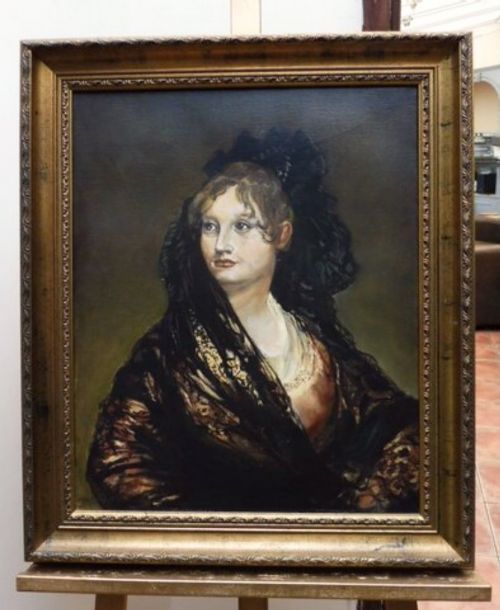
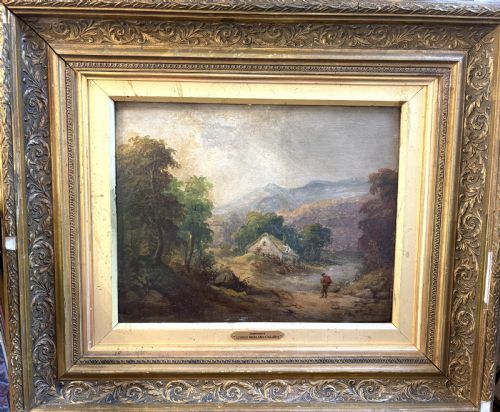
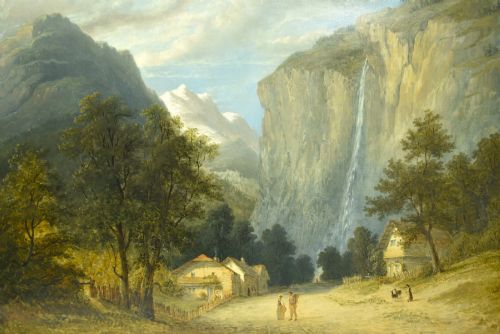
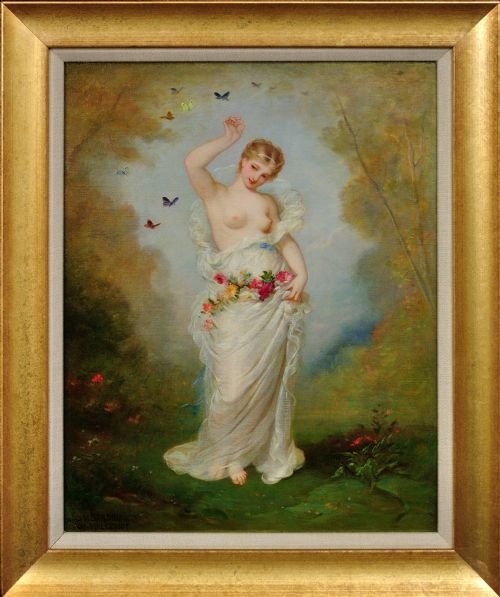
A romantic era oil painting focuses on emotional intensity, atmospheric nature, and dramatic human narratives rooted in the nineteenth century. These works frequently depict sweeping mountain passes, tranquil coastal harbours, pastoral scenes with animals, and detailed portraits in ornate frames.
The pieces available include British, French, Spanish, and Austrian compositions spanning landscapes, seascapes, and figurative works. Buyers will encounter both original signed works by listed historical painters and accomplished period copies or studio pieces.
Materials and technique
Artists of this period applied oil paint primarily onto woven canvas or prepared wooden boards, building depth through layered glazes and opaque highlights. The handling of the medium ranges from tight academic precision to loose, expressive brushstrokes that capture shifting light and weather.
Presentation relies heavily on the original housing of the artwork, utilising carved wood, gesso, and heavy gilt frames. These surrounds form an integral part of the piece, often retaining their original gold leaf or period patination.
Listings feature works spanning the nineteenth century, including Victorian, Georgian, and Regency periods.
Distinctions in quality
Quality rests in the conviction of the draftsmanship, the handling of light, and the emotional resonance of the composition. Superior works demonstrate anatomical accuracy in figures and animals, convincing atmospheric perspective in landscapes, and harmonious balance across the canvas.
The integrity of the surface and the preservation of the original support dictate the standing of a piece. Works that retain their untouched canvas texture, stable pigment layers, and period-matching giltwood frames command greater authority.
Benjamin Barker of Bath·George Morland·André Charles Voillemot·Eugene Joseph Verboeckhoven·Abraham Hulk Snr·August Heinrich Riedell·James Bell Anderson·Franz Xaver Winterhalter·Frederick Richard Lee·James Ward·Ludwig Hermann·James Bertrand·Samuel Lawrence·Robert Thomas Buttery·Julius Caeser Ibbetson
The Romantic Era Oil Painting Glossary
- Oil on Canvas
- Pigments suspended in a drying oil, usually linseed, applied to stretched fabric. This combination allows for rich blending and deep tonal graduation.
- Giltwood
- Wood carved and coated with gold leaf or metallic powder. This material frames the artwork to enhance its visual impact.
- Gesso
- A paint mixture consisting of a binder mixed with chalk, gypsum, or pigment. It serves as a smooth preparation base for wooden panels or canvases.
- Continental School
- A broad designation for artists trained in mainland Europe rather than Britain. It helps classify regional painting styles during the nineteenth century.
- Provincial
- Pertaining to art produced outside major metropolitan cultural centres. These works often display charming local character and independent stylistic choices.
Romantic Era Oil Painting: Frequently Asked Questions
What subjects appear in these paintings?
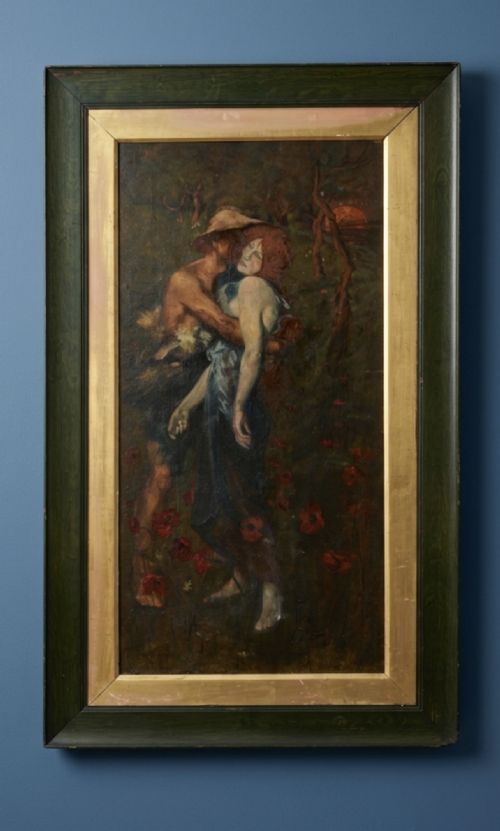
The compositions range from dramatic Alpine landscapes and misty waterfalls to tranquil river scenes and coastal shipping views. Figurative works include historical narratives, literary scenes, and formal portraits of elegant ladies.
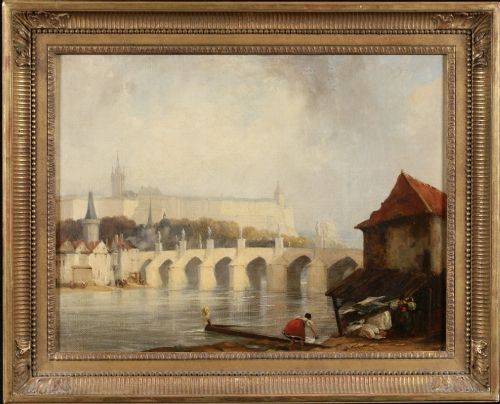
Many pieces draw inspiration from specific European locations, capturing the grandeur of Swiss mountains, German waterways, and historic British abbeys.
How do I identify the period of a painting?
Dating relies on stylistic clues, stretcher construction, canvas types, and framing methods typical of the nineteenth century. Signatures, inscriptions on the reverse, and documented exhibition histories provide definitive attribution.
Attributions to followers or circles point to the widespread influence of prominent academy painters of the era.
Are these paintings supplied with frames?
Many listings include the original period giltwood or gesso frame accompanying the canvas. These surrounds often feature decorative moulding consistent with the date of the artwork.
Checking the frame construction helps confirm whether the housing has remained with the painting since its creation.
How should I care for an oil painting?
Display the artwork away from direct sunlight, damp environments, and rapid temperature fluctuations to protect the canvas and paint layers. Gentle dusting with a soft, dry brush maintains the surface.
Professional conservation should be sought for any structural repairs or cleaning of aged varnish.