
Large Drawers
When searching for large antique drawers, buyers seek substantial storage pieces offering historical character and generous proportions.
Large Drawers
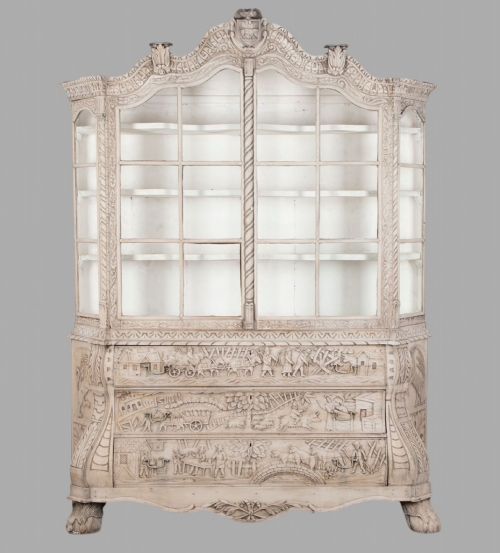
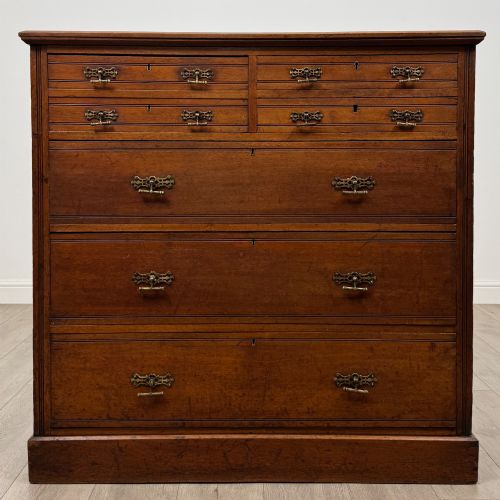
Large antique drawers span multiple forms, most commonly appearing as chest of drawers, banks of drawers, and modular bedroom pieces originating from the eighteenth, nineteenth, and early twentieth centuries.
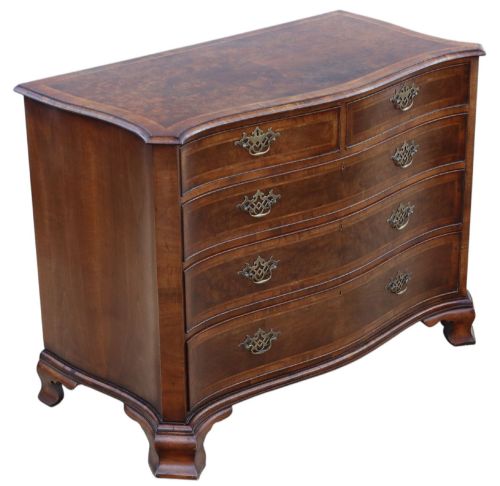
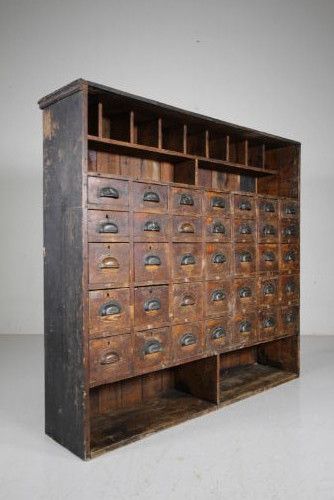
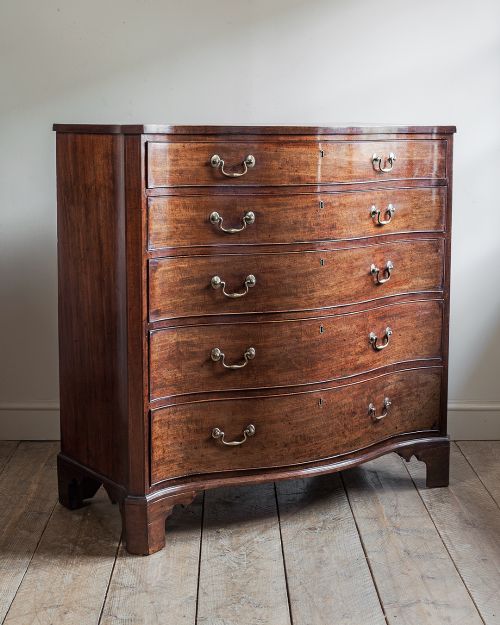
Pieces range from Georgian serpentine commodes and Regency bow fronts to Victorian pine dressers and chemist shop fittings designed for heavy domestic or commercial use.
Materials and Construction
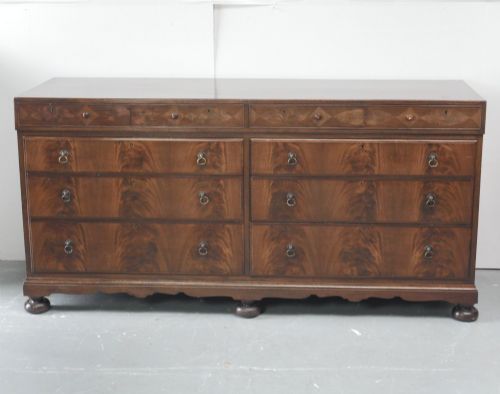
Makers utilised dense hardwoods like mahogany and oak for formal case furniture, often employing crossbanding, burr veneers, and brass hardware to elevate the visual finish.
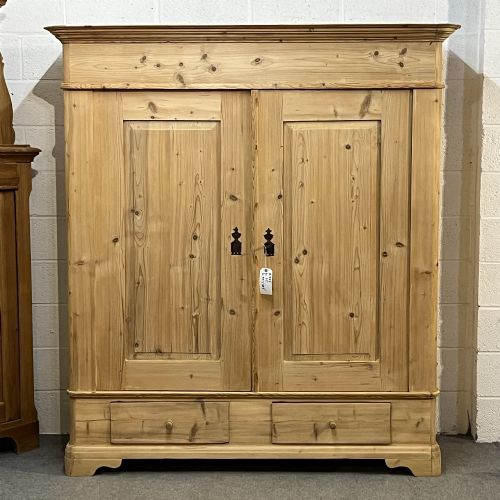
Utility pieces and larger wardrobes relied on pine, pitch pine, and elm, constructed with robust internal framing and drawer linings designed to withstand daily service.
Many larger items, particularly wardrobes and multi-drawer banks, were built to dismantle into modular sections to ease transportation into domestic spaces.
Some nineteenth-century pine chests still retain cheerful white porcelain knobs fitted by practical past owners.
Quality Variations
The distinction between standard utility furniture and superior cabinet work lies in the selection of timbers and the precision of the joinery.
Top-tier examples display thoughtful proportions, such as well-figured mahogany veneers, serpentine drawer fronts, and original brass drawer pulls.
Lesser items prioritised functional storage over ornamentation, using simpler secondary woods and straightforward pine carcasses intended for paint or wax finishes.
Whytock and Reid·Jas Shoolbred·Gillows·Heals of London
The Large Drawers Glossary
- Serpentine commode
- A chest of drawers featuring an undulating, curved front profile typical of formal eighteenth and nineteenth-century cabinet making.
- Bow front
- A convex, outwardly curved front shape commonly found on Regency and Georgian chests of drawers.
- Bank of drawers
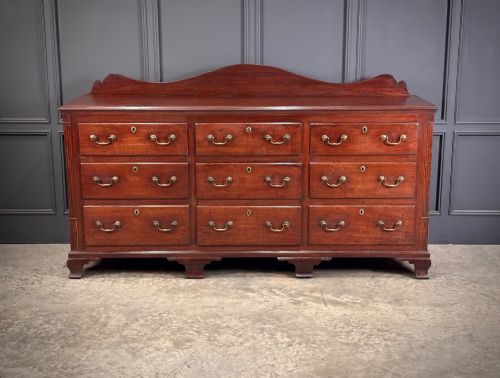
- A multi-drawer storage unit, often originating from commercial, workshop, or chemist shop environments.
- Crossbanding
- A decorative border of veneer laid around the perimeter of a drawer front or tabletop with the grain running perpendicular to the central panel.
- Compactum
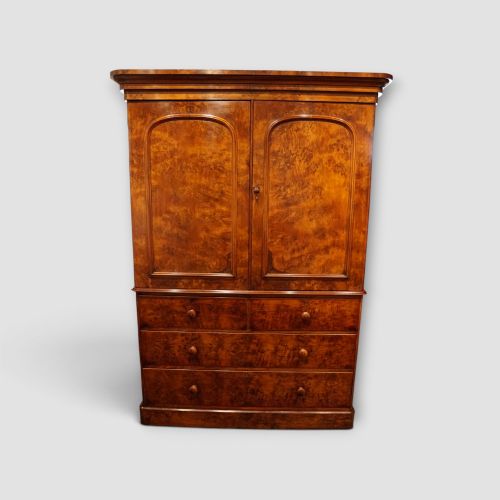
- A large fitted wardrobe combining hanging space with multiple internal drawers and shelving compartments.
Large Drawers: Frequently Asked Questions
How do I date a chest of drawers?
Dating relies on examining construction methods, timber choices, and hardware styles across different historical periods. Georgian pieces often show hand-cut dovetails and bracket feet, while Victorian examples utilise machine-sawn elements and heavier proportions.
Secondary woods inside the drawers also offer clues, as regional workshops shifted from oak and ash to pine during the nineteenth century.
Will a large chest fit upstairs?
Large antique storage units often present access challenges due to their solid construction and generous dimensions. Measuring stairwells, turning circles, and ceiling heights beforehand is essential for successful placement.
Some larger wardrobes and multi-part cabinets were specifically built to dismantle into modular sections to ease transportation through narrow doorways.
What is a bank of drawers?
A bank of drawers consists of numerous smaller compartments arranged within a single large carcass. These pieces originated in commercial settings, workshops, and chemist shops where sorting and storing small inventory was necessary.
Today, they function as sculptural statement pieces in domestic settings, offering extensive compartmentalised storage.
How should I maintain antique pine?
Antique pine responds best to gentle cleaning and periodic application of traditional beeswax rather than modern chemical polishes. Keeping pieces away from direct heat sources prevents the timber from drying out and splitting over time.
Unwaxed or painted pine surfaces can be refreshed easily by applying fresh coats of tinted wax or paint suited to the finish.