



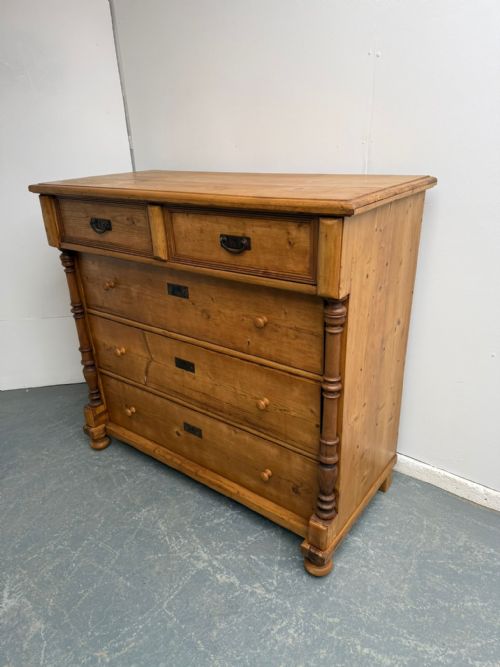


Victorian Hungarian Chest
These Victorian Hungarian chest pieces bring robust continental utility to British homes through solid pine, ash, and painted finishes.
Victorian Hungarian Chest
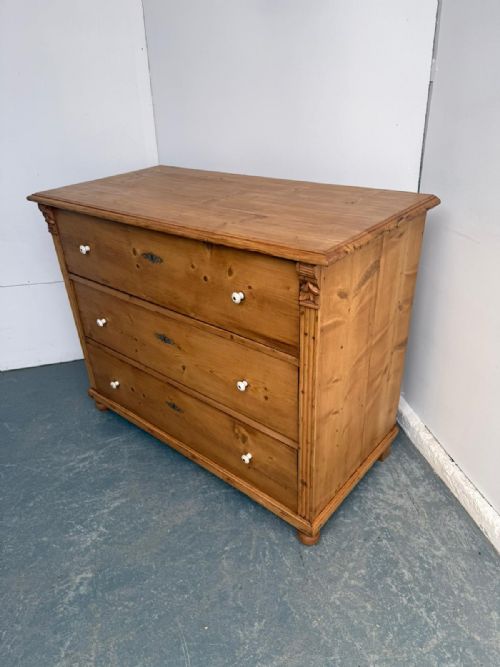
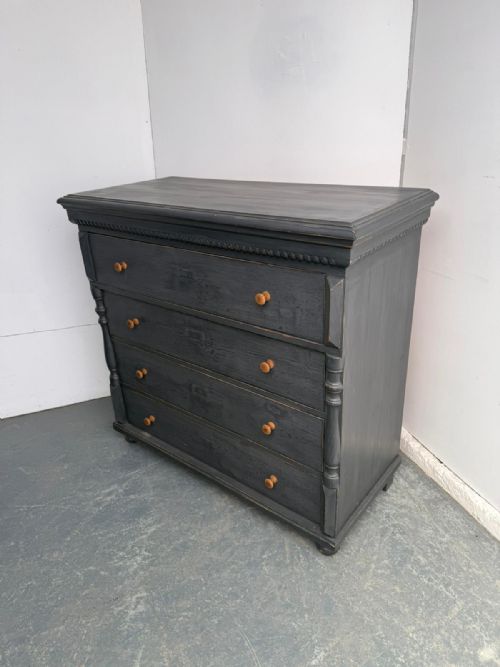
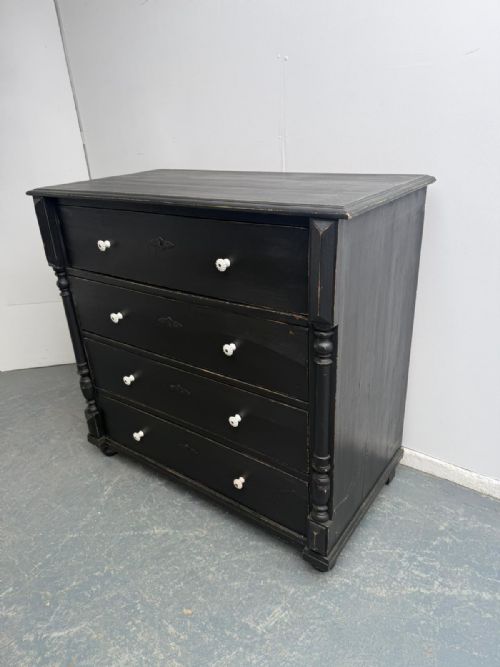
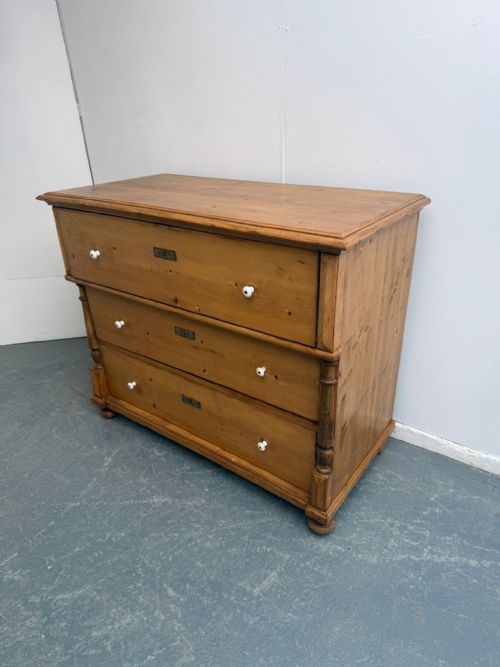
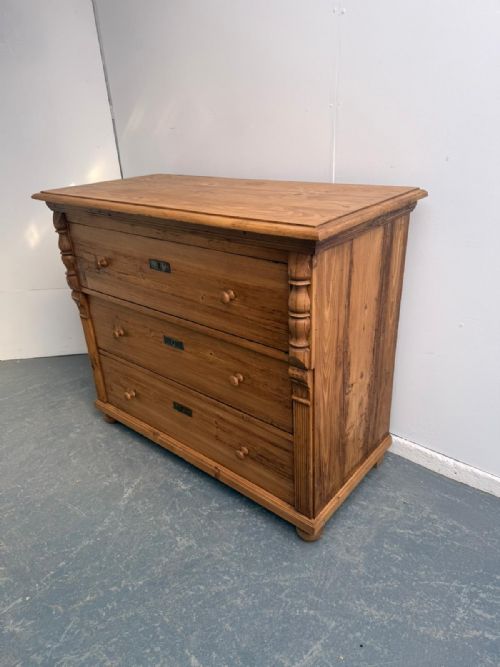
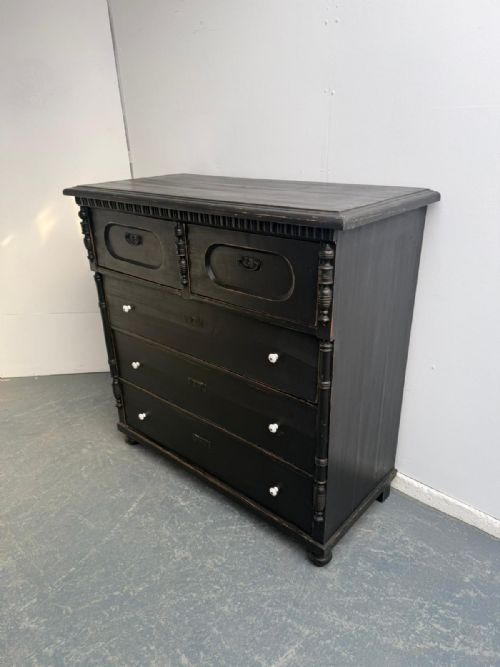
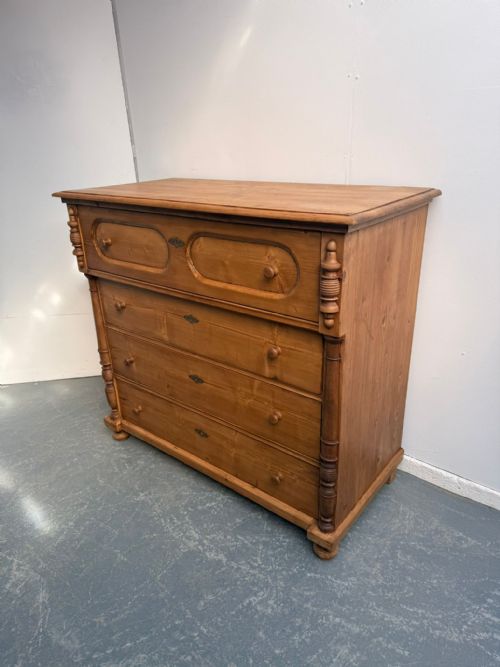
When you search for a Victorian Hungarian chest, you encounter sturdy pieces built for storage, primarily taking the form of chests of drawers, shop fittings, and storage benches. The selection spans low three-drawer designs, massive five-drawer units, and multi-drawer merchant fittings.
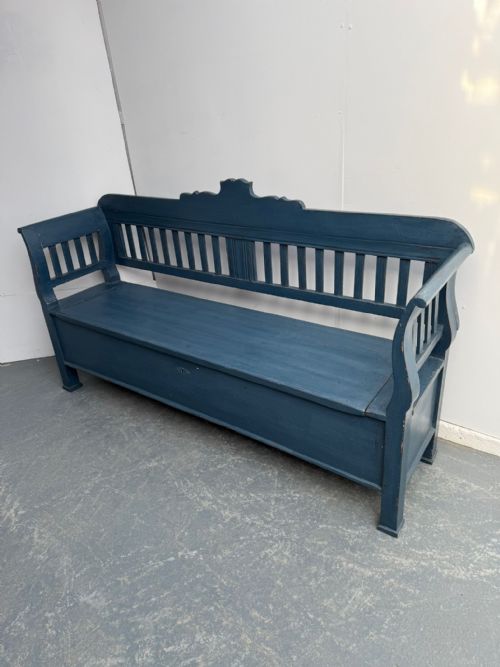
Most examples originate from the Victorian period with continental country styles, often rendered in waxed pine or substantial ash. Alongside standard chests, the records show specialised forms like box settles and columned cabinets.
How they were made
These items rely on solid timber construction, predominantly using pine and Hungarian ash, joined with robust metal, brass, and iron hardware. Many retain their original paint finishes in shades of grey, black, blue, white, and cream, while others are waxed to expose the natural grain.
Construction methods focus on utility, evident in multi-drawer shop fittings and columned frames designed to endure heavy daily use. Ceramic handles and brass fittings complete the functional hardware on these pieces.
Materials recorded across these listings include pine, metal, ceramic, paint, brass, iron, and wood.
What varies in quality
The distinction between tiers rests on the choice of timber and the complexity of the form, moving from standard pine storage towards finely figured Hungarian ash and large multi-drawer shop fittings. Columned details and original painted surfaces elevate certain examples above plain waxed carcases.
Scale and proportion also define the range, separating low wide chests and miniature versions from massive multi-drawer units. The survival of original paint coats and specialised hardware distinguishes the character of each piece.
The Victorian Hungarian Chest Glossary
- Victorian
- Belonging to the reign of Queen Victoria, denoting nineteenth-century manufacture and design. This period forms the chronological boundary for all items in this category.
- Hungarian ash
- A distinctive timber species utilised for cabinet work and decorative drawers. It provides a heavily figured surface grain prized in nineteenth-century continental furniture.
- Shop fitting
- Fixtures and large multi-drawer units built for commercial storage and display. These functional pieces often feature numerous small drawers.
- Box settle
- A wooden bench seating arrangement incorporating enclosed storage beneath the seat. This form combines seating with practical box storage.
- Wellington chest
- A tall, narrow chest of drawers secured by a hinged locking side stile. It typically contains multiple graduated drawers.
Victorian Hungarian Chest: Frequently Asked Questions
What styles define these chests?
The pieces reflect Victorian, Victorian country, rustic country, and nineteenth-century continental styles. They blend British period parameters with continental workshop traditions.
Construction styles range from plain waxed pine utility items to columned chests and painted multi-drawer shop fittings.
What materials are used?
Pine and Hungarian ash form the primary timber bodies of these pieces. Metal, brass, and iron provide structural reinforcement and functional hardware.
Surfaces are finished either through waxing to highlight the wood or via original painted coats in various neutral and dark tones.
How were shop fittings used?
Large multi-drawer shop fittings served commercial purposes in nineteenth-century retail environments. They held dry goods, hardware, or apothecary items securely.
Today, these units function as substantial storage cabinetry within domestic interiors.
What variations exist in drawer counts?
Drawer configurations span simple three-drawer and four-drawer chests up to massive five-drawer versions. Specialised shop fittings scale upward significantly to feature twenty-five or fifty drawers.
Miniature versions and tall seven-drawer Wellington chests represent the more compact or vertical alternatives in the record.