

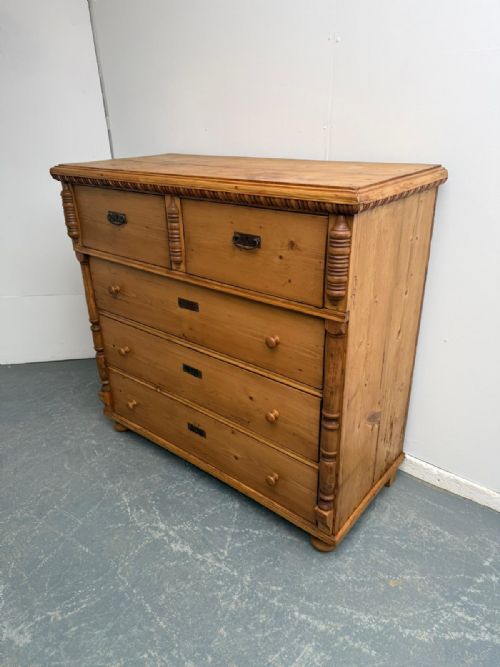
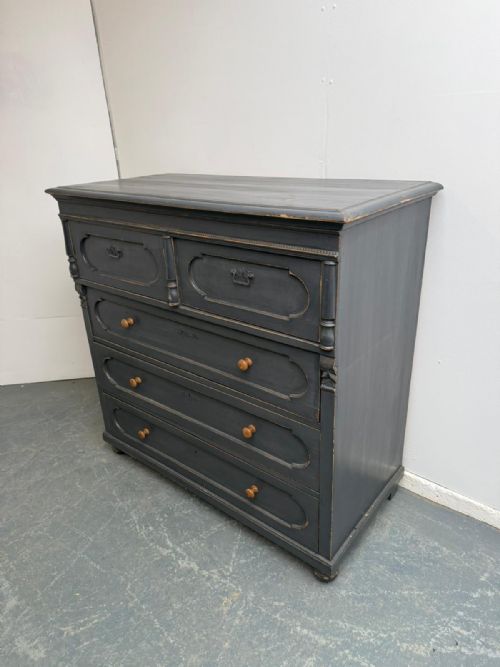


Large Pine Commode
These large pine commode pieces are substantial chests of drawers offering generous storage, built to last through generations of daily use.
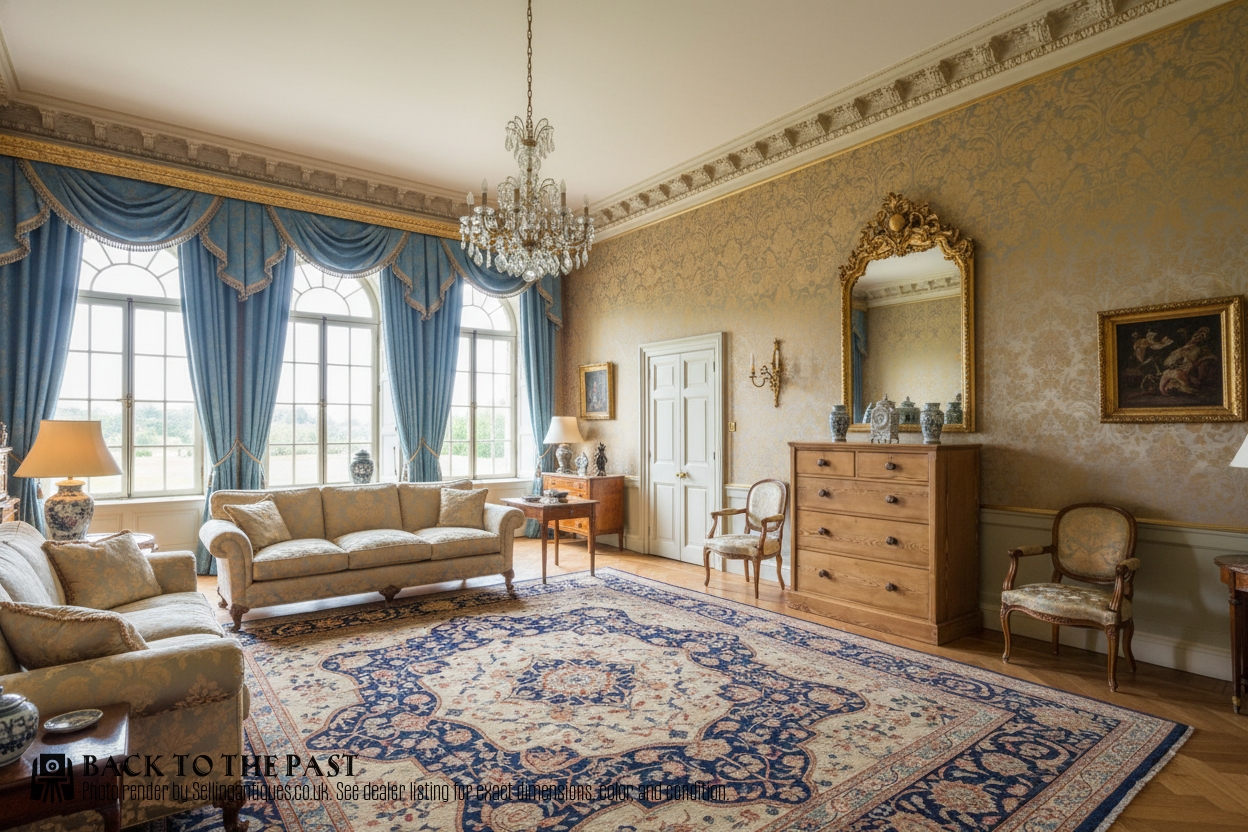
Large Pine Commode
When you search for a large pine commode, you encounter substantial chests of drawers originating primarily from the Victorian era and the nineteenth century. These pieces serve as functional storage furniture, often constructed with multiple drawers to accommodate bulky household items.
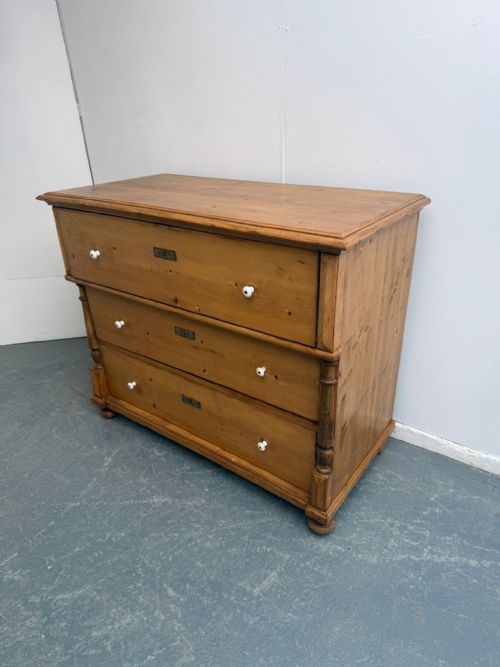
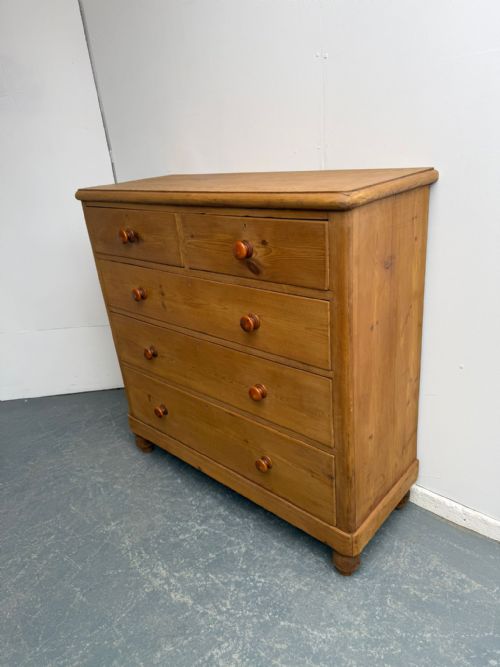
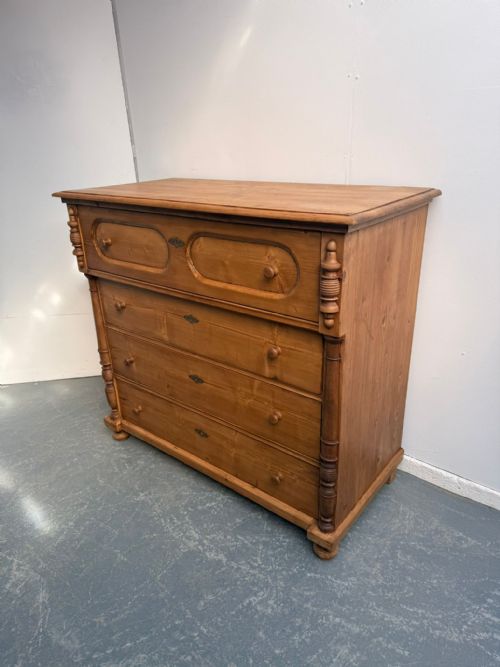
The versions you are most likely to meet on this page include Hungarian and English country examples. They range from massive five-drawer configurations down to lower four-drawer or three-drawer formats, reflecting the practical needs of past households.
Makers fashioned these chests from solid timber, and their sheer scale marks them out from standard bedroom furniture. They provide a commanding presence in a room while offering deep, capacious storage.
How they were made
Carpenters constructed these large pine commodes using solid pine timber joined with traditional methods to withstand heavy daily use. The wood was frequently finished with a simple wax coating to protect the surface while highlighting the natural grain.
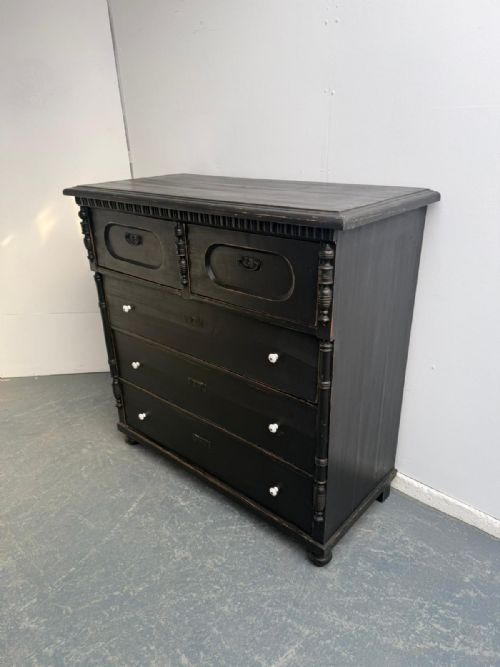
Many examples received applied treatments such as original paint, scumbled paint finishes, or specific colour applications like black and light grey. Metal, brass, and iron hardware including drawer pulls and handles completed the construction.
Many of these massive chests hide decades of old-fashioned laundry scents trapped deep within their cavernous Hungarian pine drawers.
What varies in quality
Quality in a large pine commode rests upon the preservation of its original surface finishes, whether that is an early scumbled paint layer or a traditional waxed patina. Pieces retaining their untarnished original hardware and uncompromised timber integrity stand apart from those heavily restored.
Proportion and structural balance also separate the everyday from the exceptional, as the timber must bear the weight of five large drawers without sagging. The honesty of the construction and the depth of the grain visible beneath the wax define the upper tier of these pieces.
The Large Pine Commode Glossary
- Commode
- A piece of furniture containing drawers or compartments, often serving as a chest of drawers in nineteenth-century contexts.
- Scumbled paint
- A decorative surface technique involving layers of translucent or opaque paint dragged or brushed to create a textured, mottled appearance.
- Waxed pine
- Timber treated with natural wax polishes to nourish the wood and impart a soft, warm sheen rather than a glossy varnish.
- Victorian country
- A regional style combining the industrial and domestic design trends of the nineteenth century with robust, utilitarian rural craftsmanship.
- Chest of drawers
- A case furniture form consisting of multiple horizontal drawers stacked vertically within a rectangular frame.
Large Pine Commode: Frequently Asked Questions
What is a large pine commode?
A large pine commode is a substantial nineteenth-century chest of drawers built from solid pine timber. These pieces were designed to provide heavy-duty storage in domestic settings.
They typically feature multiple stacked drawers and heavy proportions, reflecting the practical requirements of Victorian households.
Where were these chests made?
The pieces available originate from various regions including England, Scotland, and Hungary. Each region imparted subtle differences in proportion and finishing techniques.
English and Scottish country workshops produced robust utilitarian designs, whilst Hungarian examples often display distinct regional paint treatments and timber selections.
How do I care for waxed pine?
Waxed pine surfaces require gentle cleaning with a dry or barely damp cloth to avoid stripping the protective layer. Periodic application of traditional beeswax maintains the lustre.
Keep these chests away from direct heat sources and strong sunlight to prevent the timber from drying out or splitting.
What finishes do these pieces have?
Finishes range from traditional clear wax that reveals the natural grain to historic painted surfaces. Some pieces display original paint or scumbled paint in colours such as black and light grey.
These treatments protect the soft pine underneath while offering distinct aesthetic variations from different regions.