


Large Cheval Glass
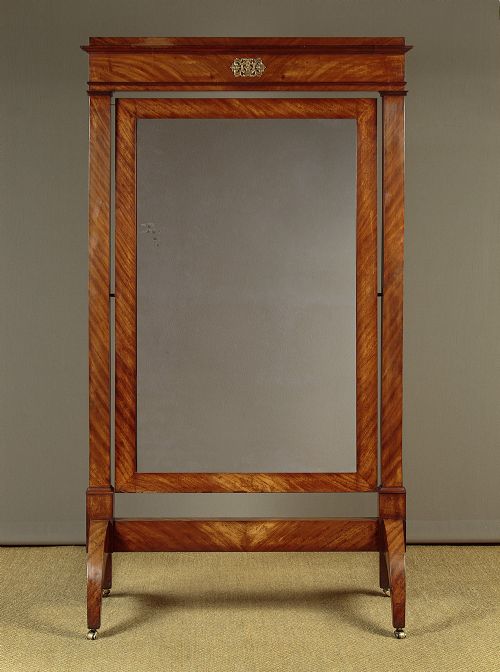
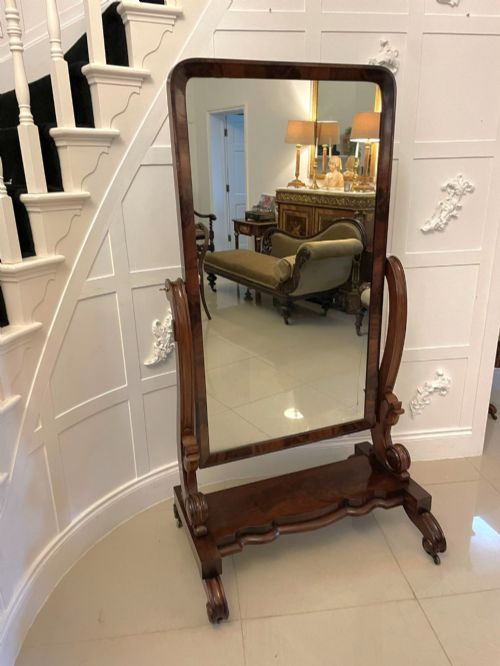
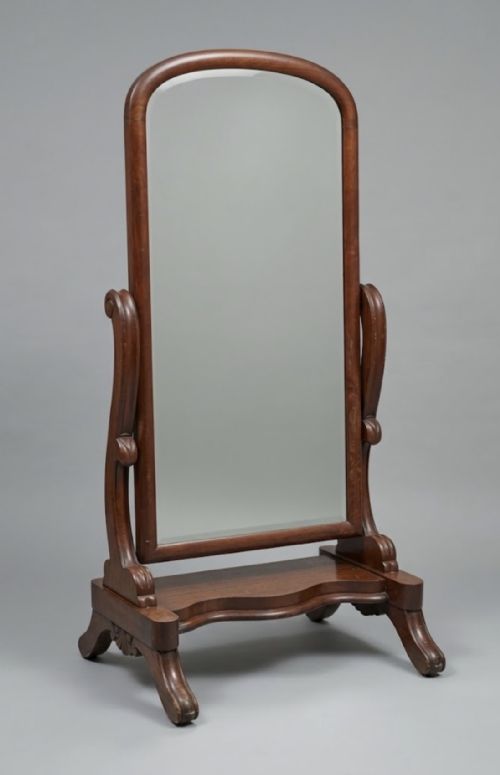
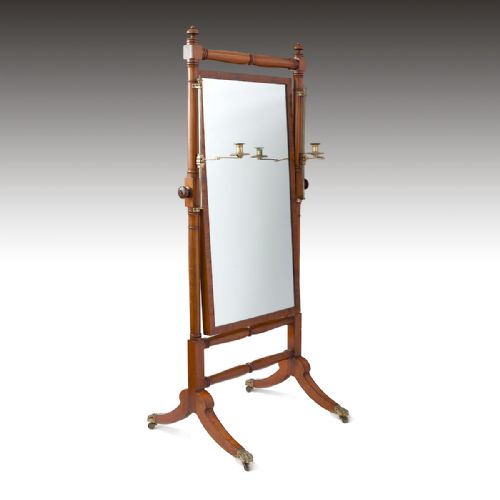
A large antique cheval glass is a floor-standing swing mirror that anchors a room and offers a full-length reflection.
Large Cheval Glass
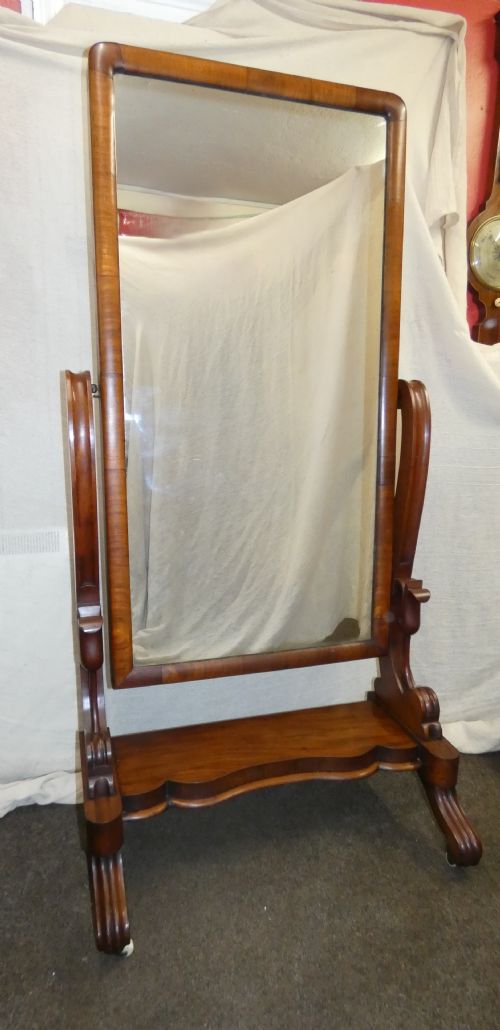
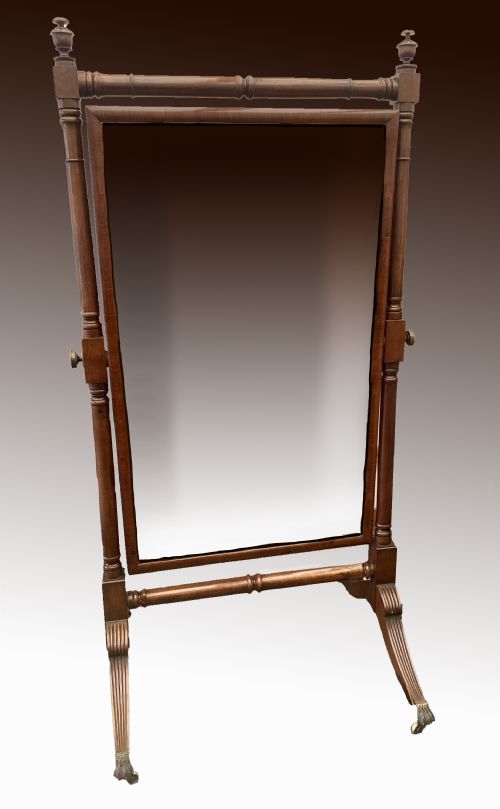
A large antique cheval glass stands tall upon its own frame, allowing the entire mirror plate to tilt on pivots so the viewer can adjust the angle. The pieces on this page span the Regency, Victorian, and Edwardian eras, executed in forms ranging from country house country furniture to refined urban dressing room fittings.
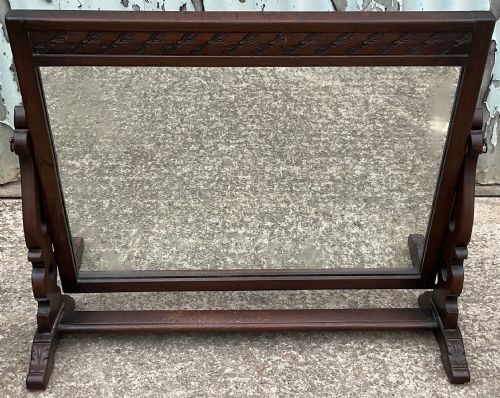
Most examples you encounter here are constructed from mahogany, oak, or pitch pine, featuring standing frames designed to rest directly upon the floor. Alongside traditional full-length floor mirrors, the selection includes related dressing table variants and large pier or wall glasses sharing the same period aesthetic.
Originating primarily from English workshops, these mirrors vary from restrained Regency frameworks to ornate Victorian and French Rococo Revival carvings. The form remains a practical centrepiece for bedrooms and dressing rooms, combining utility with period presence.
How they were made
Makers built the structural uprights and trestle bases from solid timbers such as mahogany, oak, and pitch pine, often shaping the wood with turned supports or curved scroll feet. Brass pins, screws, and pivot mechanisms allowed the heavy swing frame to pivot smoothly between the vertical pillars.
The reflective surfaces consist of traditional mirror glass set into rebated wooden frames, sometimes backed with protective panels. Giltwood and gesso found application on more decorative frames, providing a smooth base for gold leaf or painted finishes.
Listings for large antique cheval glass pieces feature work from the Regency period through to the 1930s, utilising mahogany, oak, pitch pine, and giltwood.
What varies in quality
Quality rests in the weight of the timber and the solidity of the framing joints, which must support a heavy glass plate without wobbling. Superior examples display crisp turning, finely figured mahogany veneers, and robust brass pivot hardware that holds the swing mirror firmly at any chosen tilt.
The refinement of the carved details and the clarity of the original mirror glass further separate standard workshop production from finer country house commissions. Finer execution shows in balanced proportions, cleanly fitted backboards, and stable floor trestles that distribute the weight evenly.
Gillow
The Large Cheval Glass Glossary
- Cheval glass
- A large floor-standing mirror suspended on a frame with pivot pins so it can swing back and forth. The term derives from the French word for horse, referencing the four-legged trestle base.
- Gesso
- A plaster-like mixture applied to wooden frames as a smooth base for gilding or painting. It is built up in thin layers before being carved or stamped with decorative motifs.
- Pivot
- The metal pin or screw set into the side of the mirror frame that connects it to the upright pillars. This allows the glass to tilt independently of the main stand.
- Pier glass
- A tall narrow mirror designed to hang on the wall between windows or stand against a narrow pier of masonry. It shares the vertical proportions often found in large dressing room mirrors.
Large Cheval Glass: Frequently Asked Questions
How do I secure a tilting cheval mirror?
Most cheval glasses rely on threaded brass screw caps or friction nuts set into the side pivots. Adjusting these tension fittings allows you to tighten the grip on the frame so the mirror stays at your preferred angle.
If the mirror continues to tilt forward on its own, check that the pivot washers are properly seated and that the vertical uprights remain plumb and stable on the floor.
Can these mirrors support their own weight on carpet?
Large floor-standing mirrors require a level, stable surface to prevent strain on the lower frame joints. Thick carpets can cause the trestle feet to sink unevenly, placing stress on the pivot uprights.
Placing the mirror on a flat floor or using small caster cups helps distribute the weight evenly and keeps the frame square.
How do I date a Victorian cheval glass?
Victorian pieces often display denser timbers like mahogany or pitch pine combined with turned supports and heavy scroll feet. Examining the backboards, screw types, and construction methods helps distinguish early Victorian work from later nineteenth-century revival styles.
Later Victorian and Arts and Crafts examples often feature simpler linear forms or exposed peg joinery that reflects the shift away from heavy ornamentation.
What is the difference between a cheval mirror and a dressing table mirror?
A cheval glass is a full-height, floor-standing mirror designed to show the entire figure. A dressing table mirror is much smaller and sits upon a piece of furniture rather than the floor.
While both use a swing frame mechanism, their scale and intended placement in a room differ entirely.