
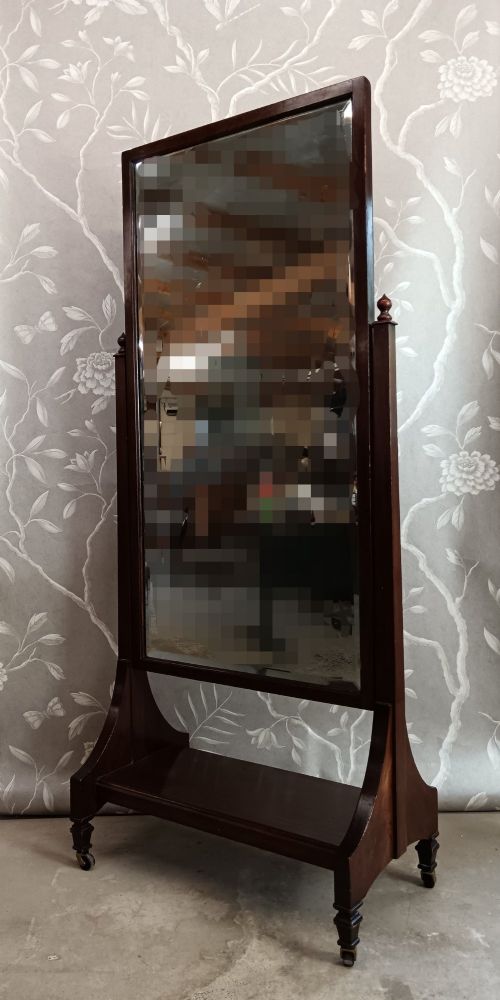


Mahogany Freestanding Floor Mirror
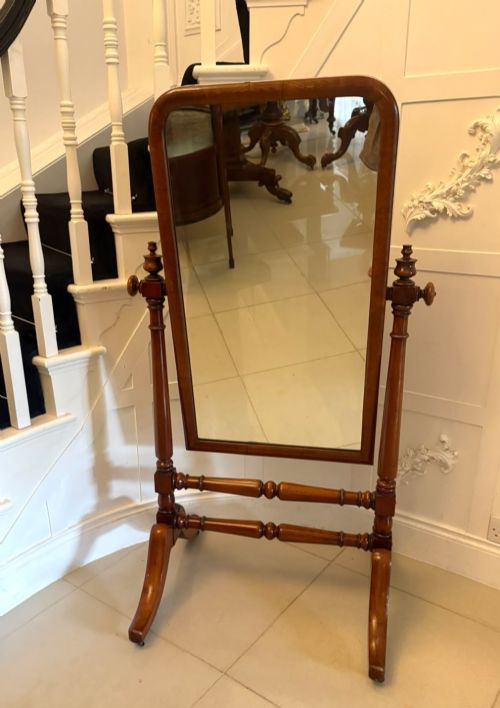
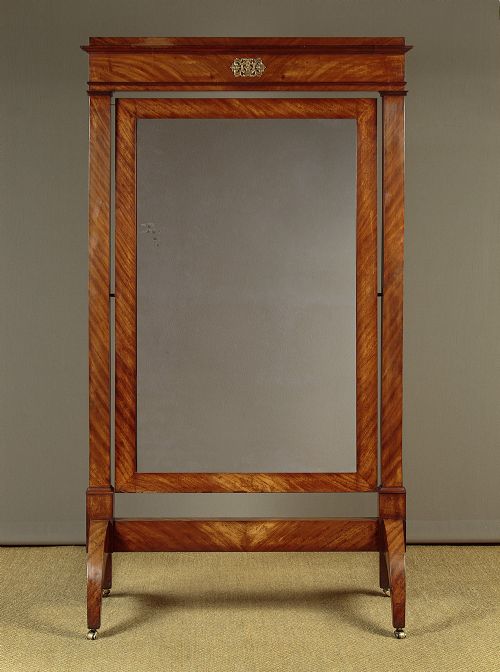
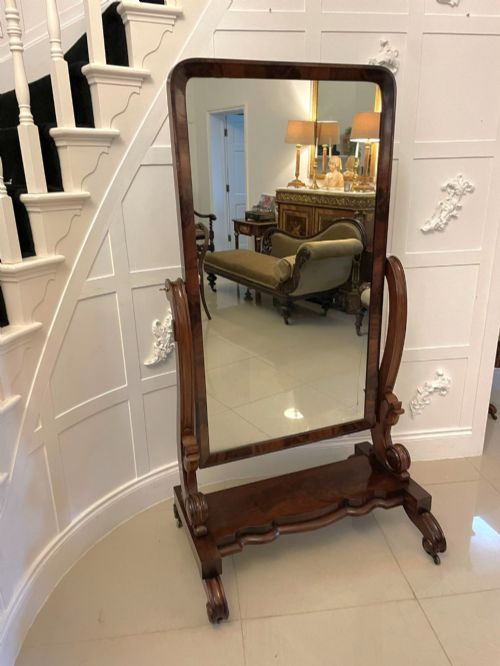
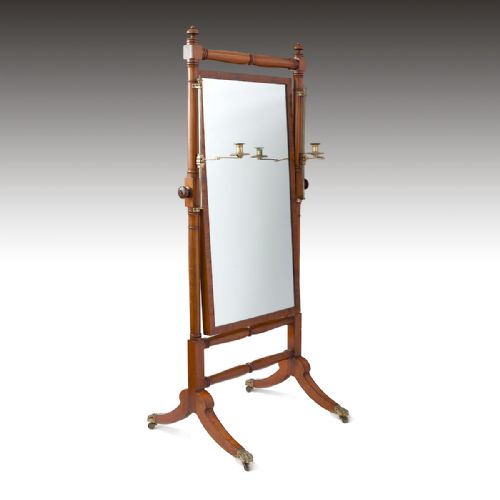
A mahogany freestanding floor mirror offers full-length reflection in a heavy timber frame designed to steady the swing glass.
Mahogany Freestanding Floor Mirror
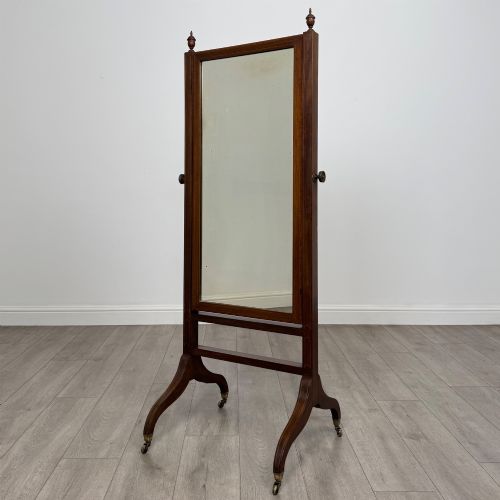
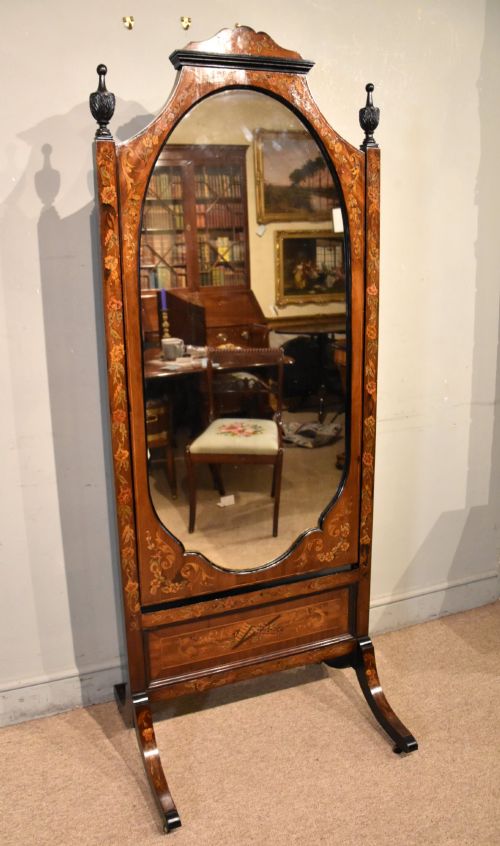
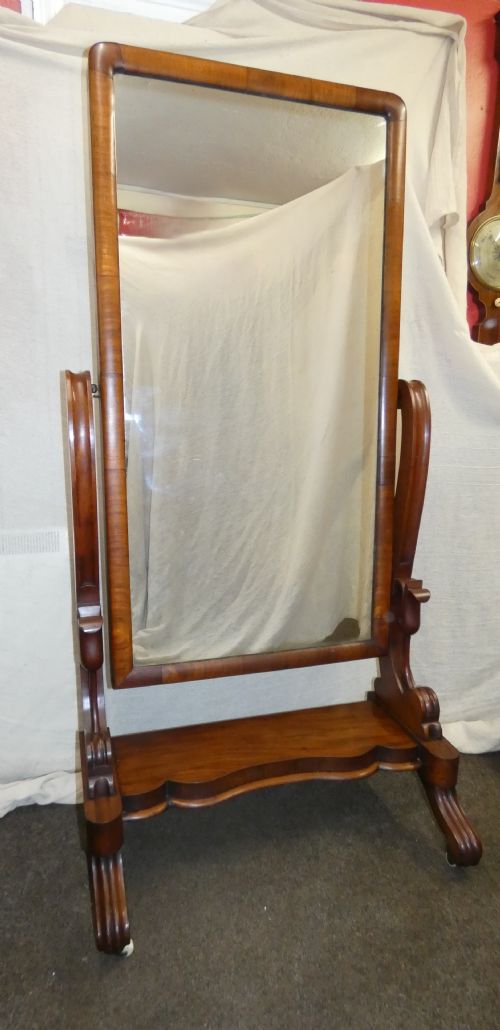
A mahogany freestanding floor mirror is primarily represented by cheval mirrors and tall dressing glasses designed for bedrooms and dressing rooms. Buyers searching for a mahogany freestanding floor mirror encounter tall swing frames spanning the Georgian, Regency, William IV, Victorian, and Edwardian periods.
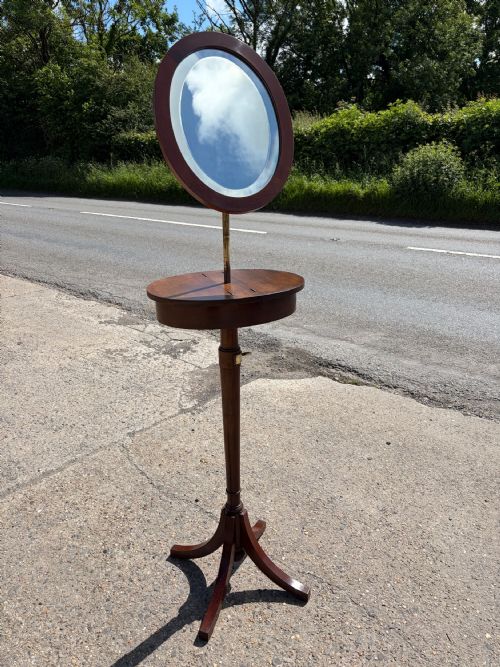
Most examples sit on sturdy uprights supported by robust legs, though some Victorian and Edwardian pieces incorporate inlay, brass fittings, or telescopic columns. The taller floor-standing forms allow a complete view, while smaller shaving mirrors sit on tripod or pedestal bases.
Materials and construction
Makers utilised solid mahogany and flame mahogany veneers over secondary timbers, often framing the glass with brass pivots, candle holders, and sabots. Frames frequently feature subtle marquetry inlay or carved details, supported by brass castors on sabre or tripod legs.
The mirror glass hangs within a swinging frame connected to side pillars by adjustable screw knobs or brass pins, allowing the plate to tilt securely to any desired angle.
Current listings span the Georgian, Regency, Victorian, and Edwardian eras, incorporating solid mahogany, brass hardware, and marquetry inlay.
Distinctions in craftsmanship
Quality rests in the weight of the timber, the depth of the mahogany grain, and the rigidity of the upright supports. Superior pieces maintain balance without undue wobble at the pivot joints.
Fine examples display crisp joinery, original brass hardware such as castors and candle arms, and heavy plate glass securely seated within the timber rebate.
Gillow
The Mahogany Freestanding Floor Mirror Glossary
- Cheval mirror
- A large standing mirror mounted in a frame that allows it to swing vertically. These floor-standing pieces are designed for full-length viewing in bedrooms.
- Flame mahogany
- A wood veneer cut from the fork of the mahogany tree to create a distinctive, flickering flame pattern. It is highly prized for decorative furniture panels.
- Sabot
- A metal sleeve, usually brass, fitted over the foot of a furniture leg. It protects the timber and adds a decorative finish.
- Tilt dressing glass
- A smaller mirror mounted on pivots between upright supports, often resting on a box base or table. It allows the user to adjust the viewing angle.
Mahogany Freestanding Floor Mirror: Frequently Asked Questions
How do I adjust the mirror?
Most pieces utilise brass thumbscrews or pivot pins set into the upright pillars. Tightening these mechanisms holds the glass at the chosen angle.
Older frames rely on friction pins, which require careful adjustment to prevent the glass from slipping forward during use.
Where should I place it?
Position the frame near a natural light source to maximise the reflection across the room. Ensure the floor surface is reasonably level so the heavy timber legs remain stable.
Allow sufficient clearance around the base for the swing arc of the glass frame.
How do I date the piece?
Examine the timber finish, leg style, and hardware fixings to determine the period. Regency and William IV pieces often show sabre legs and heavy brass castors, whilst Edwardian versions may feature lighter frames with subtle inlay.
Construction details such as hand-cut screws and backboards offer further clues to the manufacturing era.
Are the brass fittings original?
Look closely at the patina, wear patterns, and screw slots around the pivots and castors. Matching oxidation levels between the brass and the surrounding mahogany suggest original placement.
Replacement hardware typically shows cleaner screw threads and brighter, unaged metal finishes.