


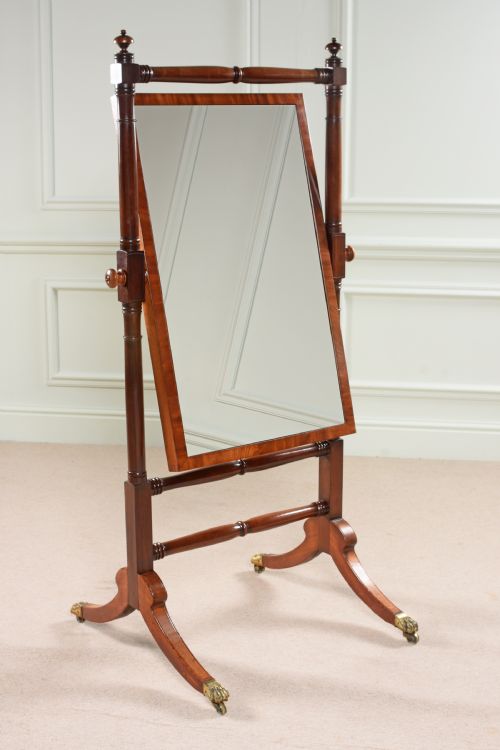


Brass Full Length Mirror
These brass full length mirror examples are substantial freestanding cheval and dressing glasses that anchor a room with period weight and bright metalwork.
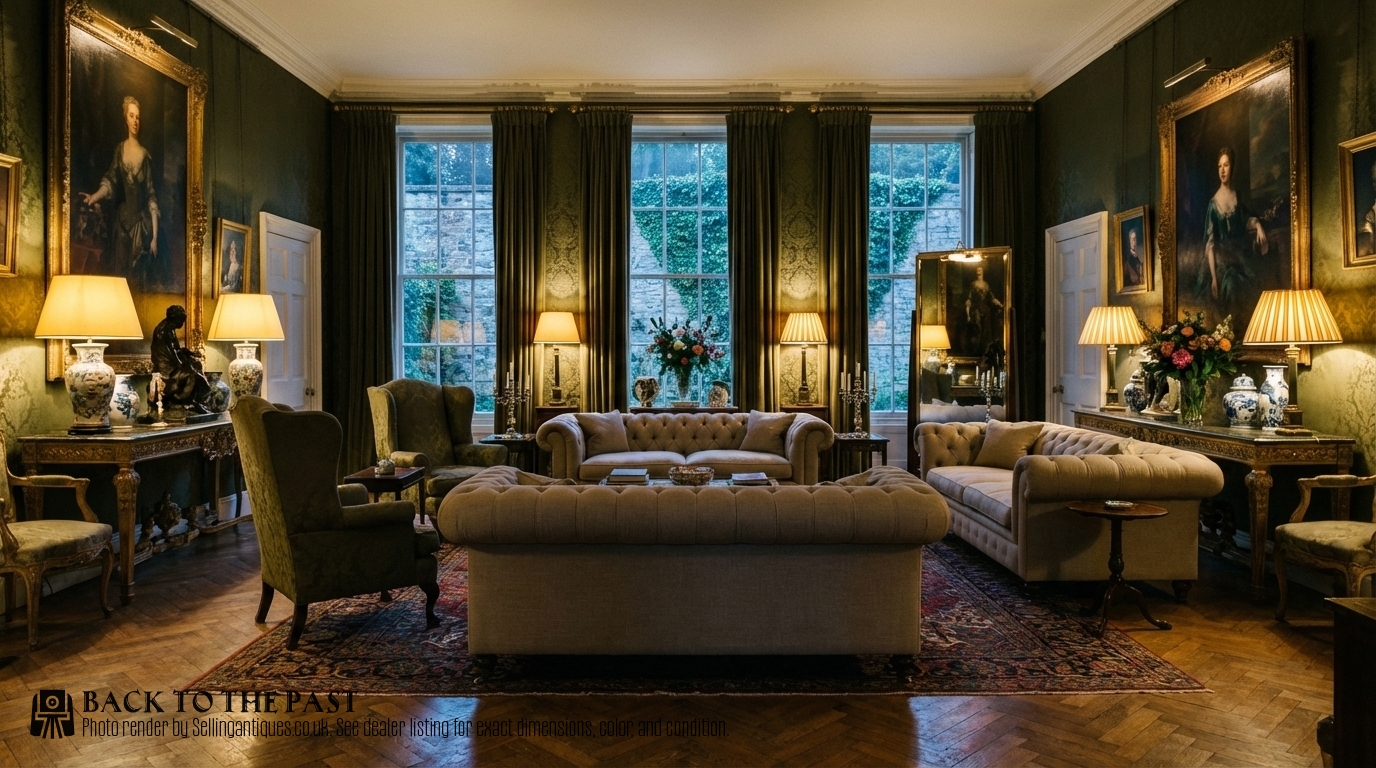
Brass Full Length Mirror
When you search for a brass full length mirror, you encounter freestanding cheval mirrors and dressing glasses that use metal mounts, frames, or hardware to support the glass. The pieces on this page span the eighteenth century, the nineteenth century, and mid-century modern design, taking forms from French Empire to Art Deco Glamour.
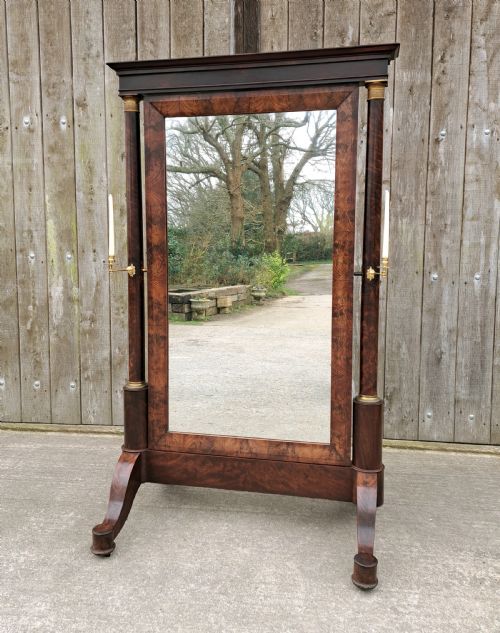
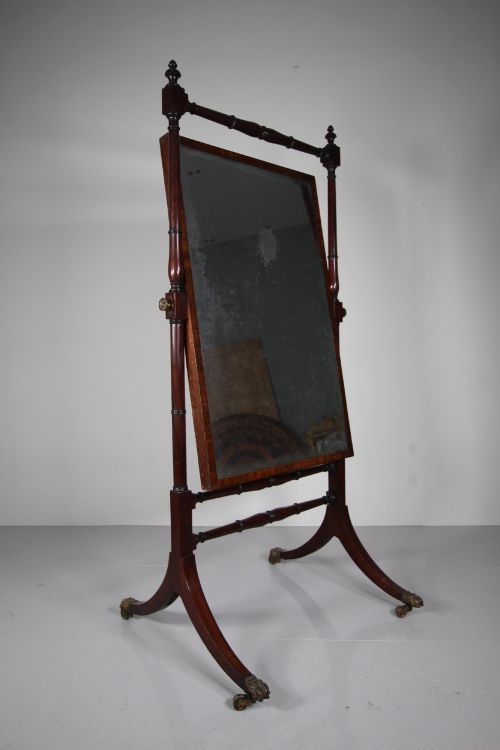
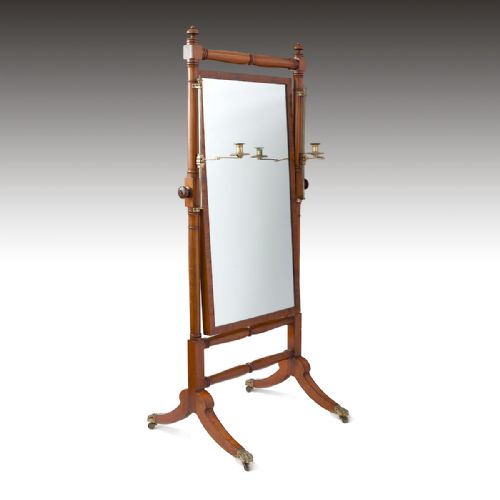
The most frequent version you meet here is the mahogany or flame mahogany cheval mirror fitted with brass sabots, castors, or candle holders. These standing mirrors allow full-length viewing while introducing warm timber tones and polished brass detail to a dressing room or bedroom.
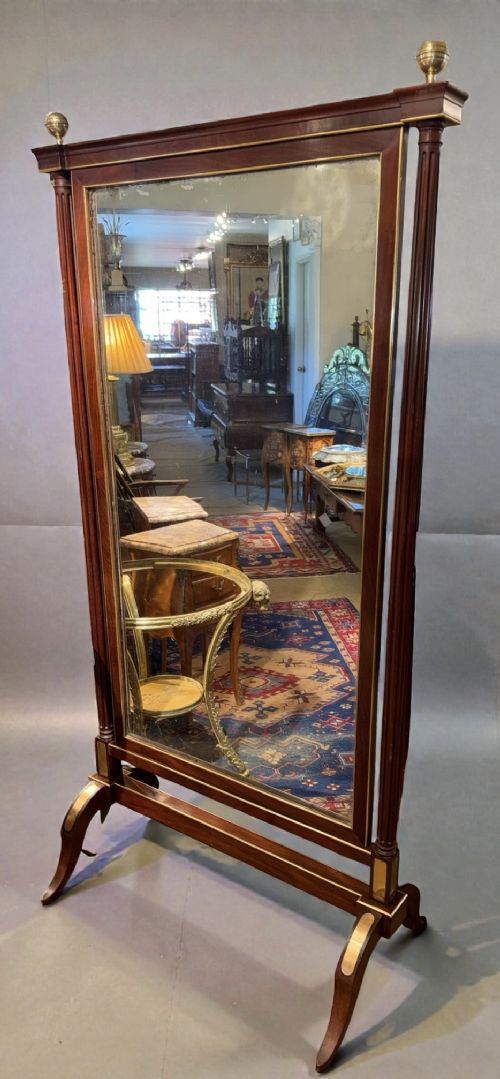
Alongside large country house cheval glasses, the selection includes pieces displaying Neoclassical lines, Regency styling, and George III proportions. Some examples incorporate satinwood, bronze frames, or double-sided glass configurations tailored for dressing room use.
How they were made
Maker workshops built these frames using dense hardwoods like mahogany and satinwood, often applying flame mahogany veneers to large standing structures. Brass and bronze provided structural stability and decorative accent, appearing as castors, sabots, and articulated candle holders attached to the swinging frame.
The heavy glass plates required sturdy pivoting mechanisms set into upright standards, allowing the mirror to tilt smoothly to various angles. Cabinetmakers employed classical joinery techniques to support the considerable weight of the glass and timber frame without sagging.
Design styles represented across these pieces include French Empire, Regency, Louis XVI, William IV, Art Deco Glamour, and Neoclassical.
What varies in quality
The distinction between ordinary and exceptional pieces lies in the crispness of the brass casting and the choice of timber figure. Superior examples display finely chased brass mounts, heavy grade mahogany with rich grain patterns, and robust pivot hardware that holds the glass firmly in position.
Proportion and scale dictate the visual success of the piece, with finer mirrors showing balanced neoclassical lines or well-executed stylistic details such as sabre legs and brass sabots. The integration of functional elements like articulated candle holders also elevates the ambition of the construction.
The Brass Full Length Mirror Glossary
- Cheval mirror
- A freestanding full-length mirror mounted on a frame with pivots that allow it to swing. This form became popular in the eighteenth and nineteenth centuries for dressing rooms.
- Sabot
- A metal shoe or sleeve fitted to the foot of a furniture leg. In these pieces, they are typically cast in brass to protect the timber base.
- Flame mahogany
- A veneer cut from the branchwood fork of the mahogany tree, creating a distinctive flamed or feathered grain pattern. Makers utilised this timber for prominent surfaces on high-status furniture.
- Sabre leg
- A curved, outwardly tapering furniture leg resembling a cavalry sword. This form appears frequently on Regency period stands and supports.
Brass Full Length Mirror: Frequently Asked Questions
What is a cheval mirror?
A cheval mirror is a full-length dressing glass mounted in a freestanding frame on pivots. This design allows the user to tilt the mirror plate to any desired angle.
First appearing in the eighteenth century, these large mirrors were essential bedroom and dressing room furnishings for checking complete attire.
How do I date a brass mirror?
Dating relies on combining the wood species, leg style, brass hardware, and construction methods. For instance, sabre legs and distinct brass sabots point toward the Regency period.
Earlier pieces show George III proportions and hand-cast brass details, while mid-century examples adopt different frame profiles and bronze finishes.
Where were these mirrors used?
These large standing mirrors were traditionally positioned in bedrooms, dressing rooms, and grand country house halls. Their full-length glass plates served practical grooming needs in private spaces.
Many included candle holders to provide illumination for dressing before electric lighting became common.
Are double-sided mirrors original?
Double-sided mirrors feature reflective glass on both the front and back of the pivoting frame. Surviving examples from the twentieth century often utilise this configuration for central placement in dressing rooms.
This layout allowed the mirror to turn completely without requiring a solid backing panel.