



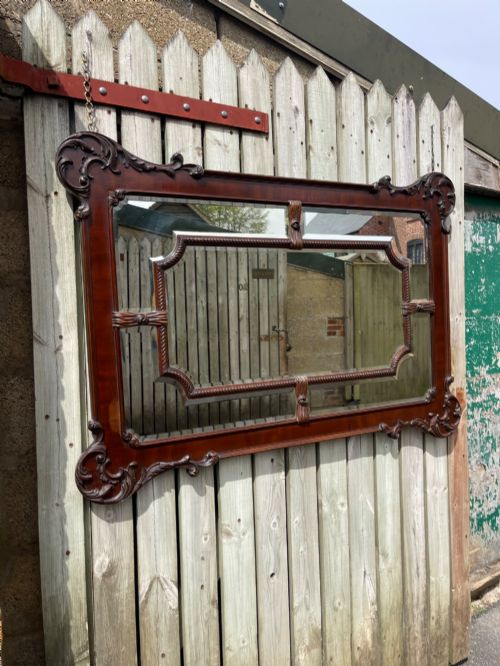

Landscape Overmantel Mirror
Landscape overmantel mirror search results bring together wide architectural looking-glasses designed to sit above a fireplace.
Landscape Overmantel Mirror
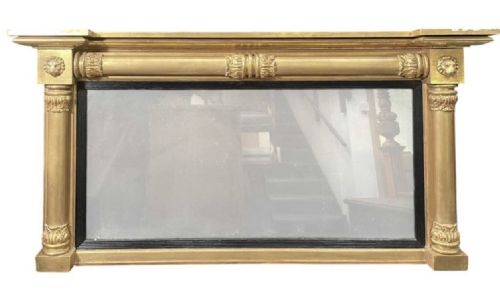
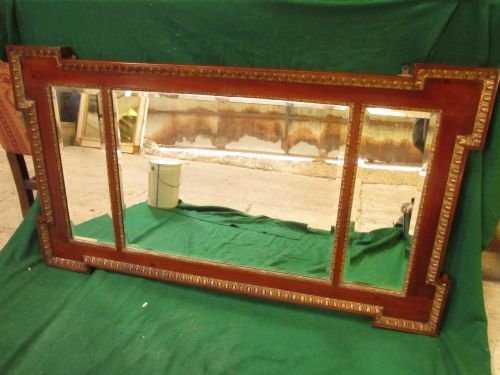
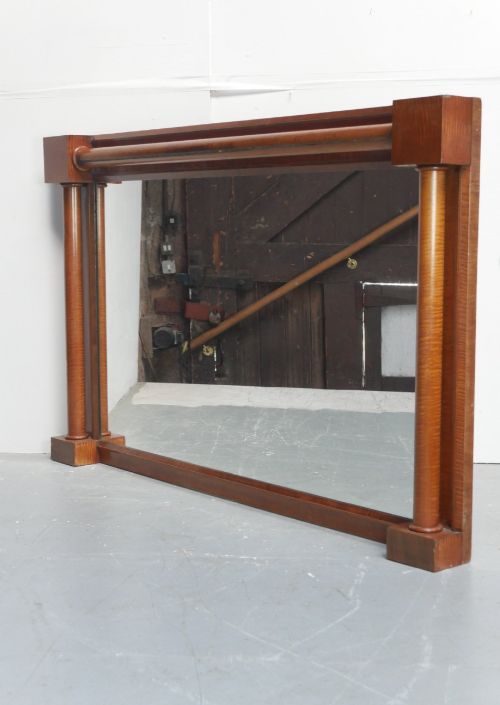
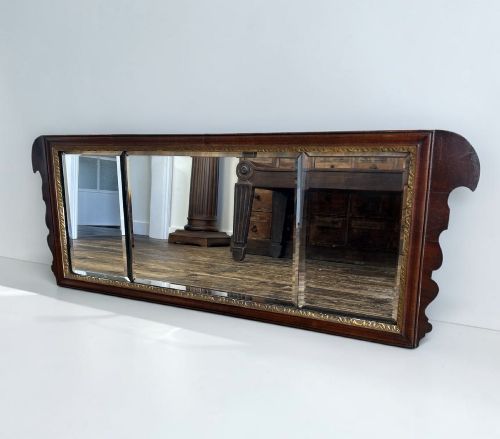
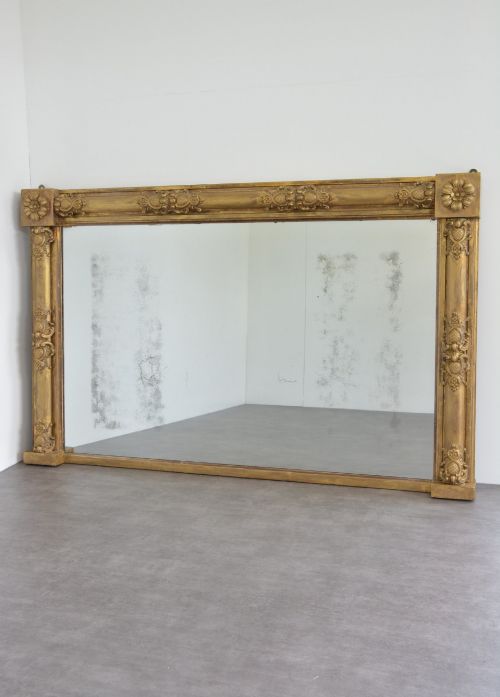
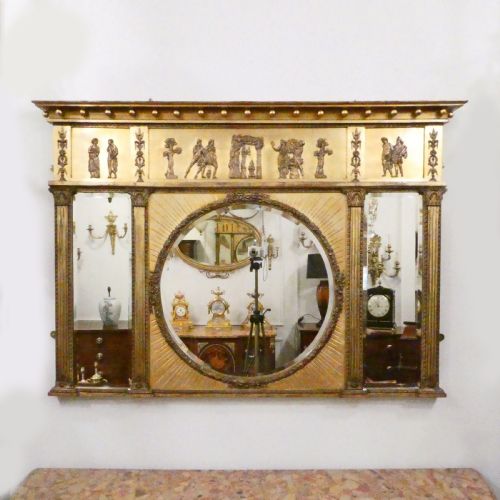
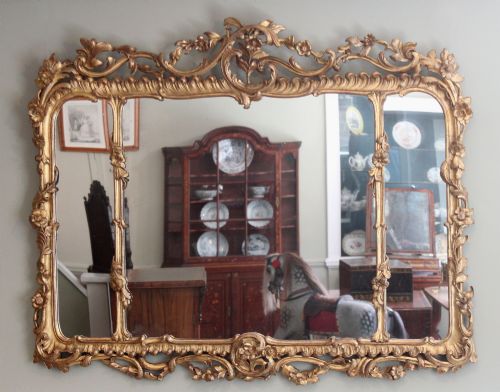
A landscape overmantel mirror sits horizontally above a fireplace mantel, extending the visual breadth of a chimney breast. These looking-glasses appear in Regency, Victorian, and Edwardian guises, often taking the form of triptych or triple-plate formats.
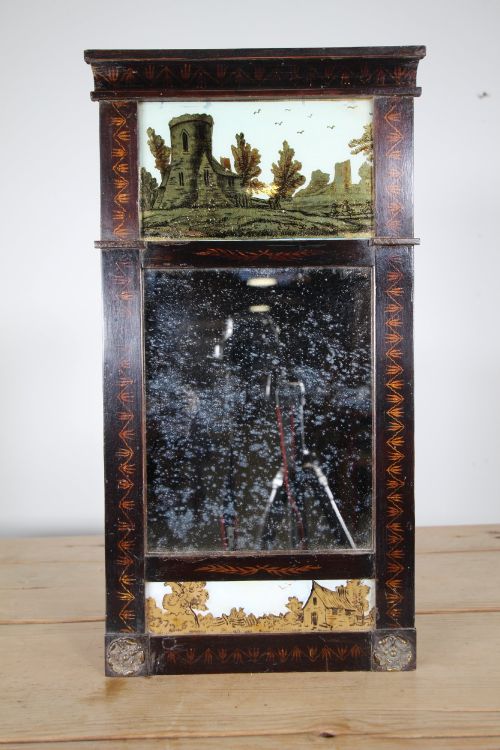
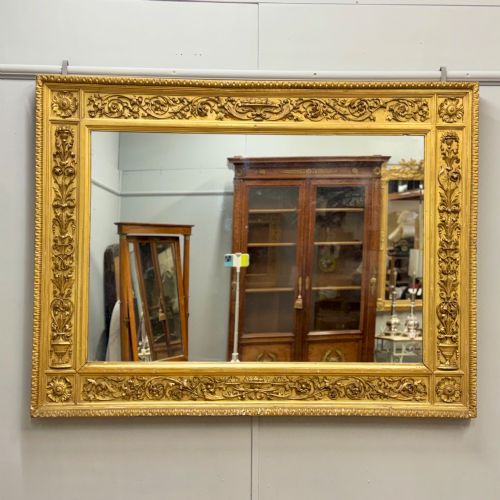
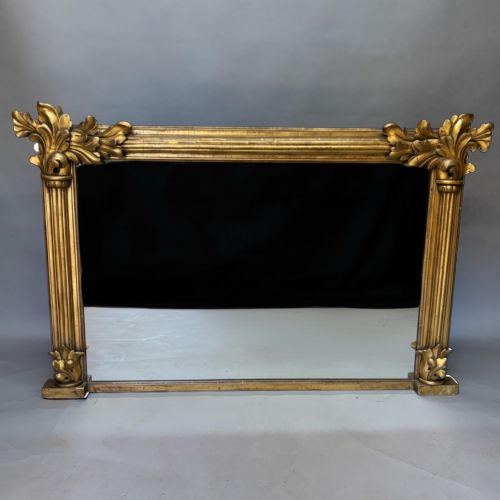
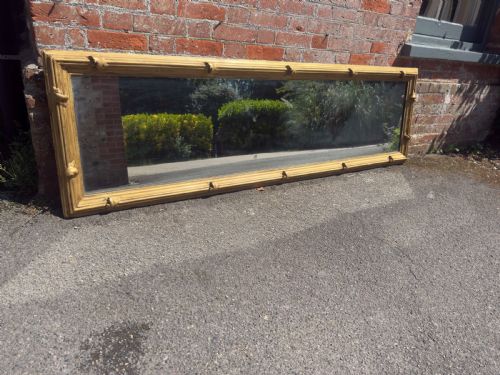
The version most commonly met on this page is the nineteenth-century giltwood frame, frequently decorated with classical motifs such as acanthus columns, laurel wreaths, or eglomisé panels.
Makers and makers' workshops also produced grand scale Georgian and French-influenced trumeau designs, alongside Arts and Crafts interpretations and painted finishes.
How they were made
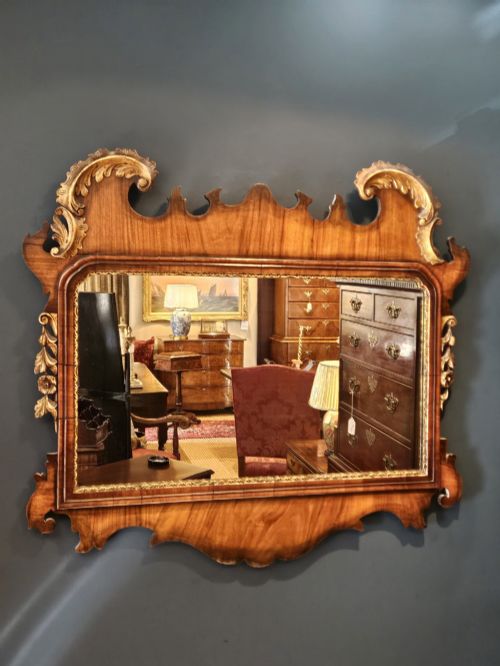
Carved wood and gesso form the structural base for many of these gilt frames, providing a firm surface to receive gold leaf or gilding. Wood such as mahogany and walnut also appear where the timber grain remains exposed or parcel gilt.
Glass plates are set into frames either as a single wide expanse or divided into triple sections, sometimes showing period traits like light foxing.
Landscape Overmantel Mirror Retail Price Guide 2026
Typical asking prices for landscape overmantel mirror among the pieces listed under this phrase on Sellingantiques today, from the lower quarter to the upper quarter. They describe what is for sale here now, not the wider market.
Listings span from the eighteenth century through to the 1930s, featuring giltwood, mahogany, walnut, and painted finishes.
What varies in quality
The crispness of the carved wood and gesso ornamentation dictates visual success, where sharp relief work on motifs like griffins and scrolling foliage separates finer examples from softer castings.
The integrity of the original mercury or silvered mirror plates and the depth of the gilding set apart pieces that retain their period character.
Rowley Gallery·Ciceri and Co
The Landscape Overmantel Mirror Glossary
- Overmantel
- A mirror or decorative panel specifically designed to hang or stand upon a mantelpiece. These fixtures often anchor the decorative scheme of a reception room.
- Triptych
- A triple-plate mirror configuration where the glass is divided into three distinct vertical sections within a single frame. This format distributes light effectively across wider chimney breasts.
- Gesso
- A plaster-like mixture applied to wood frames to create a smooth surface for gilding or carving. Artisans build up layers of gesso before cutting crisp decorative details.
- Eglomisé
- A process of applying gold or silver leaf to glass along with painting, viewed from the reverse side. It creates a lustrous, reflective panel often seen at the top of trumeau mirrors.
- Foxing
- Small dark spots and speckles that develop within the silvering of antique mirror glass over time. This ageing process indicates genuine period material.
Landscape Overmantel Mirror: Frequently Asked Questions
Where should a landscape overmantel mirror be hung?
These mirrors belong directly above a fireplace mantel, where their horizontal proportions balance the hearth below. They anchor the wall space of a reception room or drawing room.
Alternatively, they can be mounted on a large expanse of wall as a principal pier glass, reflecting light across the floor.
How do I identify a Regency period frame?
Regency frames frequently display classical motifs including acanthus leaves, columns, and convex mouldings. Gilding applied over gesso is typical of this era.
Look also for triptych plates divided by colonnettes or black-painted reeded slips inside the outer frame.
What is a trumeau mirror?
A trumeau mirror incorporates a painted panel or an eglomisé glass section positioned directly above the main looking-glass. This French-influenced style dates through the eighteenth and nineteenth centuries.
They combine artwork and reflection into a single architectural unit.
Are triple plate mirrors original to the nineteenth century?
Triple plate formats appear frequently in nineteenth-century overmantel mirrors, designed to fit wide chimney breasts. The divisions allowed workshops to manufacture large viewing areas before massive single sheets of glass were common.
Original backing boards and old fixings help confirm the period integrity of these multi-plate arrangements.