




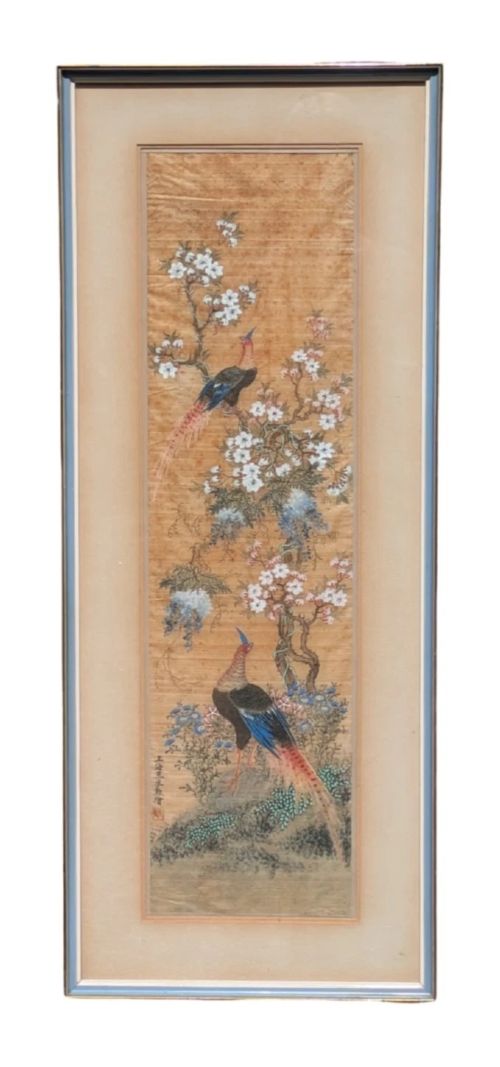
Landscape on Panel
Landscape on panel brings together small painted vistas and framed views on wooden supports, prized for the intimate scale and enduring texture they offer.
Landscape on Panel
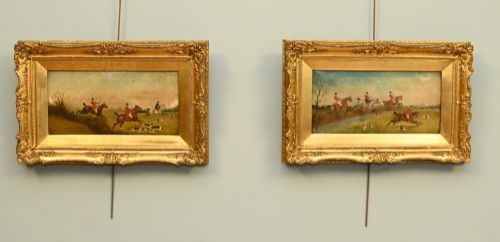
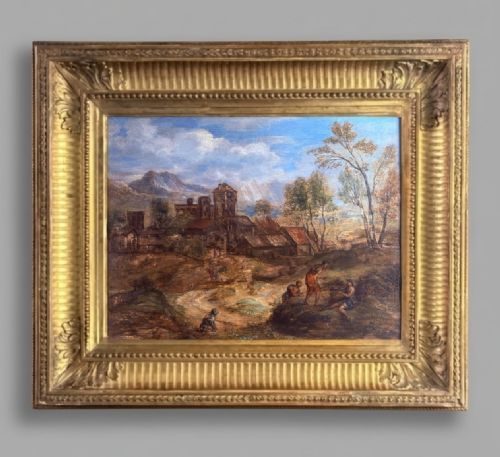
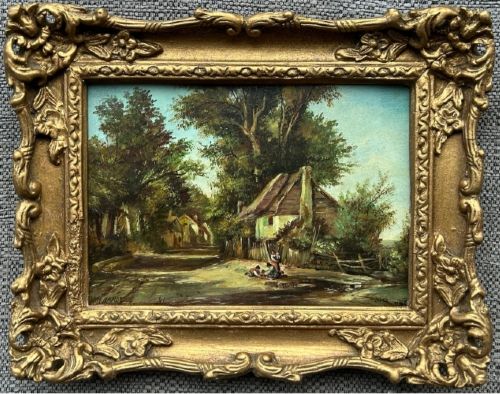
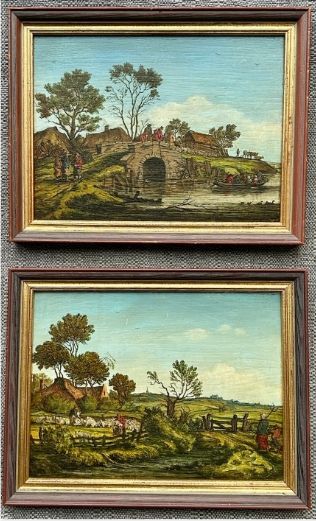
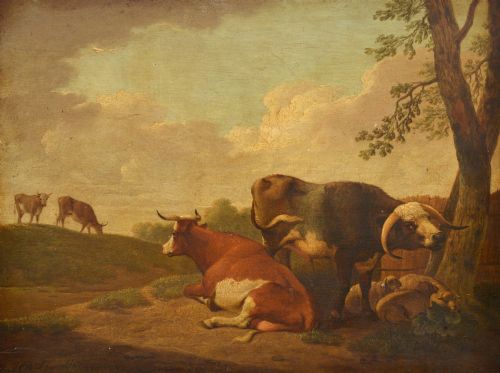
A landscape on panel involves painted scenes executed directly on wood rather than canvas, ranging from pastoral river views to rustic figures in wooded settings. These works cross several periods, appearing in seventeenth-century continental scenes as well as nineteenth-century British oil paintings.
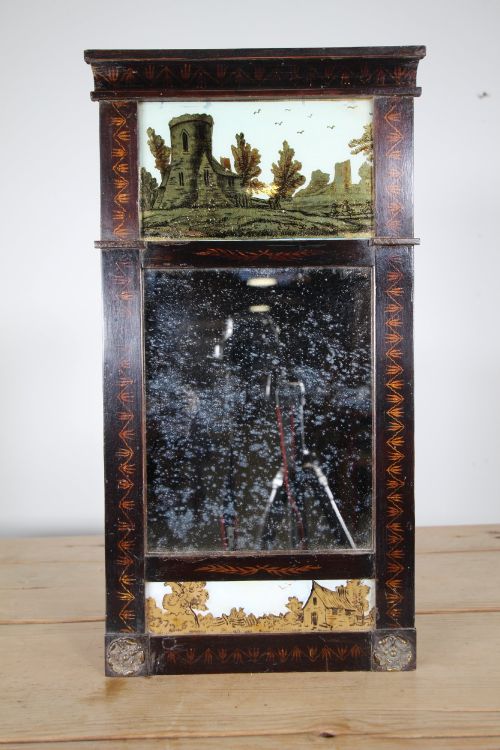
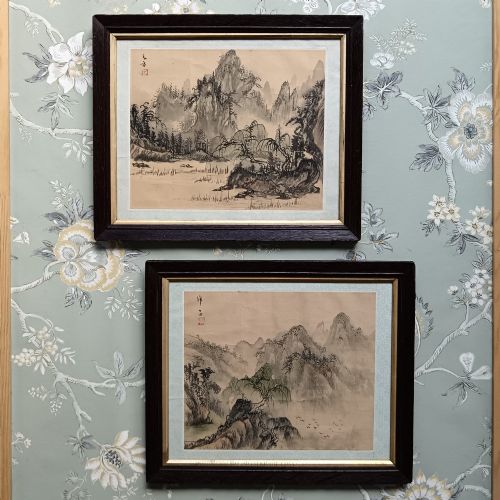
The format also extends into decorative panels and mirror inserts, incorporating carved details or painted architectural elements from the Georgian and Victorian eras. Collectors encounter diverse regional approaches, from Scottish highland valleys to Flemish pastoral compositions.
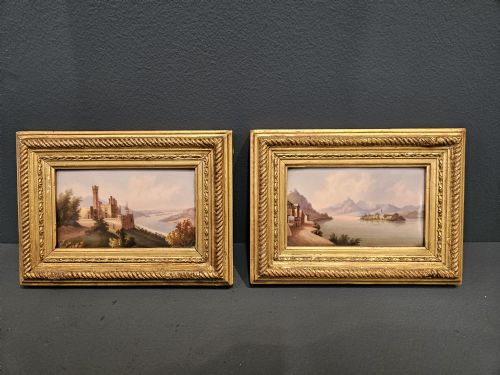
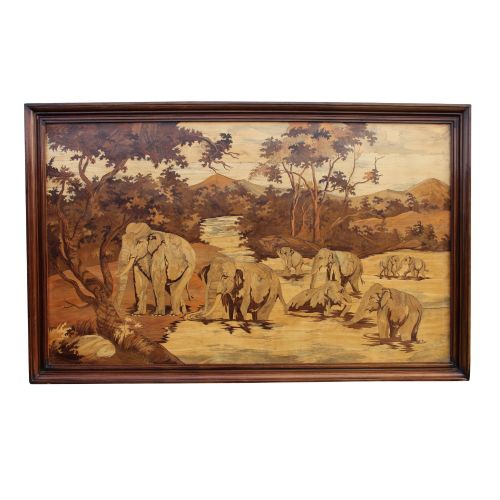
Most examples rely on oil paint applied to prepared wooden supports, though related mediums like porcelain plaques and marquetry panels also emerge within the broader category. The surface grain often remains faintly visible beneath the brushwork in earlier works.
Materials and construction
Painters used sturdy wooden boards, sometimes prepared with gesso layers to create a smooth, stable ground for oil pigments. This rigid foundation prevented the cracking often found in aged canvas.
Giltwood frames frequently complement these panels, alongside original mouldings that protect the edges of the wood. Craftspeople also utilised inlaid marquetry and carved hardwood stands for three-dimensional landscape panels.
Landscape on Panel Retail Price Guide 2026
Typical asking prices for landscape on panel among the pieces listed under this phrase on Sellingantiques today, from the lower quarter to the upper quarter. They describe what is for sale here now, not the wider market.
The selection spans seventeenth-century European landscapes up to early twentieth-century British and Scottish rural views.
Judging quality and execution
The refinement of brushwork and the management of natural light separate standard decorative boards from master-executed works. Superior panels show confident handling of foliage, skies, and figures that integrates harmoniously with the grain of the wood.
Condition of the wooden support remains central, as stable panels without warping or heavy shrinkage retain their original pigments best. The presence of authentic period framing also contributes to the integrity of the piece.
Robert Duddingstone Herdman·Tom Campbell·Hendrik Willem Schweickhardt·Maud Raphael Jones·Paul-Élie Gernez·Pieter Cornelis Dommersen·Cornelis Van Poelenburgh
The Landscape on Panel Glossary
- Oil paint
- A slow-drying paint made by combining pigments with a drying oil, typically linseed. This medium allows artists to build rich, textured layers on wooden supports.
- Wood panel
- A rigid board used as a painting support before canvas became dominant. It offers exceptional stability and a smooth working surface.
- Giltwood
- Timber that has been coated with a thin layer of gold leaf or gilt powder. It is commonly found on the frames housing antique landscape panels.
- Gesso
- A paint mixture consisting of a neutral binder mixed with chalk, gypsum, or pigment. It served as a preparatory ground on wooden panels before painting.
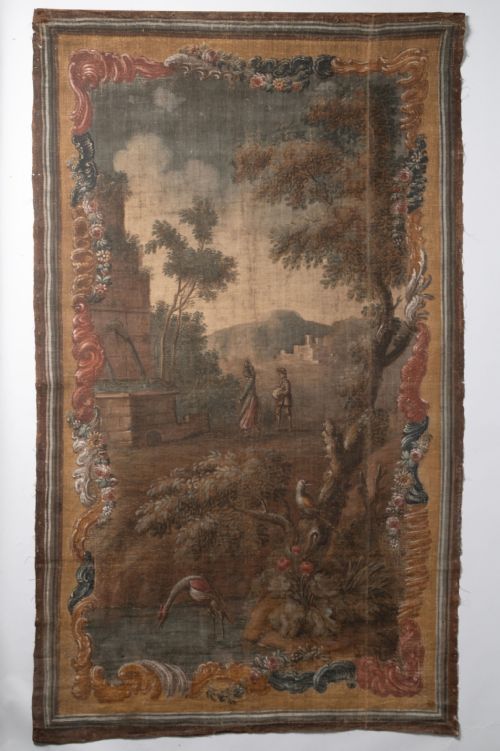
- Verdure tapestry
- A woven wall hanging featuring a predominant landscape or foliage design. These textiles often depict stylised trees, rivers, and distant hills.
Landscape on Panel: Frequently Asked Questions
What is a landscape on panel?
It is an artwork painted directly onto a wooden board rather than stretched canvas. These pieces capture outdoor scenes across various centuries.
Artists favoured wood for its smooth texture and firm resistance to sagging over time.
How should I clean a wooden panel painting?
Dust the surface very gently with a soft, dry brush. Avoid using water, household cleaners, or moisture on aged wood.
Professional conservators should handle any deeper cleaning or varnish removal to protect the delicate pigments.
Where were these panels displayed?
Owners hung them in private parlours, libraries, and drawing rooms as portable windows into scenic vistas. Smaller panels often sat on mantelpieces or desks.
Some were integrated directly into architectural woodwork or decorative overmantel mirrors.
How do I date a painted wood panel?
Examine the preparation layers, framing style, and the preparation of the timber reverse. Pigment analysis and stylistic clues also point to specific decades.
Late seventeenth-century works differ noticeably in palette and framing from nineteenth-century British school pieces.