
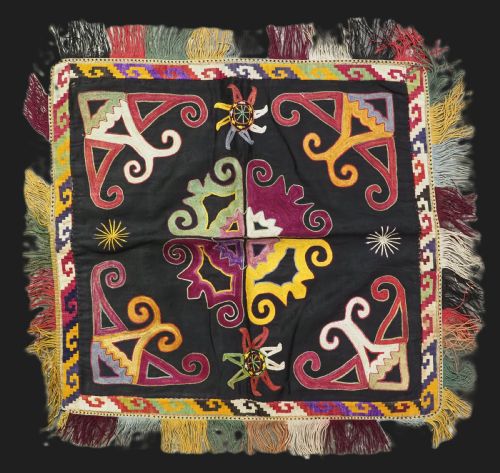
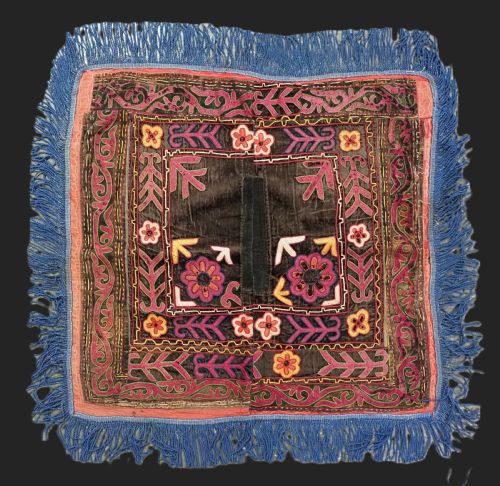
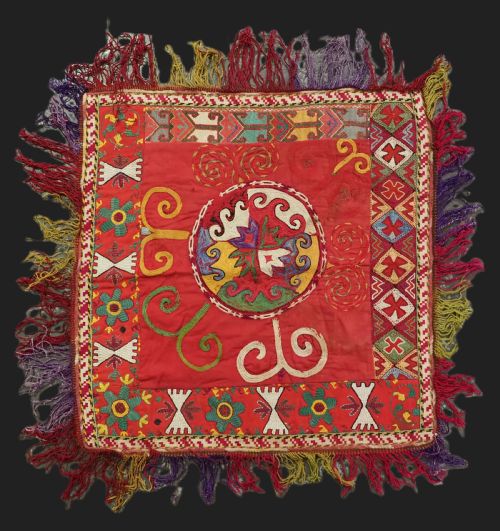


Lakai Tribe Textile
A lakai tribe textile brings bold Central Asian geometric energy and rich dowry embroidery into a room.
Lakai Tribe Textile
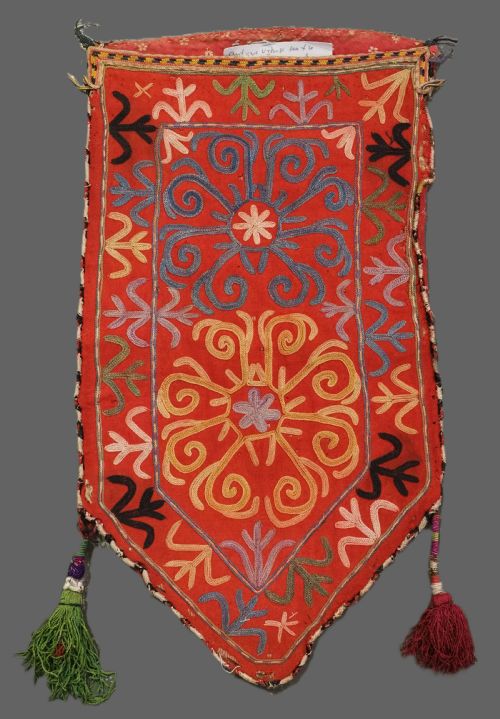
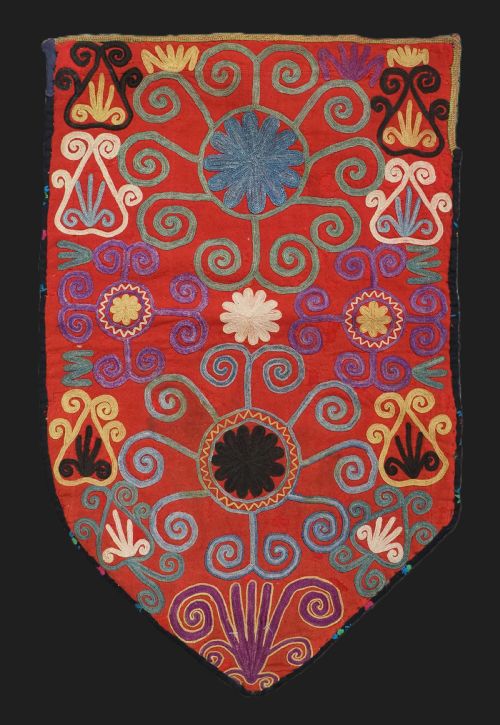
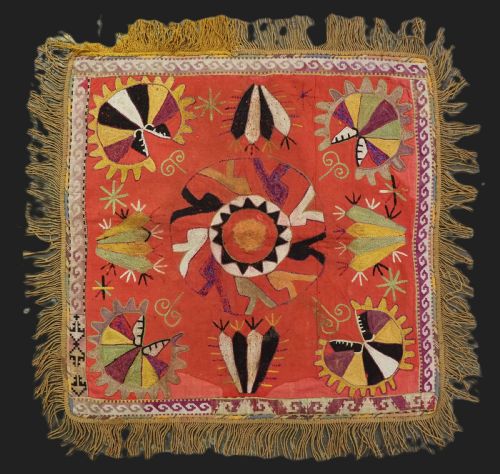
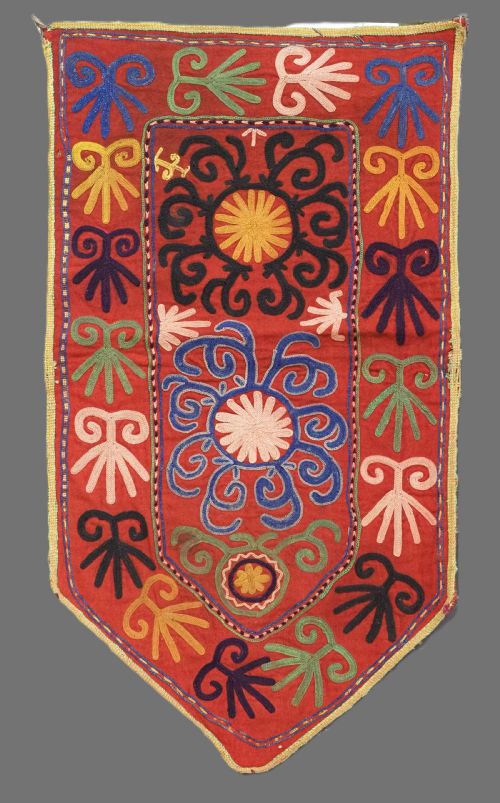
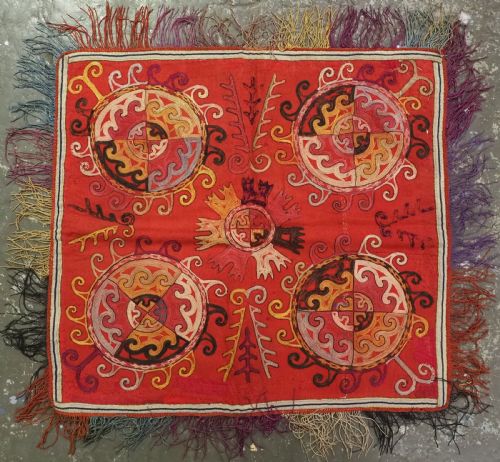
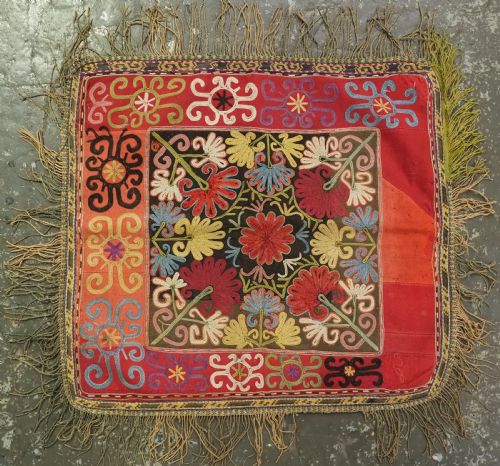
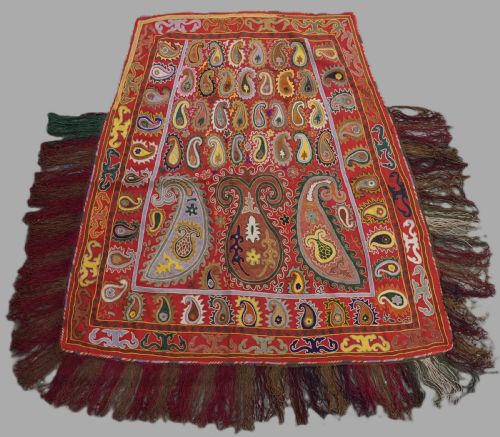
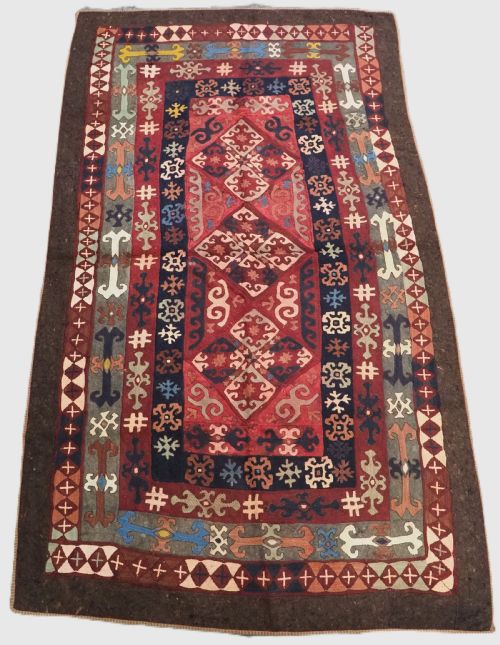
When searching for a lakai tribe textile, collectors encounter striking Central Asian artefacts originating from Uzbek nomadic groups. These pieces primarily manifest as dowry embroideries, wall hangings, ceremonial horse covers, and felt rugs.
The version most commonly met on this page is the nineteenth or early twentieth-century ilgich or uut kap ilgich. These utilitarian and ceremonial objects display distinct tribal motifs rooted in Uzbek folk art traditions.
Originating from regions such as Shakrisabz in Uzbekistan, these textiles function visually as textile art and rug forms. They represent the nomadic aesthetic through patterned wall hangings and bed decorations.
Materials and construction
Makers utilised a foundation of cotton, wool, or felt to construct these Central Asian pieces. Silk thread provided the primary medium for dense surface embroidery.
Makers embellished the textiles with elements like velvet and wool fringe to complete the composition. Double faced construction and silk on cotton techniques appear across the surviving examples.
Nomadic horses wore finer embroidery than most humans owned, sporting elaborate ceremonial saddle covers for special tribal occasions.
Assessing quality
The sophistication of the embroidery and the complexity of the tribal motifs dictate the upper tier of these textiles. Greater density in the silk thread work separates finer dowry pieces from simpler items.
Condition of the base material, whether cotton, felt, or wool, influences the structural integrity. Intact wool fringe and well-preserved velvet elements distinguish superior examples.
The Lakai Tribe Textile Glossary
- Ilgich
- A Central Asian wall hanging or dowry embroidery piece. These textiles often feature prominent geometric motifs.
- Uut kap ilgich
- A specific form of storage bag face or hanging associated with nomadic groups. It serves a decorative function in domestic spaces.
- At torba
- A ceremonial horse or saddle cover used in tribal traditions. These objects display intricate embroidery work.
- Suzani
- An embroidered textile panel originating from Central Asia. They utilise silk thread on cotton foundations.
- Saye gosha
- A specific type of bed decoration piece. These items are created through traditional embroidery techniques.
Lakai Tribe Textile: Frequently Asked Questions
What is a lakai tribe textile?
A lakai tribe textile is an embroidered piece originating from Uzbek nomadic groups in Central Asia. These items include wall hangings, dowry embroideries, and ceremonial horse covers.
They reflect the folk art traditions of the region, utilising materials like silk thread on cotton, wool, and felt foundations.
How were these textiles used?
These pieces served multiple domestic and ceremonial functions within nomadic life. Many functioned as dowry embroideries intended for wall display.
Others served as ceremonial horse covers, saddle covers, or bed decorations like saye gosha, combining utility with decorative display.
How do I live with a lakai tribe textile?
Displaying these textiles on a wall allows the detailed silk embroidery and geometric patterns to become a focal point in a room. They suit various interior styles as wall hangings or textile art.
Protecting them from direct sunlight preserves the cotton, wool, and silk materials over time.
How can I tell periods apart?
Dating relies on stylistic markers and material combinations recorded from the late nineteenth century through the early twentieth century. Pieces from the eighteen-eighties and eighteen-nineties show specific Uzbek tribal characteristics.
Early twentieth-century examples incorporate similar silk and cotton techniques with distinct Central Asian regional variations.