




Red Silk Tribal Embroidery
Red silk tribal embroidery brings vibrant Central Asian wall hangings, dowry pieces and ceremonial covers into modern interiors.
Red Silk Tribal Embroidery
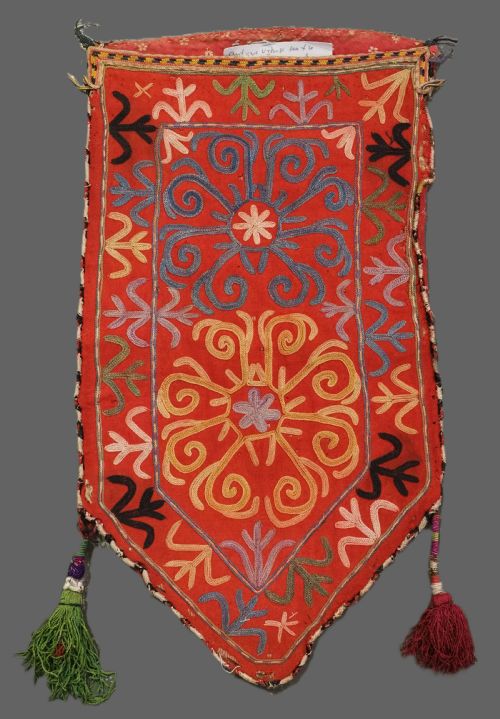
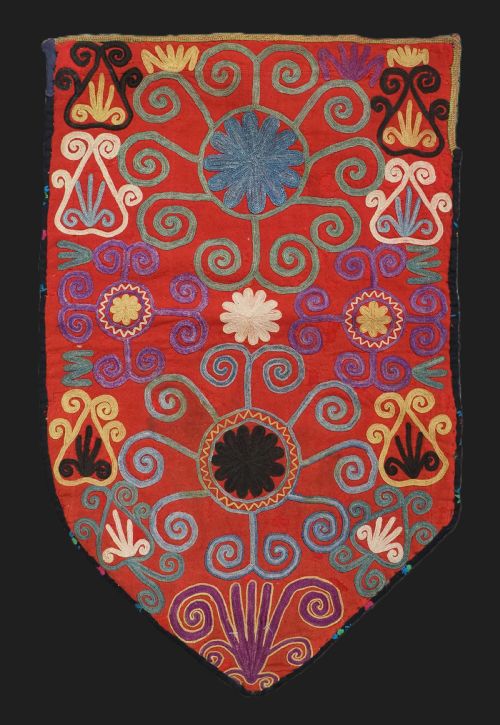
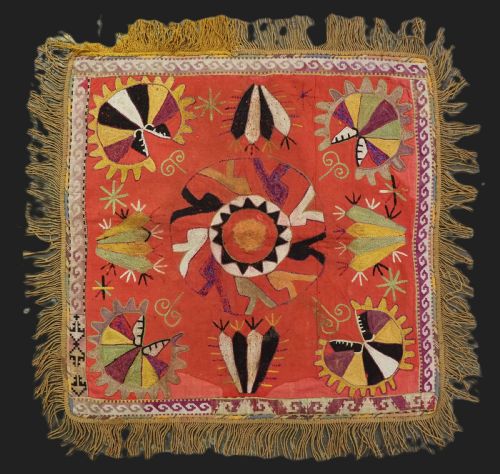
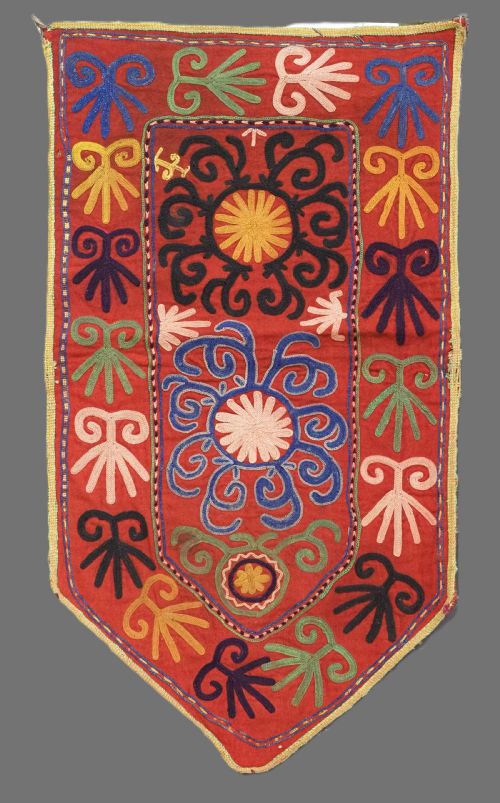
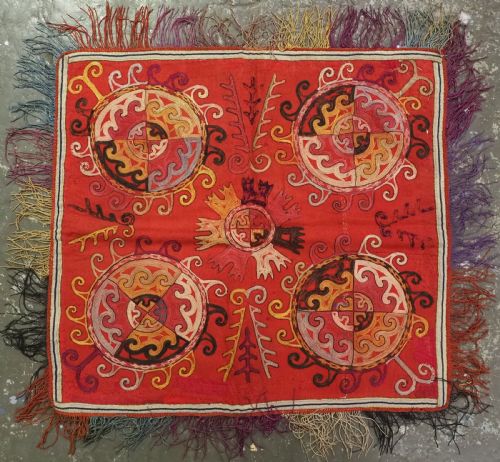
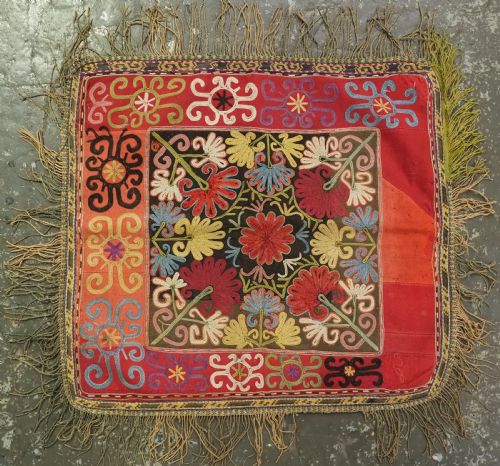
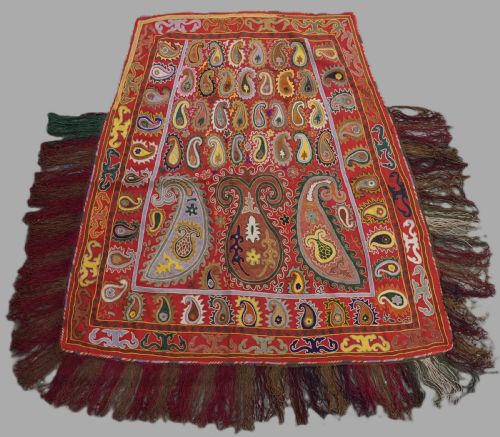
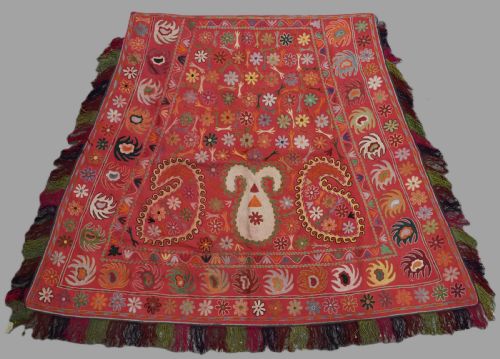
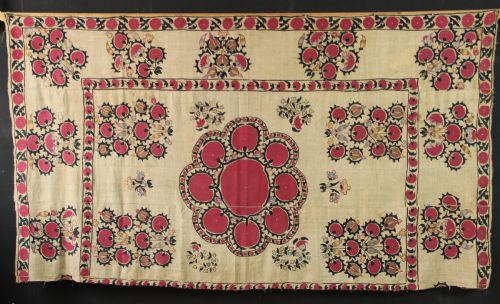
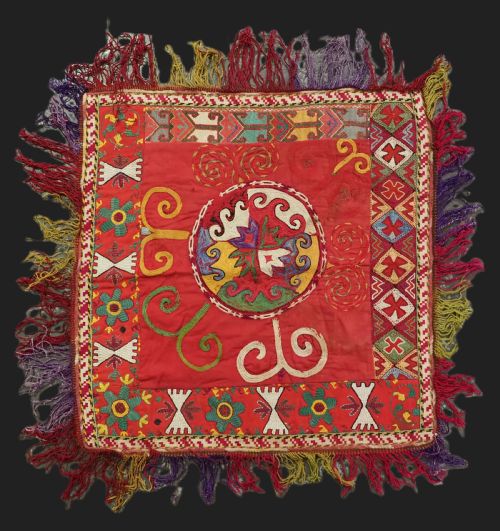
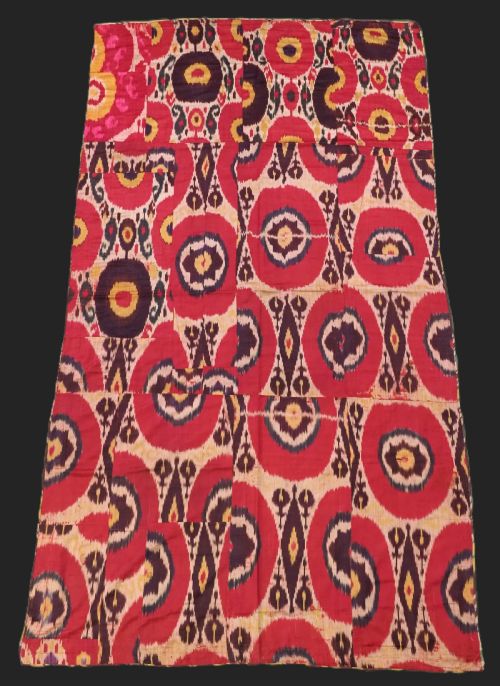
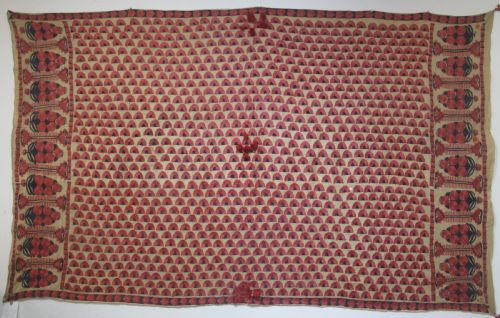
Red silk tribal embroidery encompasses textile panels, wall hangings and domestic textiles originating primarily from Central Asian regions like Uzbekistan. When buyers search for red silk tribal embroidery, they encounter pieces such as Lakai tribe ilgich wall hangings, Suzani panels and Turkmen torba covers dating from the nineteenth century to the early twentieth century.
The selection on this page centres heavily on Uzbek Lakai dowry embroideries, Tashkent Suzanis and nomadic wall hangings worked with silk threads. These textiles served functional and ceremonial roles within nomadic and village communities, functioning as dowry items, tent furnishings or ceremonial horse covers.
Most examples date between eighteen eighty and nineteen thirty, displaying traditional Central Asian motifs rendered in bold polychrome silk on wool or cotton grounds. The survival of these decorative textiles offers a direct window into the nomadic craft traditions of Central Asia.
Materials and construction methods
These textiles rely on silk thread embroidery applied to supportive foundation fabrics constructed from cotton, wool or occasionally red wool grounds. Artisans worked freehand or traced geometric and floral patterns onto the base cloth using various stitch types to build dense surface coverage.
Many Suzanis and tribal items utilise silk floss for the primary embroidery, creating a lustrous sheen that contrasts with the matte texture of the underlying woven ground. Foundation fabrics often consist of hand-spun cotton or wool dyed with natural pigments, supporting complex needlework executed across domestic workshops.
Current listings feature textiles spanning the nineteenth and twentieth centuries, including pieces originating from Uzbekistan, Pakistan and Central Asia.
Assessing quality in historical textiles
Quality in these textiles depends heavily on the density of the needlework, the complexity of the design layout and the integrity of the base material. Fully embroidered pieces, often termed full work Suzanis, demonstrate a higher degree of artisan labour compared to panels with exposed foundation fabric.
The vibrancy of the silk thread and the precision of the stitching contribute significantly to the visual impact of an individual piece. Condition also plays a role, with intact borders, minimal thread loss and stable foundation cloths distinguishing superior examples.
The Red Silk Tribal Embroidery Glossary
- Suzani
- A traditional embroidered tribal textile from Uzbekistan, typically created as part of a bride's dowry. These large wall hangings display elaborate botanical and geometric motifs stitched in silk.
- Ilgich
- A specific type of wall hanging or dowry embroidery associated with the Lakai tribe of Uzbekistan. They often display dynamic geometric arrangements and energetic nomadic aesthetics.
- Torba
- A small storage bag or trapping produced by Turkmen and related tribal groups. They frequently feature detailed embroidered faces and wool or silk highlights.
- Uut kap
- A specialised hanging bag used within nomadic yurts for storing household items. These pieces often exhibit the same spirited embroidery style as tribal ilgich panels.
- Palak
- A large Tashkent Suzani style characterised by a fully embroidered field dominated by a central star or medallion. The ground is heavily covered in dense silk needlework.
Red Silk Tribal Embroidery: Frequently Asked Questions
What is an ilgich?
An ilgich is a traditional embroidered dowry piece produced by the Lakai tribe in Uzbekistan. Families created these textiles for domestic wall hanging purposes during the late nineteenth and early twentieth centuries.
These pieces typically display dynamic geometric or abstracted motifs worked in bright silk threads on a contrasting wool or cotton ground. They represent the nomadic artistic expression of Central Asian tribal groups.
How do I care for antique textiles?
Antique textiles require protection from direct sunlight to prevent fading of the natural silk threads and dyed foundation fabrics. Mounting them professionally on stable backing materials helps distribute weight evenly if hung on a wall.
Avoid washing historical silk embroidery with water or chemical cleaners. Gentle surface dusting with a soft brush is generally sufficient for maintenance.
How are different regional styles told apart?
Regional attribution relies on examining the specific stitch techniques, colour palettes and motif structures characteristic of particular tribes or cities. For instance, Tashkent Suzanis often feature dense full-work floral sprays, while Lakai pieces showcase energetic geometric appliquu00e9 and chain stitching.
Turkmen torbas and Uzbek Suzanis also differ in their primary foundation materials and border designs. Comparing these structural details helps pinpoint the probable origin within Central Asia.