


Ladderback Rush Chairs
Ladderback rush chairs bring sturdy country craft into a room, offering tactile seating shaped by generations of regional makers.
Ladderback Rush Chairs
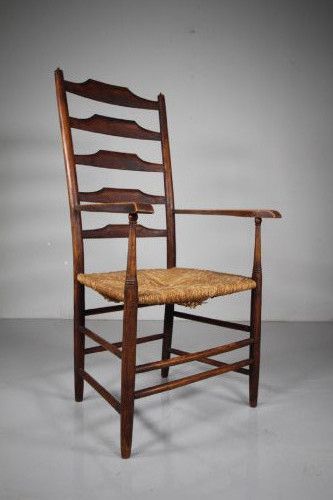
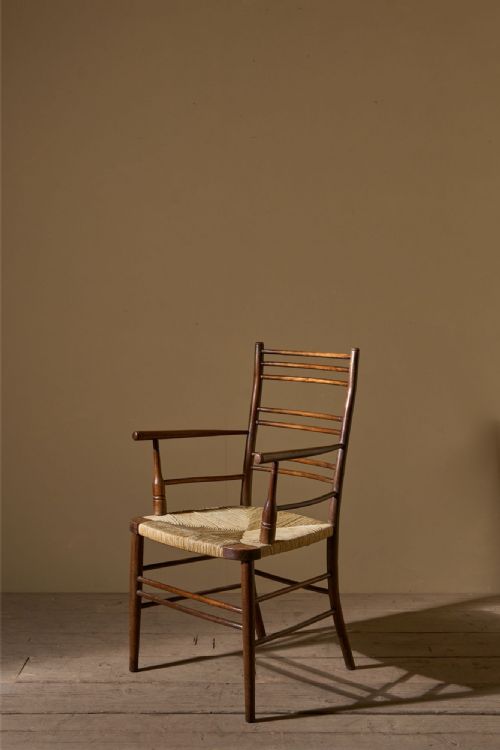
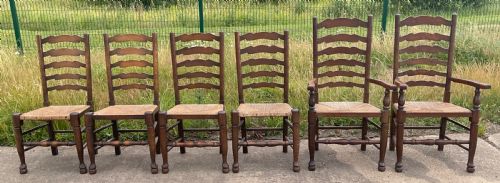
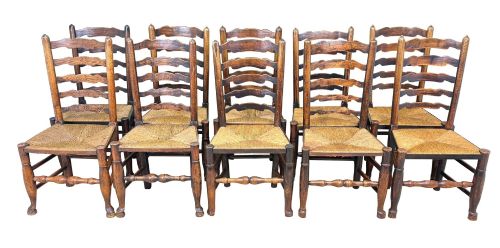
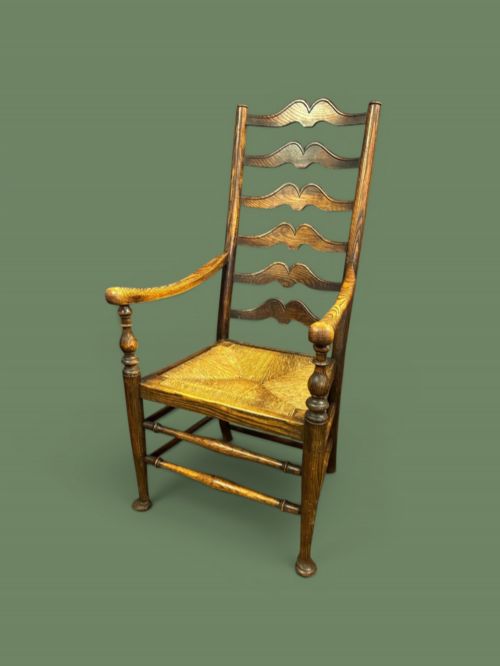
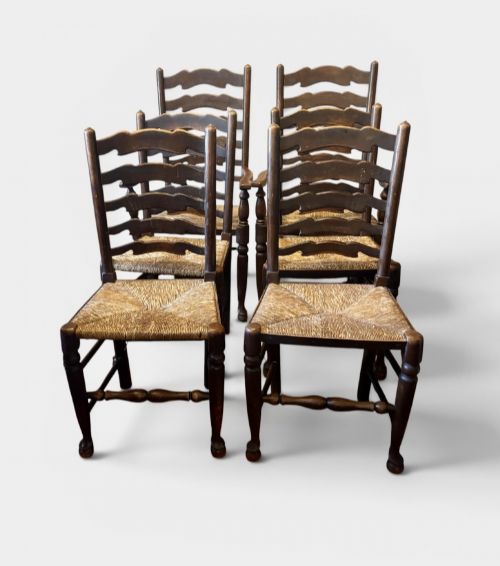
When you search for ladderback rush chairs, you encounter a lineage of vernacular seating built primarily for everyday use in kitchens, farmhouses, and cottages. The form is defined by horizontal slats between upright posts and a woven seating plane.
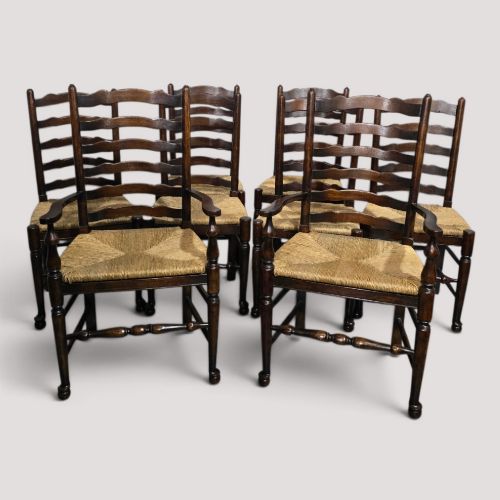
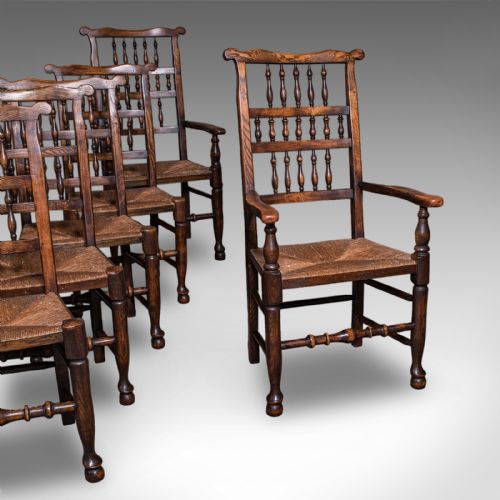
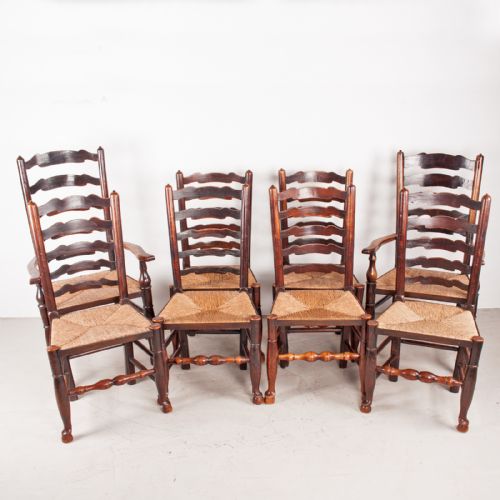
You are most likely to meet nineteenth-century examples alongside Edwardian and 1930s revivals on this page. These range from single side chairs and armchairs to large dining sets of six or ten pieces.
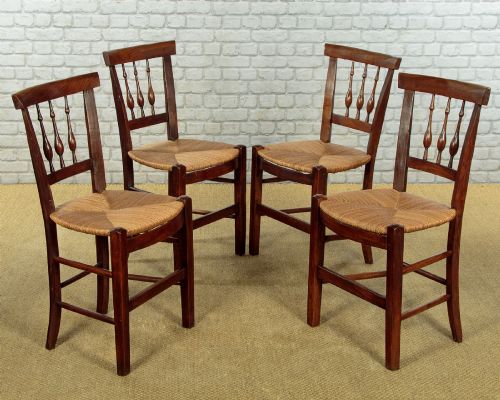
Regional variations emerge across the selection, including Lancashire, Cheshire, and Dales forms, alongside French provincial and Arts and Crafts interpretations. Occasional high chairs, rocking chairs, and miniatures appear amongst the standard dining seats.
Materials and construction
Frames are turned and shaped from native timbers such as oak, elm, ash, beech, and painted variants. Carpenters selected these woods for strength and flexibility in the uprights and rails.
Seats are tightly plaited from natural rush or súgán straw, wound around the internal frame rails to create a resilient platform. This organic cordage gives under weight before returning to tension.
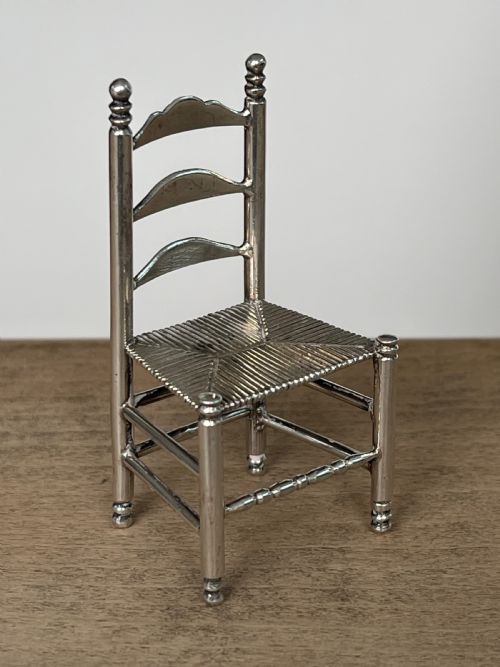
A tiny doll's house chair sits quietly amongst full-sized farmhouse carvers.
Evaluating craftsmanship and survival
The distinction between standard utility seating and exceptional examples lies in the subtlety of the slat turning and the integrity of the frame joints. Tighter joinery and balanced proportions separate workshop pieces from basic vernacular output.
Survival of the original rush seating surface and the crispness of the ladder rails determine the desirability of an antique chair. Gradual wear on the foot ends and the tension of the woven strands tell the history of use.
Philip Clissett·Dicon Nance·Lawrence Neal·Edward Gardener·Liberty and Co
The Ladderback Rush Chairs Glossary
- Ladderback
- A chair back constructed with multiple horizontal wooden slats set between two vertical rear posts. These slats are often curved or graduated in width.
- Rush seat
- A seating surface woven from dried marsh rushes or similar cordage around a wooden frame. This traditional technique creates a textured, supportive pad.
- Carver
- An armchair, typically designed with elbows to match a set of dining side chairs. These were traditionally seated at the head of a table.
- Vernacular
- Objects made by local tradespeople for practical daily use rather than following strict high-style academic designs. This tradition values regional materials and utility.
- Súgán
- An Irish term for a twisted straw rope used for chair seating. It provides a durable alternative to marsh rush.
Ladderback Rush Chairs: Frequently Asked Questions
How do I date a ladderback chair?
Dating relies on observing turning details, timber choice, and construction methods. Earlier eighteenth-century pieces often feature deeply arched slats and hand-carved details, while later nineteenth-century and 1930s revival pieces show standardised turning.
Changes in proportion and the wear patterns on the feet help narrow down the period when combined with the specific timber used.
Can rush seats support daily sitting?
Natural rush is remarkably resilient and designed for everyday utility. Properly woven rush withstands regular weight while offering a slightly yielding surface.
Keeping the chairs away from damp environments preserves the natural fibres and maintains the structural tension of the weave.
What is a carver chair?
A carver is an armchair version of a dining chair, featuring integrated armrests for the head of the table. In many historical sets, two carvers accompanied a group of side chairs.
These pieces match the slat design and overall height of the surrounding dining seating while offering additional upper body support.
How do regional styles differ?
Regional variations appear in the profile of the ladder rails and the turning of the upright posts. Lancashire and Cheshire chairs often feature distinctive wavy slats and substantial ash or oak framing.
French provincial and Arts and Crafts interpretations adapt these traditional country forms with lighter scaling or painted finishes.