


Ladder Back Carver Chairs
Ladder back carver chairs bring upright posture and horizontal rails together with open arms for structural comfort at the table.

Ladder Back Carver Chairs
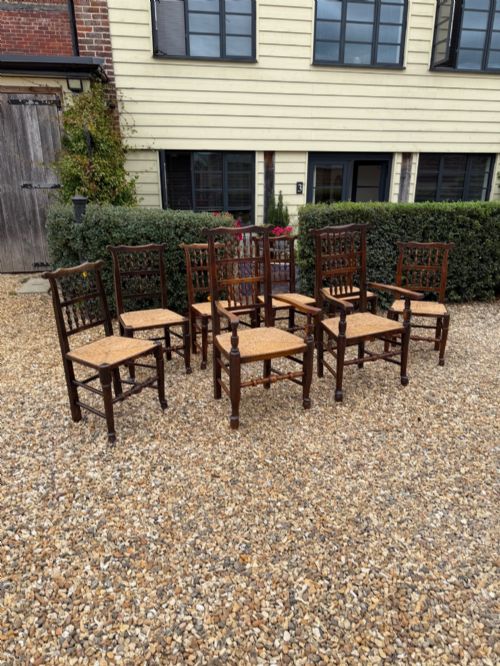
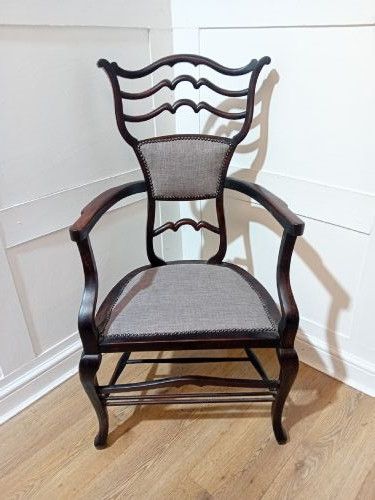
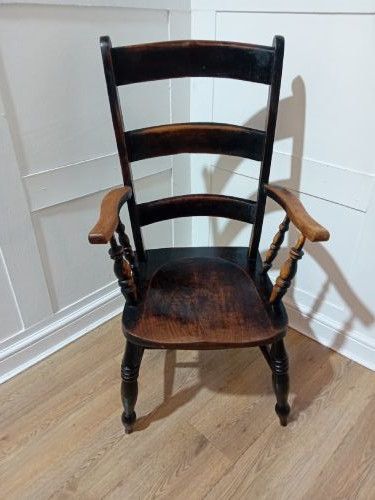
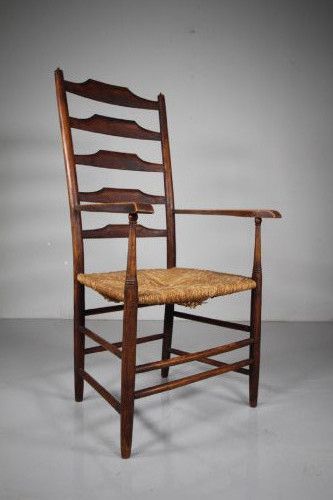
Ladder back carver chairs combine upright wooden framing with stacked horizontal slats across the backrest and integral armrests designed for head-of-table seating. When browsing ladder back carver chairs, buyers encounter country workshop vernacular pieces alongside formal revival dining carvers spanning the eighteenth century through to the interwar period.
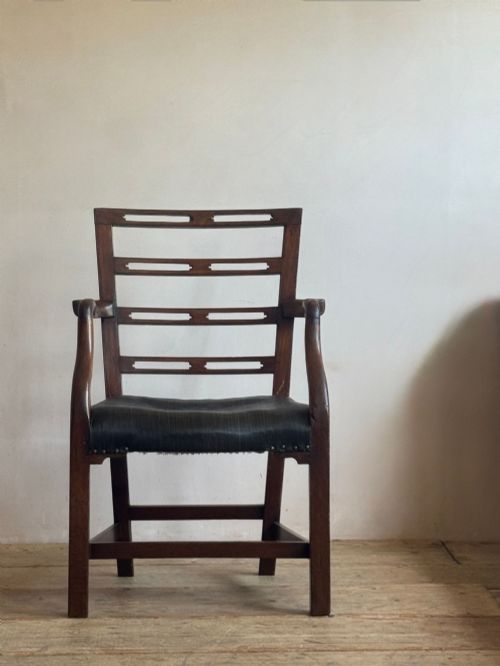
The regional country pieces utilise native timbers like ash, elm and oak often fitted with woven rush seating. Formal urban variants lean towards mahogany with pierced slats and cabriole legs reflecting Georgian and Chippendale aesthetics.
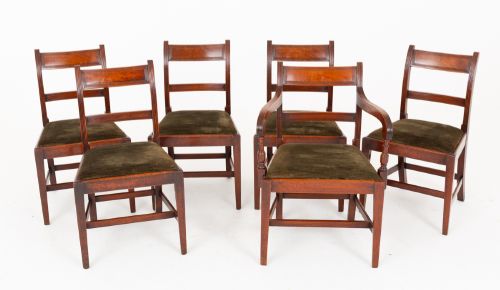
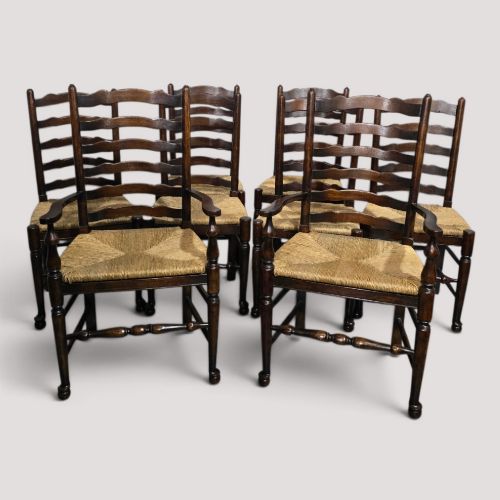
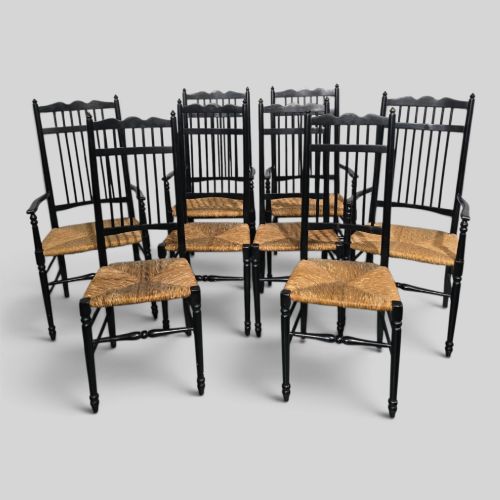
Sets frequently pair larger carvers with matching single side chairs to furnish dining spaces with unified seating arrangements.
Materials and construction
Makers shaped local hardwoods such as ash, elm, beech and oak using a combination of turning lathes and hand-drawn spokeshaves for spindles and uprights. Frames relied on traditional mortise and tenon joinery secured with wooden pegs to withstand daily weight and movement.
Rush seating was hand-woven tightly around the seat rails to create a durable, springy platform that flexes with use. Formal mahogany versions utilised drop-in upholstered pads covered in fabric, leather or velvet.
Some ladder back carvers feature subtly wavy rungs, added by country makers so slouching diners received an extra inch of lower back comfort.
Distinctions in craftsmanship
Quality rests in the rhythm and taper of the horizontal slats, where hand-sculpted or graduated rungs demonstrate greater workshop care than uniform machine cuts. The integrity of the frame relies on tight timber joints and minimal replacement wood in high-stress areas like the arm supports and leg tenons.
Rush seats show hand-weaving density; tightly packed marsh grass sits firmer and wears longer than loose, uneven strands. Timber selection also defines the tier, with figured mahogany and selected quarter-sawn oak holding stronger structural lines than mixed utility woods.
Philip Clissett·Liberty & Co·Dicon Nance
The Ladder Back Carver Chairs Glossary
- Carver
- An armchair designed to match a set of dining chairs, usually placed at the head of the table.
- Rush
- Woven marsh plant material traditionally used to create resilient, flexible seating pads.
- Spindle
- A turned wooden rod supporting the armrests or forming part of an open backrest.
- Tenon
- The projecting end of a piece of wood shaped to fit into a mortise hole for a tight joint.
- Vernacular
- Everyday domestic furniture made by regional country craftspeople rather than urban cabinet makers.
Ladder Back Carver Chairs: Frequently Asked Questions
How do I identify a country ladder back from a revival piece?
Country pieces often show regional vernacular traits through turned ash or elm framing, hand-woven rush seats and slight irregularities from manual lathe work. Revival chairs produced later adopt cleaner uniformity and borrow heavily from earlier eighteenth-century Georgian or Chippendale proportions.
Examine the underside of the seat rails and the wear patterns on the foot terminals to understand the age of the timber surface.
Can I mix carvers with different single chairs?
Mixing carvers with single chairs works well if the timber species and general ladder rail count share a visual harmony. Many period dining sets were gathered as harlequin groups or supplemented over time with matching armchairs.
Keep the seat height and arm clearance compatible with your dining table dimensions to ensure practical daily use.
How should I care for a rush seat?
Rush seats need dry conditions and benefit from occasional cleaning with a soft brush to remove dust between the reeds. Avoid soaking the dried marsh grass with water, as moisture causes the natural fibres to weaken and snap.
Applying a light microcrystalline wax to the wooden frame preserves the finish without affecting the woven seat.
What defines a Chippendale style ladder back?
Chippendale style ladder backs incorporate mahogany frames with intricately pierced and carved horizontal slats, often following ribbon or interlaced scroll motifs. These formal carvers typically feature square or slightly cabriole legs with stretchers rather than the turned rush-seated vernacular profile.
They represent urban eighteenth-century dining design rather than country kitchen seating.