
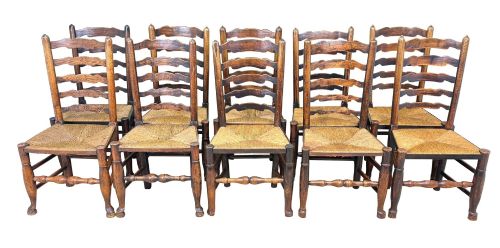
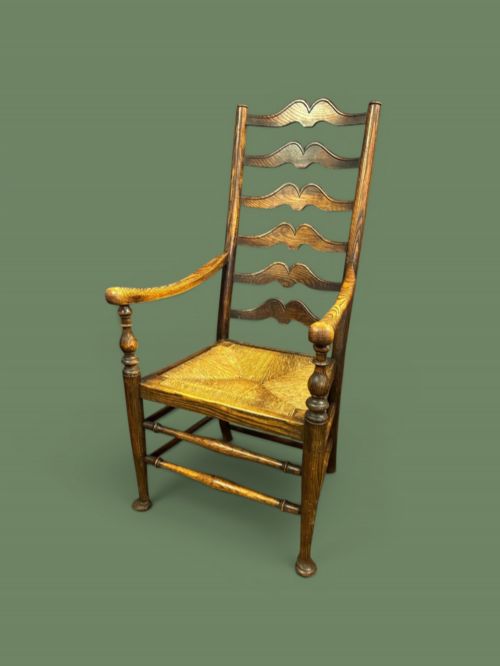


Georgian Ladderback Seats
Georgian ladderback seats offer honest vernacular seating, combining pierced horizontal slats with traditional rush or wood construction for everyday utility.

Georgian Ladderback Seats
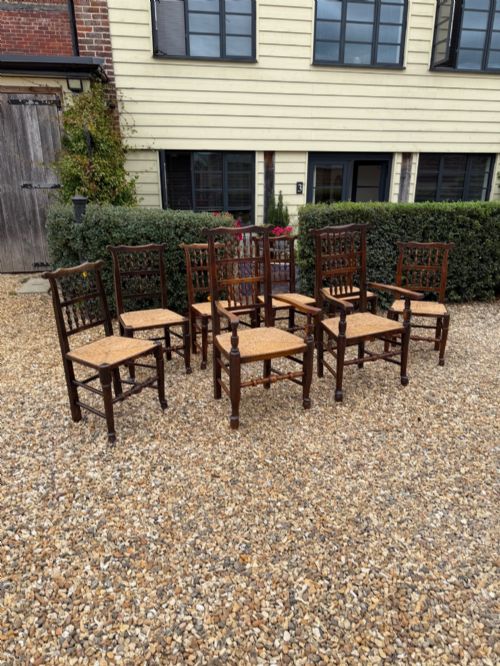
When you search for georgian ladderback seats, you encounter sturdy dining chairs, armchairs, settees, rocking chairs, and high chairs spanning the eighteenth century and subsequent revival periods. These pieces range from simple country vernacular forms to formal mahogany dining sets influenced by Chippendale and Hepplewhite designs.
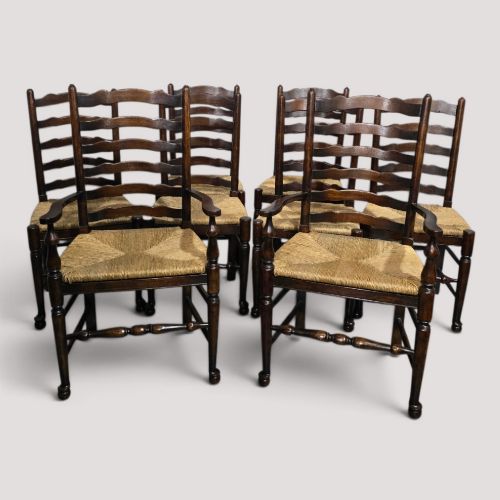
The most common examples on this page are dining chairs and armchairs constructed from regional timbers like oak and elm, often fitted with woven rush seats. You will also find larger sets alongside rarer forms such as children's high chairs, rocking chairs, and chair-back sofas.
Origins vary from English regional workshops in Cheshire and Lancashire to Welsh country districts and Scottish cabinet makers. While many pieces date directly to the Georgian era and the George III period, later nineteenth and early twentieth-century examples also appear.
Materials and construction methods
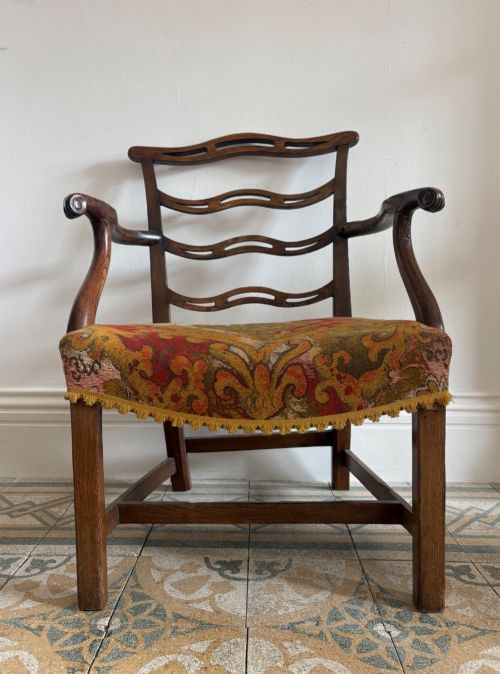
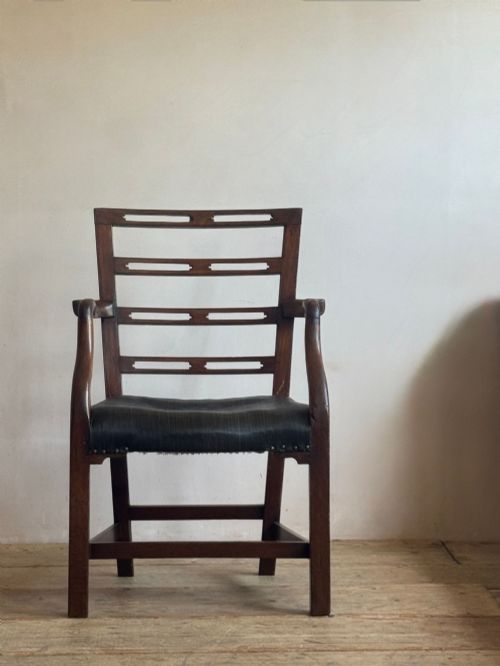
Cabinet makers and vernacular joiners utilised native timbers, predominantly solid oak, elm, ash, and mahogany, shaped into turned posts and curved horizontal ladder slats. Seat construction frequently relied on woven rush, though upholstered pads featuring fabric, leather, velvet, or tapestry also occur.
Joinery techniques involved pegged mortise and tenon joints to ensure rigidity across high-stress points like the legs and back rails. Turned spindles and shaped crest rails further demonstrate the balance between regional utility and refined cabinet making.
Seating surfaces on this page include woven rush, tapestry, velvet, leather, and fabric drop-in pads.
Distinguishing quality across examples
The division between standard vernacular seating and superior craftsmanship rests in timber selection and the refinement of the slat profiling. Finely sculpted horizontal ladder backs with multiple graduated slats and crisply turned arm supports command greater attention than plain, utilitarian alternatives.
Originality of components, including intact rush seating and matching sets rather than assembled harlequin groups, dictates the integrity of the piece. Subtle details such as carved crest rails, finely proportioned legs, and retained surface patination separate provincial utility from high-style urban production.
Hepplewhite
The Georgian Ladderback Seats Glossary
- Ladderback
- A chair back featuring multiple horizontal wooden slats arranged between two upright posts. These slats are often curved for comfort.
- Rush seat
- A seating surface woven from dried marsh rushes tightly twisted around the seat rails. This traditional method provides a resilient and flexible platform.
- Carver
- An armchair, typically designed to match a set of single dining chairs and placed at the head of a table. These pieces often feature scrolling open arms.
- Harlequin set
- A collection of chairs that are closely matched in style and period rather than being manufactured together as an original set. They share similar vernacular traits.
- Vernacular
- Objects designed and built by local craftsmen for practical domestic use rather than following strict high-style academic design. These pieces reflect regional timber availability and traditions.
Georgian Ladderback Seats: Frequently Asked Questions
What is a ladderback chair?
A ladderback chair is a traditional form of seating characterised by horizontal wooden slats, known as rungs or ladders, set between the upright rear posts.
These chairs were historically produced in regional workshops and urban cabinet makers' studios alike, utilising local timbers and woven rush or upholstered drop-in seats for domestic dining and parlour use.
How do I care for rush seats?
Rush seats require a stable indoor environment away from excessive moisture and direct heat sources, which can cause the dried marsh plant fibres to become brittle and snap.
Cleaning should be limited to gentle dusting with a soft brush, avoiding liquid cleaners that might penetrate and weaken the natural twisted plant material.
Are these chairs comfortable?
Comfort varies depending on the rake of the back posts and the presence of arms, with many examples designed for upright posture during formal or everyday dining.
Woven rush seats offer a degree of natural spring, while wooden plank or upholstered variations provide different levels of support.
Can I mix these with modern tables?
These chairs pair effectively with contemporary dining tables, providing a contrasting texture through exposed timber grains and traditional turnings.
Selecting pieces with matching wood tones or consistent proportions helps integrate historical vernacular seating into a modern interior scheme.