


Lacquered Grandfather Clock
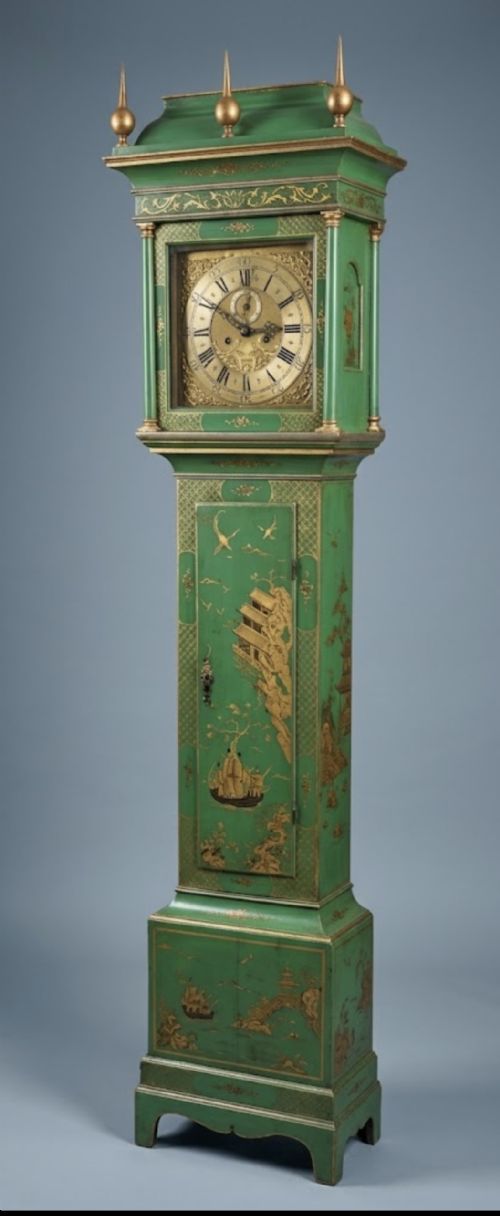
A lacquered grandfather clock brings the rich narrative and ornamental depth of eighteenth-century chinoiserie directly into a room.
Lacquered Grandfather Clock
When searching for a lacquered grandfather clock, buyers encounter tall floor-standing timepieces, also recorded as longcase clocks and grandmother clocks, spanning periods from the eighteenth century through to the twentieth century. These vertical timber cases display decorative finishes that range from early Georgian examples to later revivals.
The most common variations on this page include eighteenth-century pieces alongside later twentieth-century iterations like the grandmother clock. Origins stretch across regional English makers in Alton, Reading, Yarmouth, London, and Edinburgh.
The core structure follows a tall housing built to protect the pendulum and weights, accompanied by a brass movement. Cases utilise wood treated with specialist decorative finishes rather than simple polished timber.
How they were made
Makers constructed these tall housings primarily from wood, applying layers of lacquer, japanned finishes, and gold leaf to achieve the characteristic glossy decorated surface. This process involved building up pigment and varnish over successive applications.
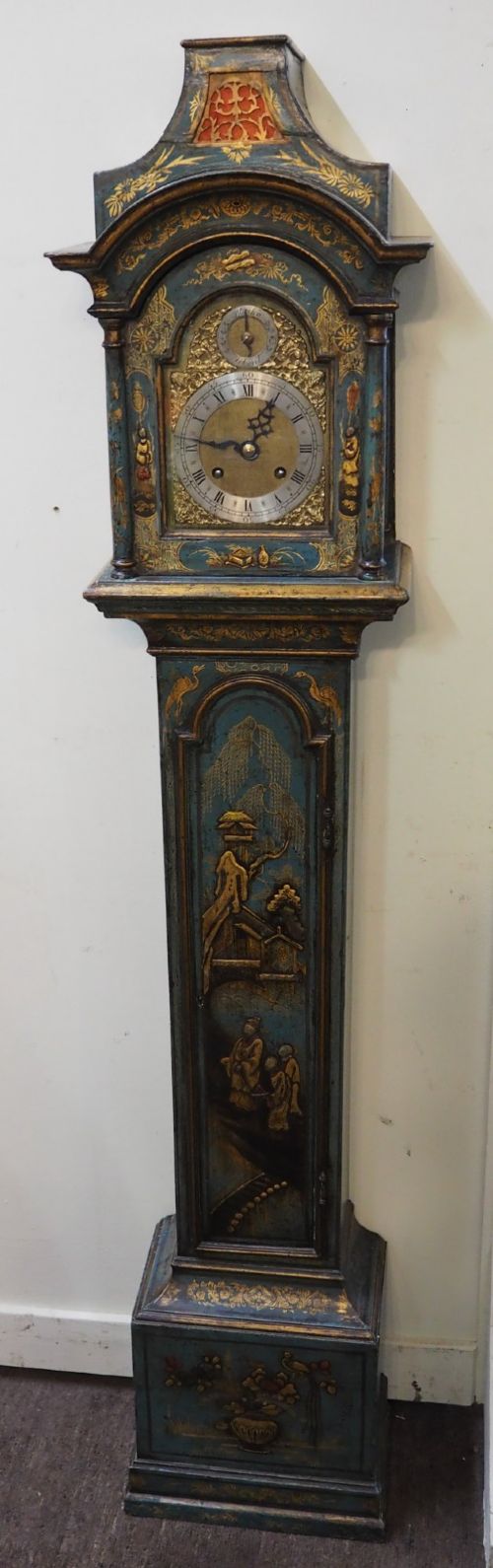
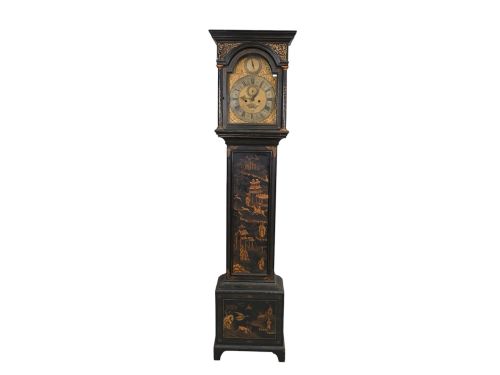
The visual vocabulary relies on chinoiserie decoration, incorporating gilt detailing against coloured grounds such as green, blue, and cream. Inside, the timepieces operate via brass movements driven by weights and controlled by pendulums.
Father Time occasionally rocks back and forth above the dial, keeping a tireless eye on the hours.
What varies in quality
Distinctions in quality rest upon the crispness of the chinoiserie decoration and the fidelity of the japanned surface work. Finer examples display intricate hand-painted figures and landscapes rendered in gold leaf upon deep, stable coloured lacquer grounds.
John fielder of Alton·William Kipling London·Wise of Reading·Thomas Utting of Yarmouth·Gardner of London·Robert Berry·Richard Roughsedge of Twickenham
The Lacquered Grandfather Clock Glossary
- Chinoiserie
- European decorative style reflecting Chinese artistic traditions, featuring figures, pagodas, and landscapes painted in gold or colours upon a lacquered ground. This style defines the visual character of the majority of these tall clocks.
- Japanned wood
- European furniture finished with varnishes and paints in imitation of East Asian lacquerware. The technique involves heat-curing layers to achieve a hard, lustrous surface.
- Longcase clock
- Alternative term for a grandfather clock, describing the tall wooden case built to enclose the pendulum and weights. These tall floor-standing timepieces form the principal group on this page.
- Grandmother clock
- A scaled-down version of the traditional longcase clock, typically produced during the twentieth century. These shorter variations maintain similar dial layouts and movements in a more compact height.
- Automaton
- Moving mechanical figure incorporated into the clock dial, such as a rocking Father Time. This mechanical addition animates the face of the clock during operation.
Lacquered Grandfather Clock: Frequently Asked Questions
How do I tell an 18th-century clock from a later revival?
Eighteenth-century examples typically display hand-finished timber construction alongside original brass movements signed by period makers.
Later twentieth-century iterations often feature distinct proportions, such as smaller grandmother clock formats, and different chime configurations.
What is the difference between a grandfather and grandmother clock?
Grandfather clocks, or longcase clocks, stand at full height to accommodate long pendulums and heavy weights.
Grandmother clocks are scaled down in size, offering a shorter case while retaining the traditional dial and movement style.
Where were these clocks originally made?
Makers produced these timepieces in both major urban centres like London and regional locations such as Reading, Yarmouth, Alton, and Edinburgh.
Regional makers often signed the brass dials directly, recording their workshop locations on the face.
How do I care for a lacquered wood finish?
Keep the clock away from direct sunlight and fluctuating heat sources to protect the delicate lacquer and gold leaf layers.
Dust the surface gently with a dry, soft cloth without applying modern liquid polishes or abrasive cleaners.