
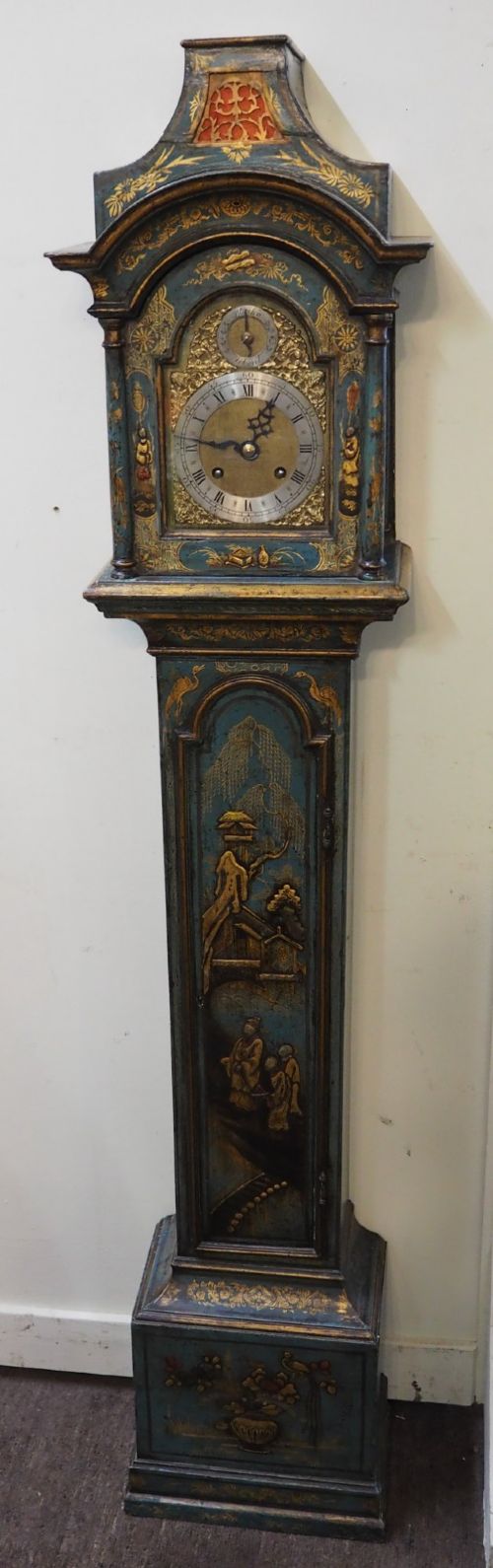


Oriental Lacquered Clock
An oriental lacquered clock brings painted court scenes and rich japanned surfaces into a room, offering both traditional timekeeping and striking decorative presence.
Oriental Lacquered Clock
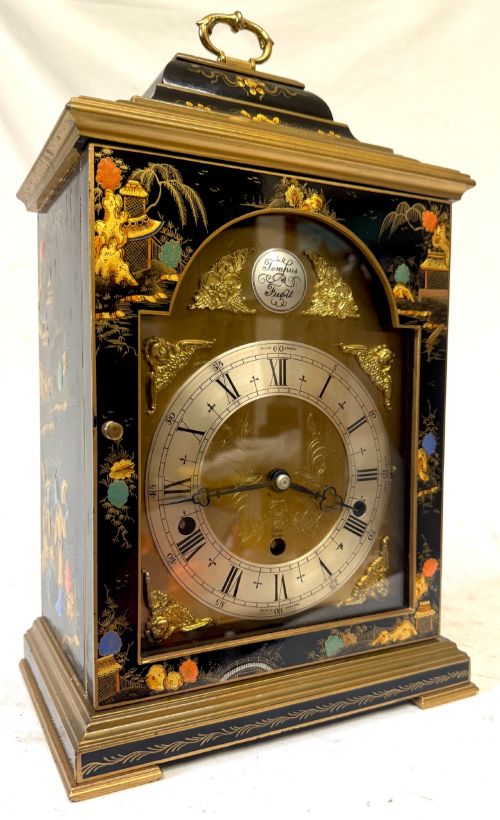
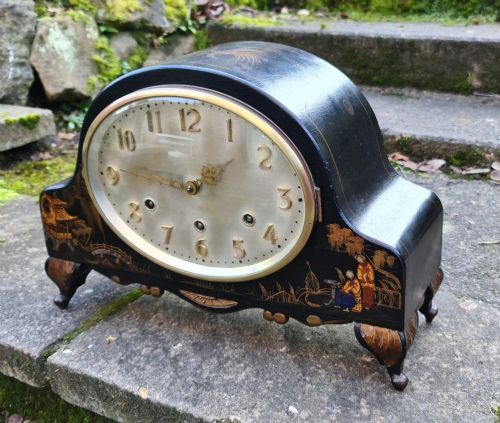
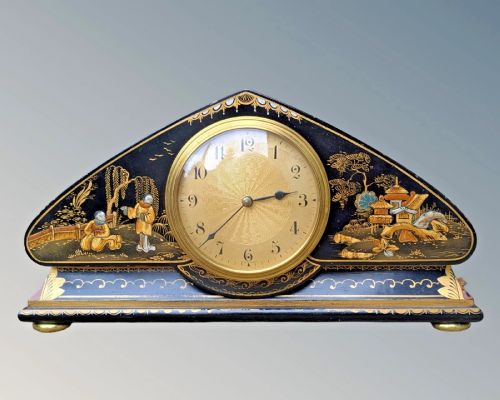
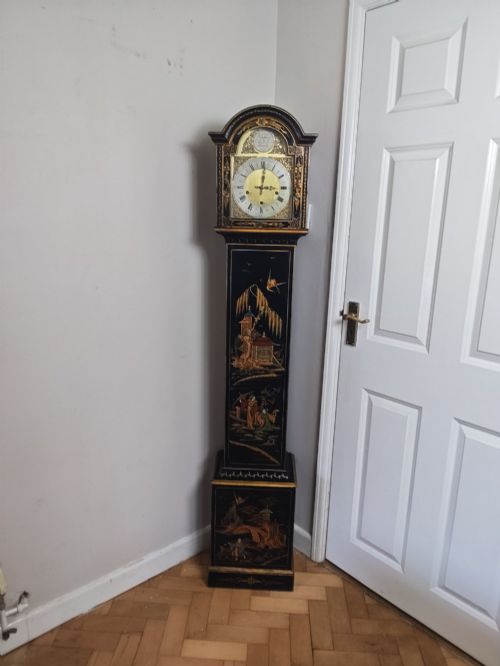
An oriental lacquered clock combines the practical function of a timepiece with intricate hand-painted decorative schemes. These pieces range from substantial tall case designs to compact mantel models suited for smaller spaces.
The selection includes tallcase, longcase, and grandmother clocks alongside smaller mantel and bracket formats. Examples span from the eighteenth century through to later revivals in the nineteenth and twentieth centuries.
Makers drew heavily on Chinoiserie aesthetics, rendering pavilions, figures, and landscapes across wooden housings finished in black, cream, green, or blue lacquer.
Construction and materials
Craftsmen built wooden carcasses using traditional joinery before applying multiple layers of lacquer to create a smooth canvas for ornamentation. Artisans then built up the raised motifs using gesso and finished the details with gold leaf, gilt, and enamel paints.
Mechanisms housed within these cases relied on brass and steel components, often incorporating precision movements such as French or English gear trains. Glass panels protected the painted dials, which frequently featured brass bezels and delicate hands.
Listings feature lacquer finishes in black, cream, green, and blue, spanning periods from the eighteenth century to the mid-twentieth century.
Assessing quality and craftsmanship
Quality rests heavily on the depth and execution of the lacquerwork, where finely rendered figures and crisp gilt detailing distinguish superior examples from simpler decoration. The condition of the japanned finish, with minimal craquelure or loss to the raised elements, marks a higher standard of preservation.
Mechanical execution also separates pieces, as robust movements with musical chimes or eight-day gear trains represent a more substantial investment than basic timepieces. The integration of the clock face with the surrounding woodwork indicates the skill of the original maker.
Gardner of London·Elliott London
The Oriental Lacquered Clock Glossary
- Chinoiserie
- European interpretation of Chinese and East Asian artistic traditions, prominent in furniture decoration and clock cases. This style uses motifs of pagodas, exotic birds, and figures in landscape settings.
- Japanning
- A type of European finish that emulates Asian lacquerware by applying heat-dried varnishes in layers. Craftsmen often decorated the final surface with gold and coloured designs.
- Grandmother clock
- A slender floor-standing timekeeper similar to a longcase clock but built to a smaller scale. These pieces fit comfortably in rooms with lower ceilings while retaining tall proportions.
- Bracket clock
- A portable timekeeper originally designed to sit on a bracket mounted to a wall. Later examples function as large mantel clocks with carrying handles.
Oriental Lacquered Clock: Frequently Asked Questions
How do I care for my lacquer clock?
Keep the clock away from direct sunlight and heat sources to prevent the lacquer finish from drying out and cracking.
Dust the surface gently with a soft, dry cloth and avoid using chemical polishes or water on the decorated wood.
Where should I place a longcase clock?
Position the clock against a sturdy interior wall where it will not be disturbed by passing traffic or heavy vibrations.
Ensure the floor is level so the pendulum swings evenly and the movement maintains accurate time.
How do I distinguish eighteenth-century pieces from later revivals?
Examine the construction of the wooden case, the style of the brass dial, and the type of movement behind the face. Earlier clocks show hand-cut components and organic wear patterns distinct from twentieth-century production.
Materials and hinge types also offer clues, as older brasswork and cabinet joints differ noticeably from later manufacturing methods.
What movement types appear in these clocks?
Many house mechanical gear trains driven by weights or springs, sometimes featuring musical chimes or multiple trains.
Some examples pair English clock cases with imported French movements, reflecting international trade among horologists.