





Lacquered Dressing Table
These lacquered dressing table pieces bring hand-painted Chinoiserie and rich surface finishes straight from the bedroom into everyday use.
Lacquered Dressing Table
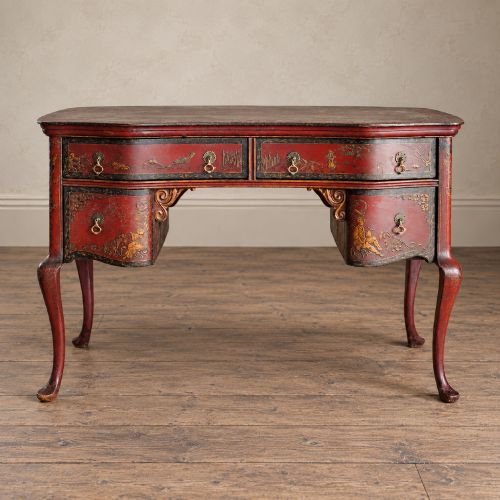
A lacquered dressing table offers a decorative surface finished with oriental motifs, figures, and landscapes, often rendered in gold and coloured pigments upon a dark or black ground. The selection includes full-sized vanity tables, kidney-shaped desks, and smaller toilet mirrors designed to sit atop a chest of drawers.
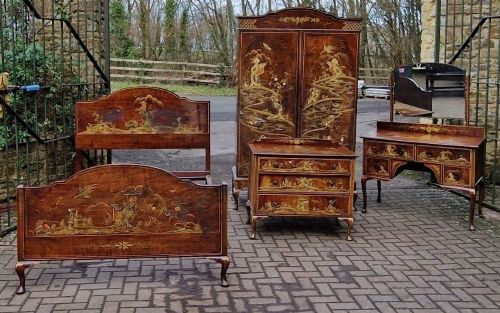
The objects span multiple centuries, ranging from early eighteenth-century Chinese export pieces and Queen Anne style mirrors to Victorian interpretations and items from the 1920s. Buyers will frequently encounter Chinoiserie decoration applied to bedroom furniture suites, alongside related forms such as lowboys and jewellery boxes.
While larger dressing tables provide functional surface space with kneeholes and drawers, the smaller tabletop mirrors and dressing glasses serve a similar decorative purpose on a compact scale. Each piece reflects the enduring British taste for imported oriental aesthetics adapted by local cabinet makers.
Materials and construction
Makers built these pieces using foundational timbers such as walnut and oak, occasionally employing ebonised wood to achieve a dark, uniform ground that mimics exotic oriental lacquer. Surfaces received multiple layers of lacquer, cured and polished to create a hard sheen before artists applied gilt and painted details.
Hardware played a functional and decorative role, with brass handles, hinges, and escutcheons fitted to drawers and mirror supports. Glass formed the pivoting mirror plates, while specialised keepsake cases and boxes utilised metal fittings and fabric linings alongside wood and lacquer.
Lacquered Dressing Table Retail Price Guide 2026
Typical asking prices for lacquered dressing table among the pieces listed under this phrase on Sellingantiques today, from the lower quarter to the upper quarter. They describe what is for sale here now, not the wider market.
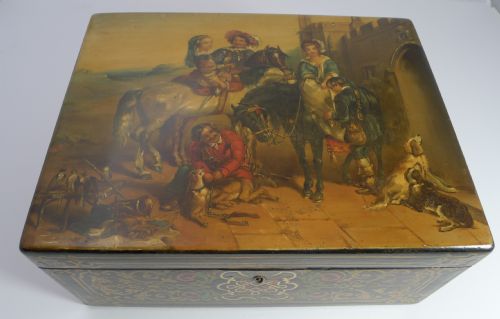
Even the smallest keepsake boxes were given royal treatment with miniature pagodas and tiny gilt mandarins hiding beneath the lid.
Assessing quality and execution
Quality rests primarily in the execution of the hand-painted Chinoiserie decoration, where finer pieces display precise brushwork, depth in the gilt detailing, and subtle shading within the figures and architectural motifs. Superior examples maintain crispness in the lacquer layers without excessive cracquelure or clumsy later restoration.
The underlying cabinet work distinguishes ordinary pieces from exceptional ones, particularly in the joinery of serpentine fronts, kneehole configurations, and the delicate turning of mirror supports. Original brass hardware and undamaged mirror glass further elevate the standing of an individual piece.
Whytock and Reid·Jennens and Bettridge
The Lacquered Dressing Table Glossary
- Chinoiserie
- European decorative art in the Chinese taste, popular across various periods and characterised by whimsical scenes of figures, pagodas, and landscapes.
- Lowboy
- A small oak, walnut, or lacquered table with one or more drawers, frequently used as a dressing table or side table in eighteenth-century interiors.
- Toilet mirror
- A small pivoting looking glass mounted on a miniature bureau or box base, designed to sit on a larger chest or table for grooming.
- Ebonised
- Wood treated with a stain or finish to imitate ebony, providing a dark, polished ground common in Victorian Chinoiserie pieces.
- Kidney-shaped
- Describing a curved desk or dressing table top shaped like a kidney, which became popular in late nineteenth-century bedroom furniture.
Lacquered Dressing Table: Frequently Asked Questions
What is a lacquered dressing table?
A lacquered dressing table is a bedroom furniture piece finished with oriental-style varnished decoration, typically featuring gold motifs on a dark ground. These surfaces are applied to full tables, desks, and smaller toilet mirrors.
Buyers encounter various forms ranging from eighteenth-century examples to Victorian and 1920s interpretations. They provide both functional surface space and strong decorative character.
How do I date a lacquered dressing table?
Dating relies on examining the timber construction, the style of the legs, and the nature of the brass hardware. Eighteenth-century pieces often feature Queen Anne forms and hand-cut joinery, while Victorian examples show heavier ebonisation or kidney shapes.
Comparing the painted Chinoiserie motifs to period design books helps confirm the era. Construction details inside the drawers provide further clues to age.
Where were these pieces used?
These dressing tables and mirrors were traditionally placed in bedrooms, dressing rooms, and boudoirs for morning grooming and personal care. Smaller toilet mirrors sat atop existing chests of drawers or writing surfaces.
Today, they function equally well in modern bedrooms as vanity desks or in hallways as statement side tables. Their decorative surfaces allow them to blend into diverse interior schemes.
How should I care for lacquer furniture?
Care requires keeping the lacquered surfaces away from direct sunlight and excessive heat to prevent the finish from drying out or cracking. Dusting should be done gently with a dry, soft cloth without chemical polishes.
Protecting the top from moisture and cosmetics ensures the painted Chinoiserie decoration remains intact. Wax is rarely required on modern or antique lacquer surfaces.