



Oriental Lacquer Vanity
Oriental lacquer vanity pieces bring layered depth and rich hand-finished surfaces into a room, offering both practical storage and striking decorative presence.
Oriental Lacquer Vanity
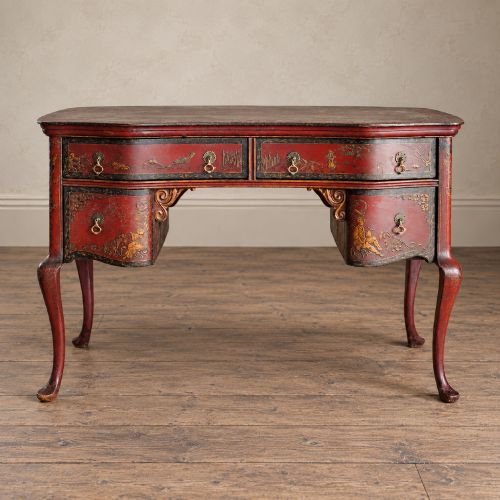
When you search for oriental lacquer vanity items, you encounter a range of forms designed for grooming and personal organisation, spanning dressing tables, mirrors, and storage boxes. The pieces available here cross multiple periods, from early eighteenth-century examples to late Victorian and Edwardian interpretations.
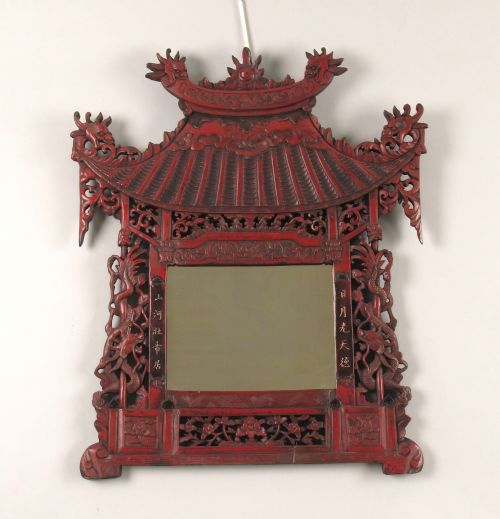
The selection includes dressing tables, wall mirrors, table cabinets, jewellery boxes, and desks. Styles lean heavily towards Chinoiserie, Chinese Export, and Japanese Meiji period influences, alongside occasional Anglo-Indian pieces.
You are most likely to meet dressing tables, wall mirrors, and compact table cabinets finished in black or red lacquer. These items blend functional utility with ornamental surface design suited to bedrooms and studies.
How they were made
Construction relies on timber substrates coated with successive layers of lacquer, which are then polished and decorated. Wood provides the stable core for dressing tables, desks, and smaller boxes alike.
Surface ornament incorporates gilt work, brass hardware, and glass components such as mirror plates. Metal elements like brass secure corners and closures on travelling and jewellery boxes, while glass furnishes the dressing mirrors.
Oriental Lacquer Vanity Retail Price Guide 2026
Typical asking prices for oriental lacquer vanity among the pieces listed under this phrase on Sellingantiques today, from the lower quarter to the upper quarter. They describe what is for sale here now, not the wider market.
Listings span the eighteenth, nineteenth, and early twentieth centuries, featuring materials like brass, glass, and lacquered wood.
What varies in quality
Quality shows in the depth of the lacquer finish and the precision of the surface ornament. Finer examples display crisp detail in Chinoiserie scenes and consistent application across complex forms like kidney-shaped dressing tables and pagoda mirrors.
Construction standards in the underlying timber and the integration of brass fittings dictate durability. Superior pieces maintain structural integrity in drawers and hinges while preserving the integrity of the decorative surface.
The Oriental Lacquer Vanity Glossary
- Lacquer
- A durable finish applied to wood substrates in multiple layers. It creates a smooth, lustrous surface that accepts gilt and painted decoration.
- Chinoiserie
- European decorative style reflecting Chinese artistic traditions. It appears frequently on Victorian and Edwardian furniture.
- Chinese Export
- Items produced in China specifically for Western markets. These pieces combine traditional craftsmanship with European furniture forms.
- Meiji Period
- An era in Japanese history associated with distinct decorative arts. Objects from this time often feature detailed black lacquer work.
- Kidney-Shaped
- A curved furniture profile utilised for dressing tables. This shape allows the user closer access to the mirror.
Oriental Lacquer Vanity: Frequently Asked Questions
What defines an oriental lacquer vanity?
These pieces combine traditional lacquer surface finishes with functional forms meant for personal grooming and storage. They include dressing tables, mirrors, and compact cabinets.
Materials typically involve wood coated in lacquer, accented with brass, gilt, and glass. The designs draw on Chinoiserie, Chinese Export, and Japanese aesthetics.
How do I care for lacquer surfaces?
Keep these pieces away from direct sunlight and excessive moisture to protect the finish. Dust gently with a soft, dry cloth rather than using chemical polishes.
Stable indoor humidity prevents the underlying wood from expanding. This care routine preserves both the lacquer and any gilt detailing.
Where were these pieces made?
Origins vary between Asian workshops producing export goods and European makers applying Chinoiserie decoration locally. Chinese export items and Japanese Meiji pieces sit alongside Victorian and Edwardian interpretations.
Each region employed distinct timber choices and finishing techniques. Examining the construction details helps reveal the likely origin of a piece.
How do I identify a Victorian Chinoiserie piece?
Victorian examples often feature black or ebonised lacquer decorated with gilt motifs inspired by Asian art. Common forms include kidney-shaped dressing tables and travelling jewellery boxes.
Hardware such as brass hinges and locks aligns with nineteenth-century manufacturing methods. The combination of European furniture shapes with oriental surface ornament is characteristic of this period.
Are these pieces suitable for daily use?
Many items, such as desks and dressing tables, remain functional for regular use. Smaller boxes and cabinets serve well for storing jewellery and small accessories.
Care should be taken to protect the lacquer surface from sharp objects or heavy wear. Gentle daily use allows you to enjoy these decorative objects safely.