





Lacquered Chinoiserie Tea Table
Lacquered chinoiserie tea tables bring painted oriental scenes and dark polished surfaces into sitting rooms as practical low tables and stands.
Lacquered Chinoiserie Tea Table
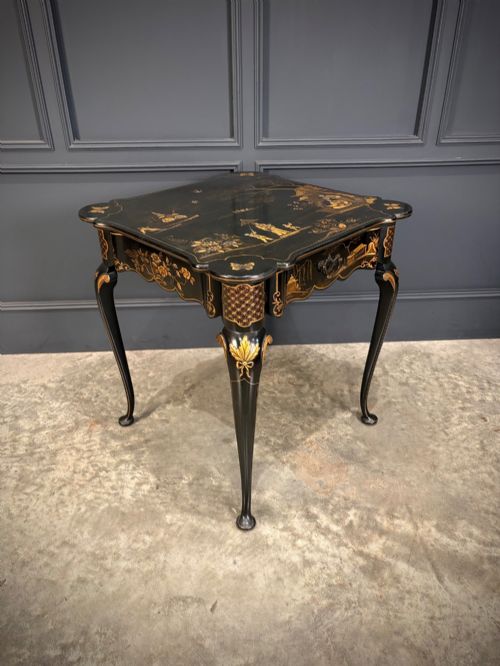
A lacquered chinoiserie tea table combines traditional decorative techniques with functional British furniture forms spanning from the eighteenth century to the early twentieth century. Buyers seeking this phrase encounter occasional tables, coffee tables, tray tables, and card tables produced during the Victorian, Edwardian, and Regency periods.
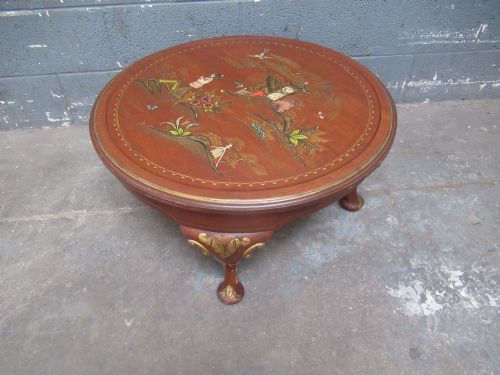
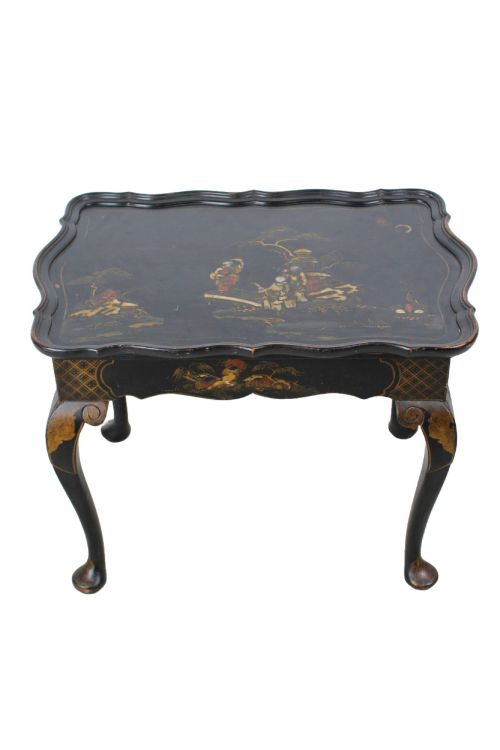
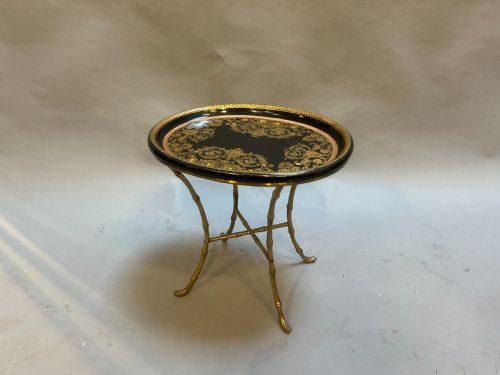
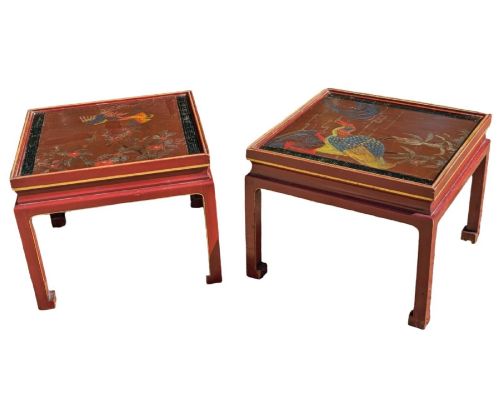
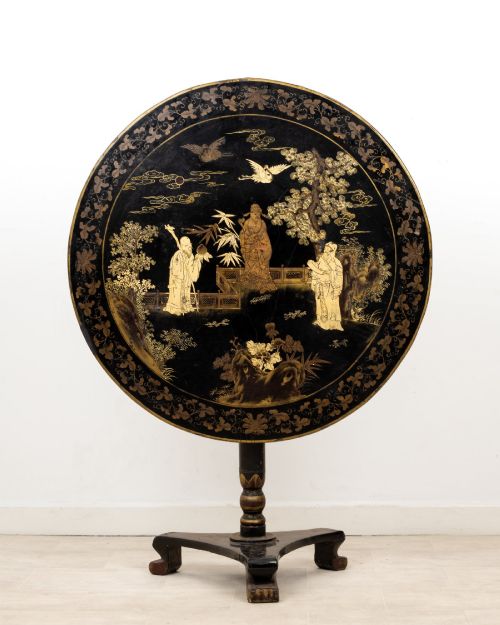
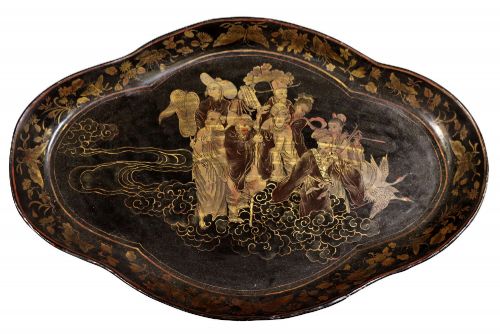
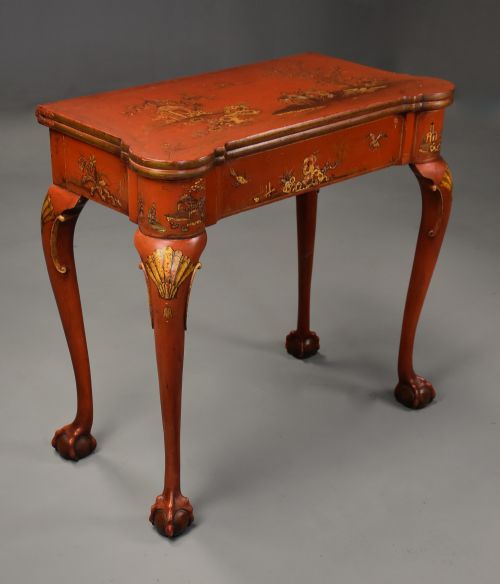
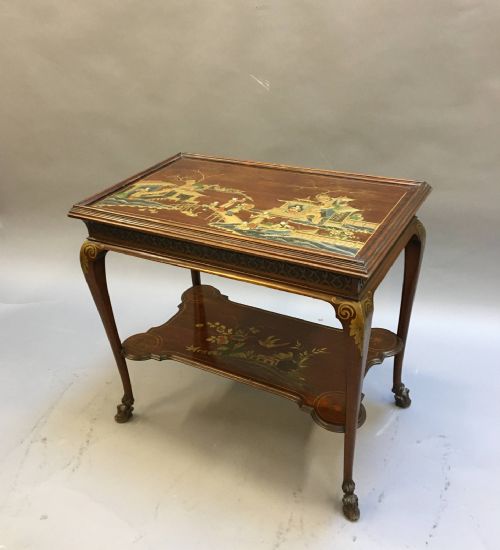
The selection ranges from George III tilt-top surfaces and Sheraton side tables to Edwardian coffee tables and papier-mâché trays mounted on stands. Many pieces utilise ebonised wood or red lacquer finishes decorated with gilt figures, landscapes, and floral motifs.
Tray tables and low coffee tables dominate the contemporary selection, offering adaptable surfaces for modern interiors while retaining distinct nineteenth-century and early twentieth-century character.
Materials and construction methods
Construction relies heavily on wood, papier-mâché, and ebonised timber finished with layers of dark lacquer and detailed gold leaf or painted decoration. Craftsmen applied successive coats of lacquer to wooden bases or moulded papier-mâché trays before adding intricate oriental motifs.
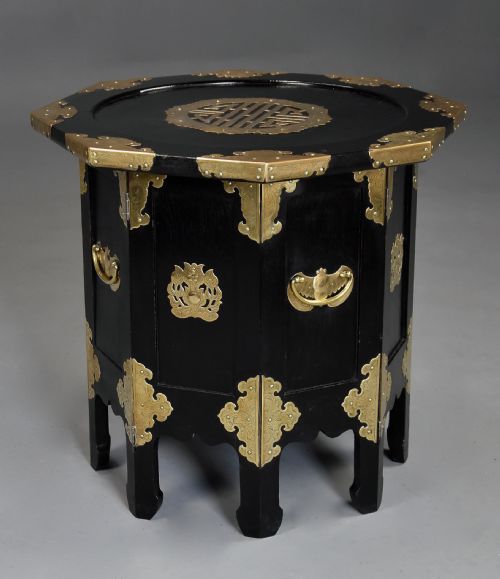
Metal components such as brass appear on specific occasional tables, while parcel gilt highlights accentuate the black and red lacquered surfaces found across Regency and Edwardian examples.
Lacquered Chinoiserie Tea Table Retail Price Guide 2026
Typical asking prices for lacquered chinoiserie tea table among the pieces listed under this phrase on Sellingantiques today, from the lower quarter to the upper quarter. They describe what is for sale here now, not the wider market.
Several tables transform from tea servers into upright panels with a single tilt.
Judging the finish and decorative depth
The distinction between standard examples and the finest pieces rests upon the crispness of the hand-painted detailing and the depth of the lacquer finish. Superior surfaces exhibit layered gold leaf and delicate brushwork that remains sharp across intricate figures and landscapes.
Structural integrity also separates ordinary tables from exceptional works, particularly in the joinery of tilt mechanisms, nesting sets, and the rigid mounting of papier-mâché trays onto their wooden stands.
The Lacquered Chinoiserie Tea Table Glossary
- Chinoiserie
- European decorative style imitating Chinese artistic traditions. It appears in the painted figures, pagodas, and landscapes adorning these tables.
- Japanned
- European imitation of East Asian lacquerwork. This finish involves layered varnishes baked and polished on wood.
- Papier-mâché
- Compressed paper pulp mixed with glue and resin. Craftsmen moulded this material into durable serving trays mounted on wooden stands.
- Parcel Gilt
- Partial gilding applied to specific areas of a painted surface. It highlights raised details against black or red lacquer grounds.
- Tilt Top
- A tabletop hinged to turn upright when not in use. This mechanism saved space in smaller historic parlours.
Lacquered Chinoiserie Tea Table: Frequently Asked Questions
How were these tables originally used?
These tables served primarily for serving tea, playing card games, or displaying decorative items in domestic reception rooms.
Removable tray tables allowed servants to bring refreshments directly from the kitchen to guests before resting on folding wooden stands.
Are these tables suitable for daily use?
Most examples function effectively as low coffee tables or side surfaces in contemporary living spaces.
Careful placement away from direct heat and moisture preserves the delicate lacquer and gold leaf decoration over time.
How do I distinguish Victorian from Edwardian pieces?
Victorian examples frequently utilise papier-mâché trays and heavier ebonised timber frames with dense floral or figurative painting.
Edwardian pieces tend toward lighter occasional tables and tray-top coffee tables produced during the early twentieth-century revival.
What does japanned mean on a listing?
Japanning denotes the European technique of applying resinous dark varnishes to simulate Asian lacquerwork.
This finish creates a glossy black or red background that showcases hand-painted gilt ornamentation.