
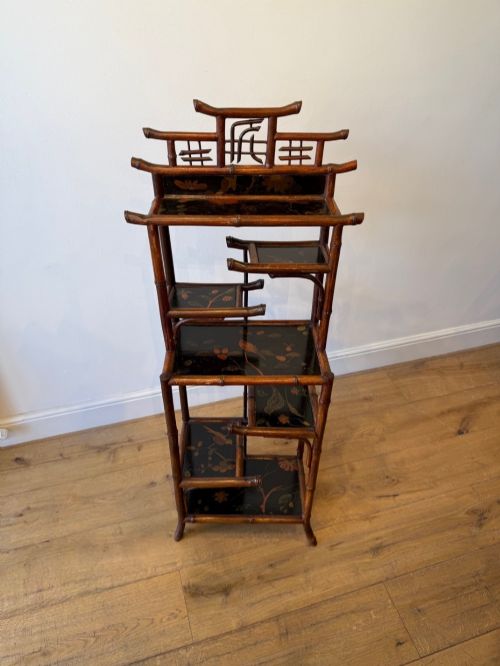
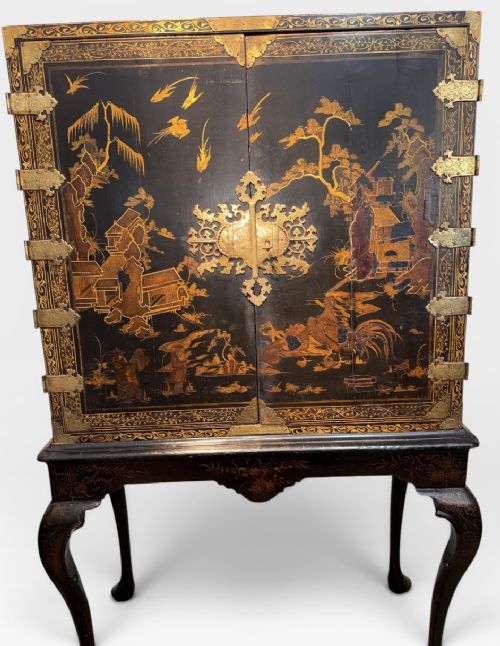
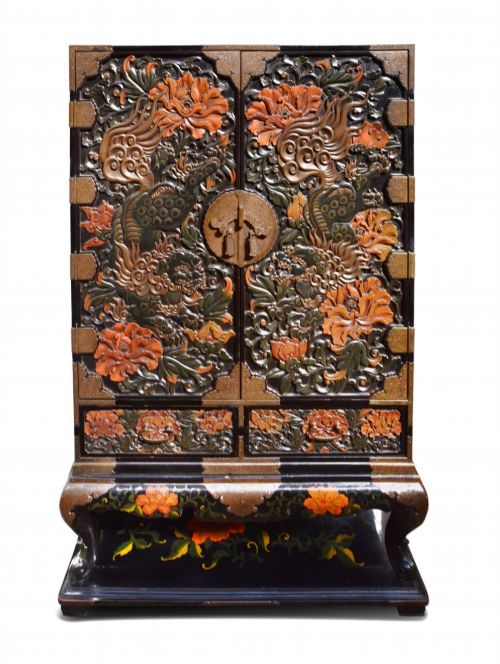


Lacquered Cabinet on Stand
A lacquered cabinet on stand brings together a closed storage body and a raised support, offering deep surface decoration alongside architectural presence.
Lacquered Cabinet on Stand
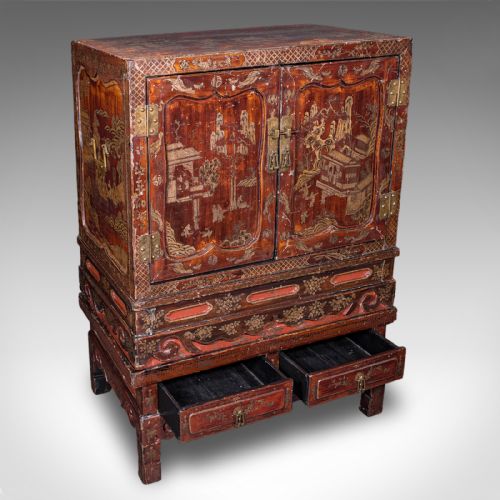
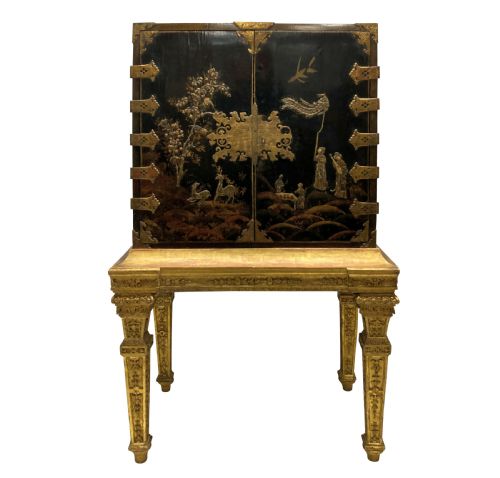
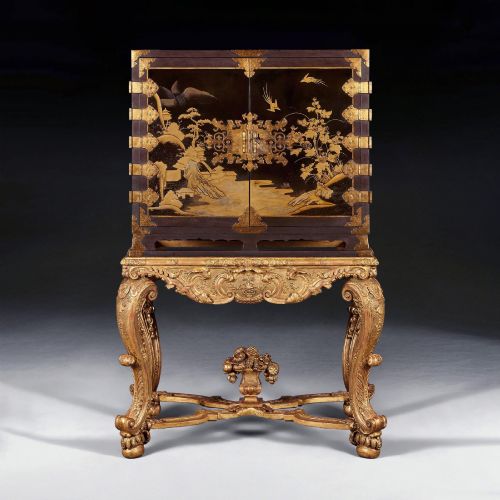
A lacquered cabinet on stand combines a decorative upper storage box with a distinct supporting table or frame, designed to elevate precious contents to eye level. When searching for a lacquered cabinet on stand, buyers encounter forms ranging from seventeenth-century export panels to twentieth-century cocktail versions.
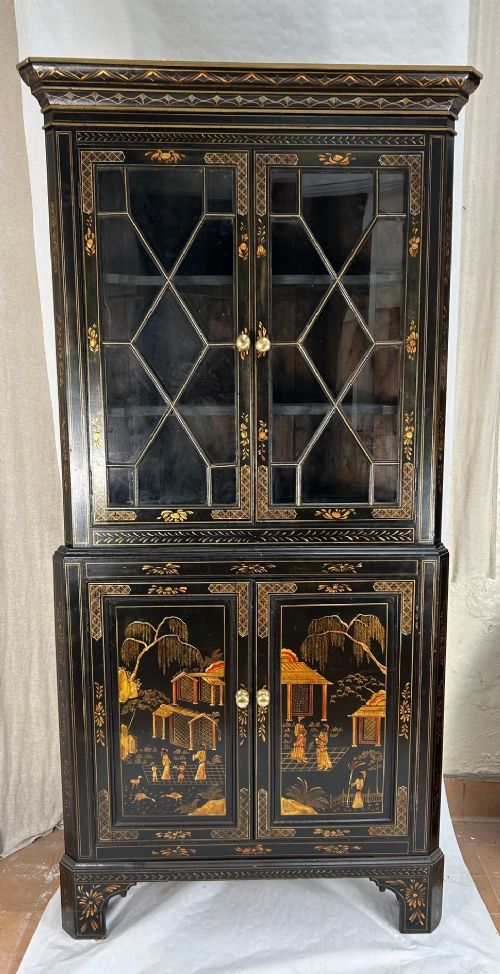
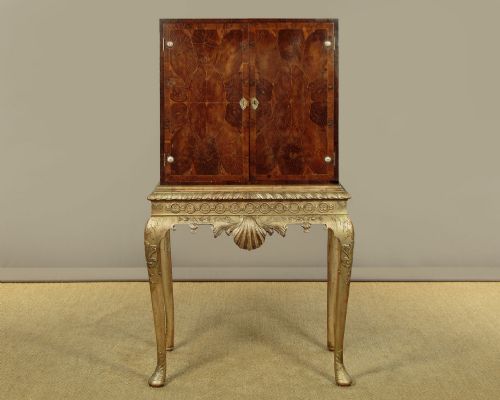
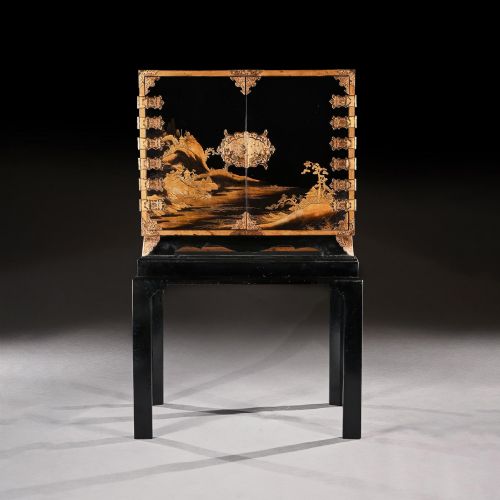
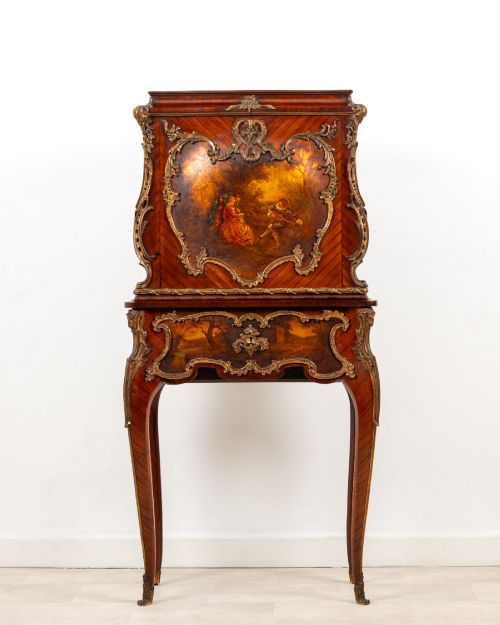
The evidence shows numerous examples created in Chinoiserie and Japanese Meiji styles, alongside European interpretations from the William and Mary, Queen Anne, and Georgian periods. These pieces serve as focal points in interiors, providing enclosed shelving or drawers within richly decorated surfaces.
Materials and construction
Makers built the primary carcasses from various timbers before applying successive coats of lacquer to build a deep, lustrous ground. Artisans then added detail using gold leaf, gilt, and painted motifs, often incorporating brass hardware for hinges and locks.
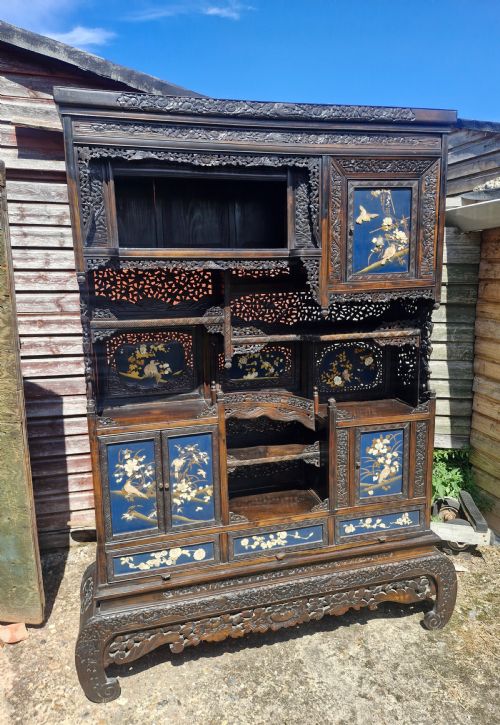
Stands were constructed to complement the upper cabinet, utilising carved wood, giltwood, or coordinated hardwood to bear the heavy weight of the lacquered body. Surface decoration frequently employed japanning techniques or mother of pearl inlay to achieve pictorial depth.
The recorded styles encompass Chinoiserie, Japanese Meiji, Venetian Rococo, William and Mary, and Queen Anne Revival.
Assessing craftsmanship
Quality rests in the depth and execution of the lacquer surface, where superior examples display smooth, hand-polished finishes with intricate, multi-layered pictorial scenes. Inferior versions show flat paintwork or modern synthetic varnishes that lack the refractive quality of period finishes.
The harmony between the cabinet and its stand dictates overall merit, as original or period-correct stands exhibit superior carving and joinery compared to later married combinations. The crispness of applied gold leaf and the refinement of brass mounts further separate standard production from exceptional artistry.
The Lacquered Cabinet on Stand Glossary
- Lacquer
- A durable finish applied in multiple layers to wood surfaces, derived from natural tree sap or specialised resins. It provides a smooth, hard protective coating that accepts polishing and intricate decoration.
- Chinoiserie
- European artistic interpretation of Chinese and East Asian decorative styles, popular during the seventeenth and eighteenth centuries. It relies on whimsical motifs of figures, pavilions, and landscapes rendered in gold on dark grounds.
- Japanning
- A European imitation of East Asian lacquerwork developed during the seventeenth century. The technique involves building layers of varnish and heating the surface to create a hard, glossy finish decorated with raised gilt designs.
- Shodona
- A traditional Japanese tabletop or stand-supported cabinet featuring asymmetrical shelving and small cupboards. These pieces showcase intricate woodwork and metal fittings characteristic of the Meiji period.
- Stand
- The supporting table or framed base designed to elevate a cabinet off the floor. Stands vary from simple turned legs to elaborately carved giltwood and ormolu-mounted structures.
Lacquered Cabinet on Stand: Frequently Asked Questions
How are these cabinets cleaned safely?
Dust surfaces gently with a soft, dry microfibre cloth to prevent scratching the delicate lacquer finish.
Avoid chemical polishes, water, and solvents, as moisture can penetrate hairline cracks and damage the underlying wood and gilt decoration.
Where should a cabinet be placed?
Position the piece away from direct sunlight and heat sources to prevent the lacquer from fading, drying, or cracking over time.
Ensure the floor beneath the stand is level, as these top-heavy forms require stable placement to protect fragile joints.
Are stands usually original to them?
Many surviving examples have stands that were paired or replaced during centuries of use, making original configurations particularly desirable.
Inspect the joinery where the cabinet meets the stand to check for consistency in wood type, wear patterns, and period style.
What interiors suit these cabinets?
These versatile storage pieces function effectively as cocktail cabinets in living spaces or as standalone focal points in traditional hallways.
Their rich surface textures and reflective gold details complement both minimalist modern rooms and classic period backdrops.