



Gilt Corner Cupboard
A gilt corner cupboard uses painted lacquer, gold leaf and timber to turn dead angles into focal points.
Gilt Corner Cupboard
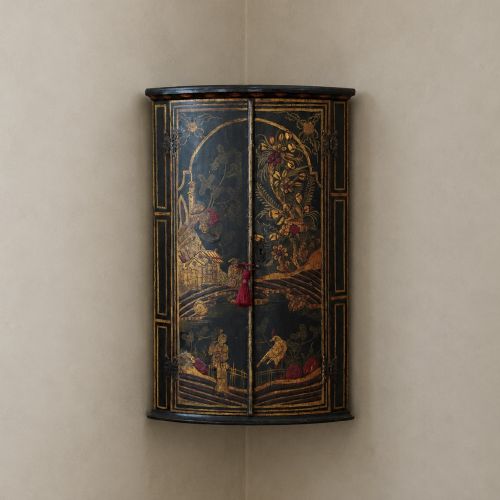
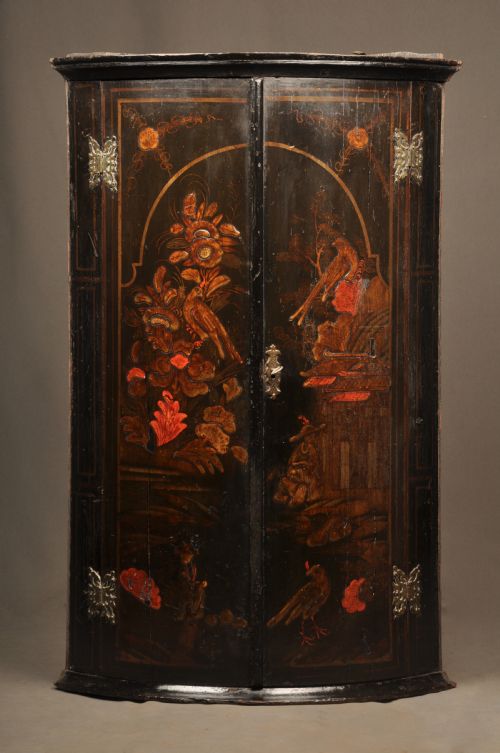
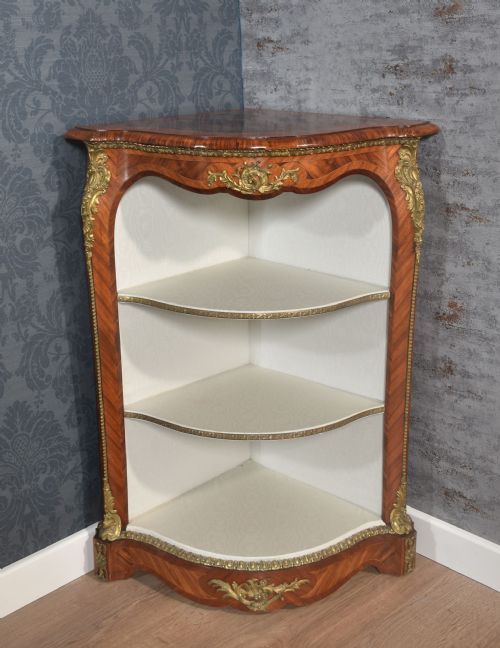
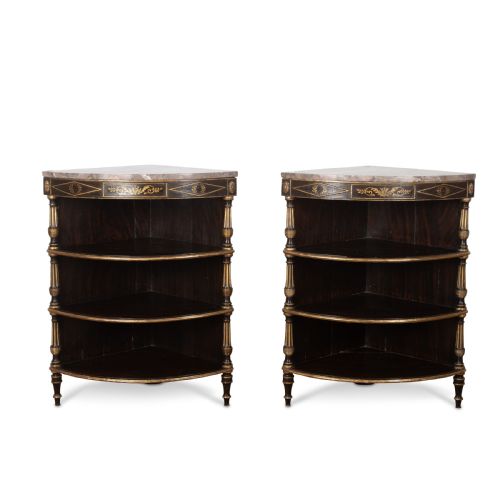
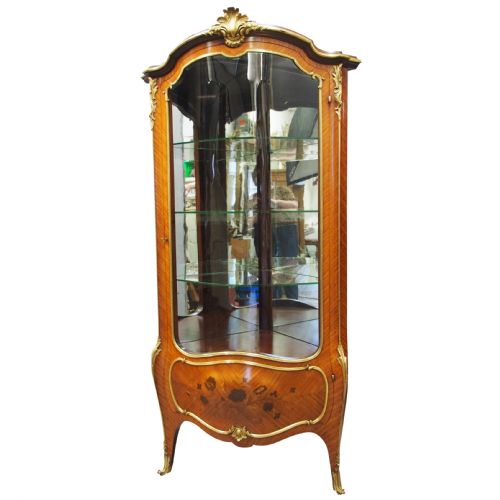
A gilt corner cupboard is a fitted or freestanding storage unit designed specifically to occupy the junction of two walls. The forms range from bowfront hanging cabinets to large floor-standing vitrines and double-door cupboards, utilising the awkward angles of period rooms for both display and concealment.
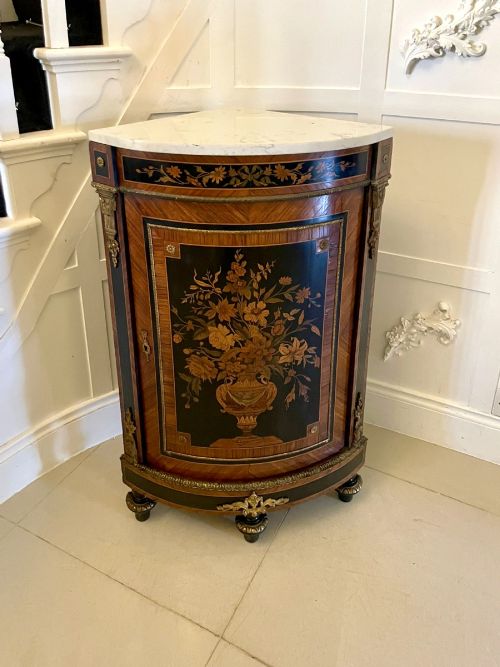
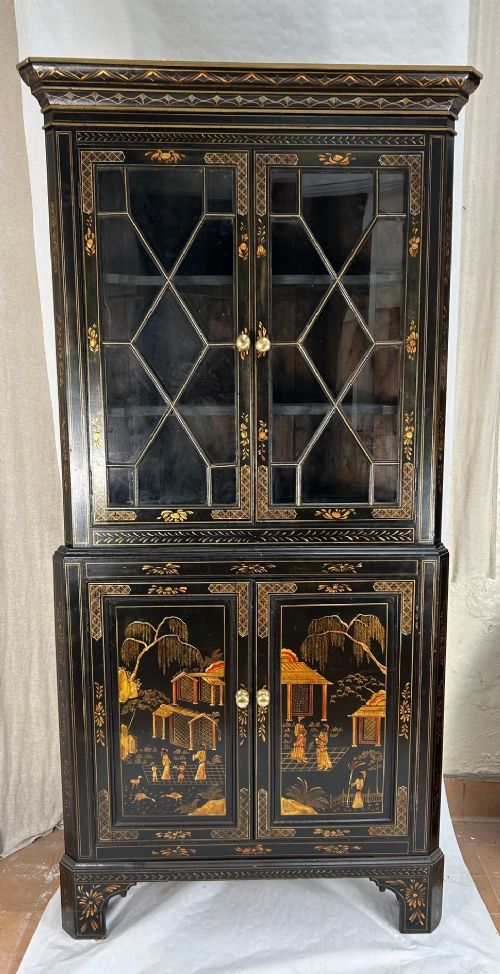
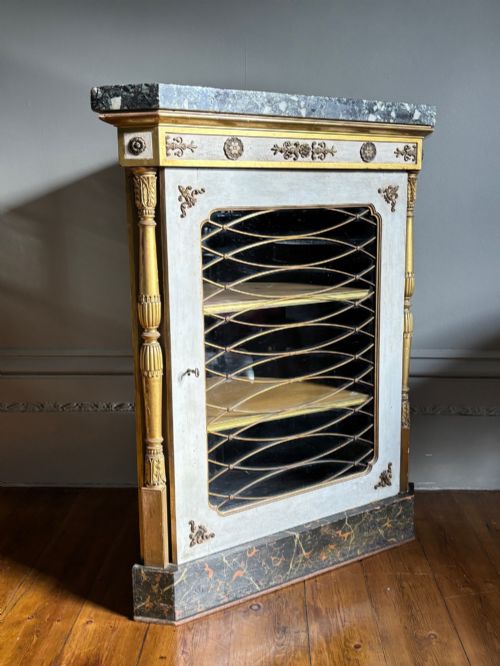
Most examples encountered here belong to the eighteenth and nineteenth centuries, spanning Georgian, Regency and Victorian eras alongside continental revivals. They appear in styles such as Chinoiserie, Louis XVI, Italian Rococo and French Rococo, often incorporating painted lacquer or marble tops.
How they were made
Wood forms the primary carcass, frequently overlaid with kingwood, marquetry, or painted lacquer surfaces finished with gold leaf. Brass and ormolu mounts provide structural framing and decorative accents, particularly on French-influenced and Regency pieces.
Cabinetmakers applied specialist techniques such as japanning to simulate oriental lacquer, building up layers of paint and gold leaf. Marble tops appear on several refined specimens, requiring precise stone-cutting to fit the angled contours of the cabinet top.
Listings feature woods including kingwood alongside marble, glass, brass and gold leaf across multiple centuries.
What varies in quality
The sophistication of the surface decoration marks the distinction between standard production and superior craftsmanship. Hand-rendered Chinoiserie detailing and crisp ormolu mounts demonstrate a higher level of artisan investment than plain painted finishes.
The integration of materials such as genuine marble tops and finely figured kingwood veneers elevates the standing of a piece. Structural complexity, seen in bombe shapes and bowfront doors, also separates simpler wall-hanging units from substantial floor cabinets.
The Gilt Corner Cupboard Glossary
- Chinoiserie
- European decorative style imitating Chinese artistic traditions, typically featuring painted figures, landscapes and pagodas in gold on lacquered grounds. It gained immense popularity in eighteenth-century British and continental furniture.
- Japanning
- European imitation of Japanese and Chinese lacquerwork involving layered varnishes and metallic dust. Artisans baked and polished the surface to achieve a glossy, durable finish adorned with raised gilt motifs.
- Ormolu
- Gilded bronze mounts applied to furniture for decorative and protective purposes, characteristic of high-status cabinetmaking. The technique involves fusing gold amalgam to a bronze base through intense heat.
- Marquetry
- Inlaid wood veneers arranged in pictorial or geometric patterns across a furniture surface. Craftsmen cut contrasting timbers to fit flush into a background veneer.
- Vitrine
- A glass-fronted display cabinet designed for exhibiting porcelain, silver and curiosities. These pieces often feature glazed doors and mirrored interiors to maximise light.
Gilt Corner Cupboard: Frequently Asked Questions
Where should I place a corner cupboard?
These cabinets suit dining rooms, hallways and drawing rooms where standard rectangular furniture blocks traffic flow. They anchor empty wall junctions and draw the eye upwards.
Ensure the wall angle matches the cabinet ninety-degree or custom geometry before installation, particularly with heavy marble-topped variants.
How do I care for antique lacquer and gilt?
Dust surfaces gently with a dry, soft microfibre cloth to protect delicate gold leaf and painted lacquer from abrasion. Avoid modern chemical polishes and silicone sprays.
Keep wooden cabinets away from direct sunlight and strong heat sources to prevent timber shrinkage and lacquer cracking.
How do I identify Regency pieces?
Regency furniture often incorporates classical architectural motifs, bold brass inlays and rich mahogany or rosewood veneers. Italian and French influences appear frequently in this period.
Look for restrained classical proportions combined with decorative gilt or painted surfaces that reflect early nineteenth-century taste.