
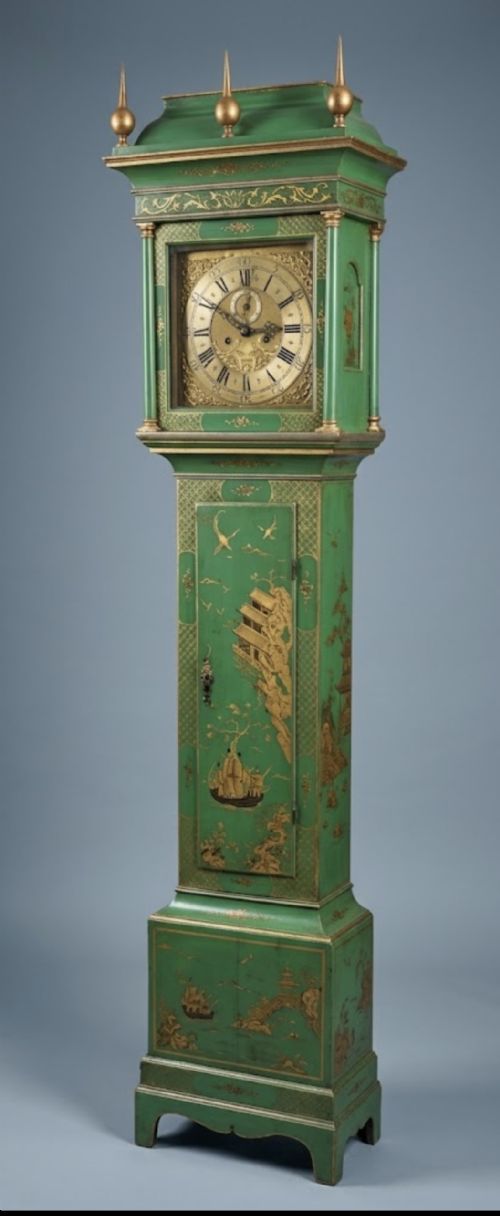
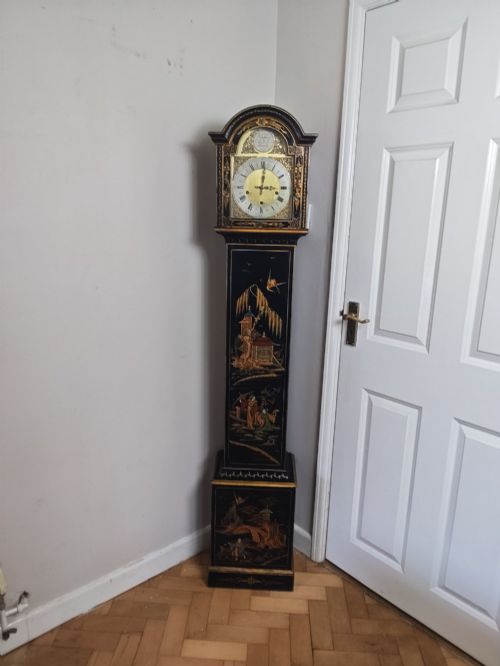
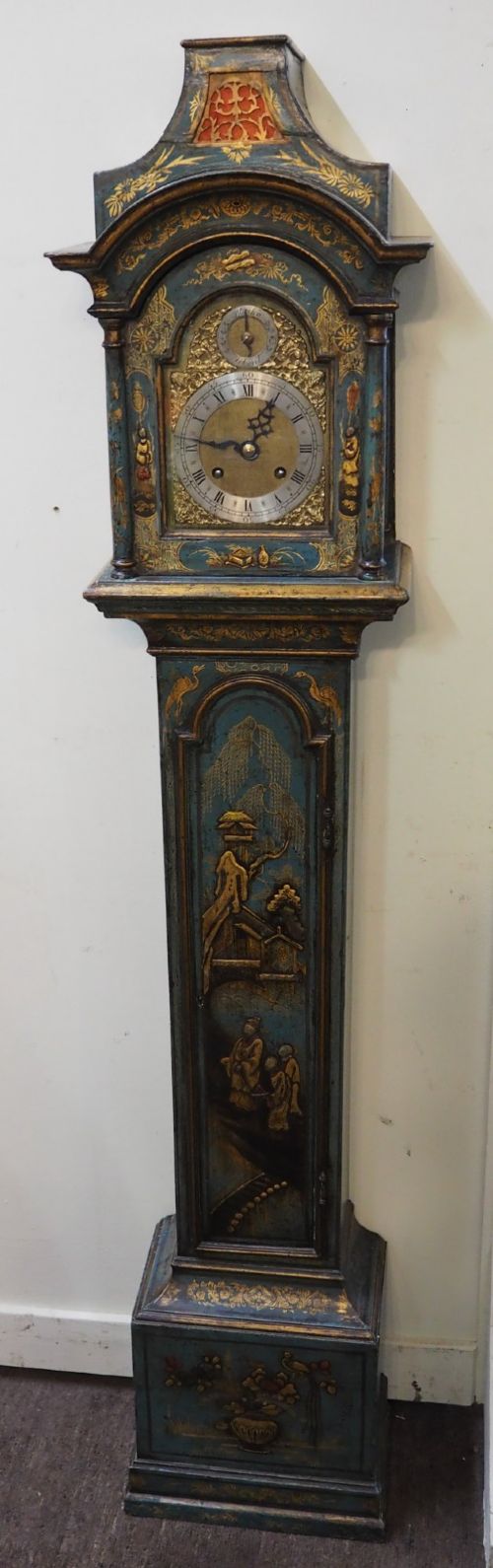
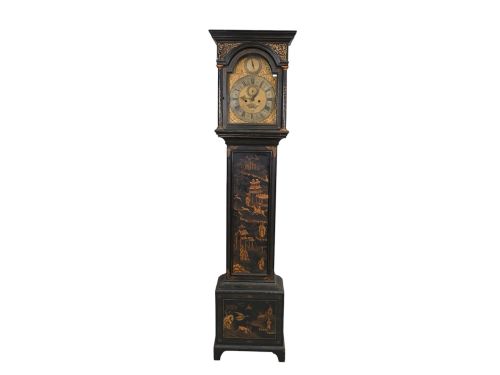


Lacquer Tall Case Clock
A lacquer tall case clock brings striking chinoiserie decoration and a stately vertical presence into a room, making it the ultimate statement piece for a hallway.
Lacquer Tall Case Clock
A lacquer tall case clock combines a tall wooden case finished with elaborate decorative painting with a precision mechanical movement. These timepieces stand tall and command attention in any interior setting.
You will most frequently encounter pieces spanning the Georgian and 18th century periods, often finished in green, blue, or gilt lacquer over wood. The designs showcase classical Chinoiserie motifs alongside traditional longcase proportions.
The selection ranges from grand eight-day grandfather clocks down to smaller grandmother clocks and musical variations. Regional origins stretch from London workshops to Edinburgh and Yarmouth.
How they were made
Makers built the tall cases primarily using wood before applying layers of lacquer, Japanned finishes, and gold leaf. Skilled artisans then detailed these surfaces with intricate Chinoiserie figures and landscapes.
Materials recorded on this page include brass, glass, gold leaf, and Japanned wood.
What varies in quality
The finesse of the surface decoration separates standard examples from exceptional ones, particularly the depth of the gilt work and the complexity of the Chinoiserie scenes. Superior pieces retain the crispness of their original hand-painted details.
The sophistication of the mechanical movement also dictates worth, with automata and musical capabilities representing higher tiers of horological ambition. The integrity of the wooden case structure beneath the lacquer finish underpins the durability of the piece.
John Fielder of Alton·William Kipling London·Thomas Utting of Yarmouth
The Lacquer Tall Case Clock Glossary
- Chinoiserie
- European decorative style reflecting Chinese artistic influences. This aesthetic dominates the painted scenes found across the tall cases.
- Japanned wood
- European imitation of East Asian lacquerwork using layered varnishes and metallic dust. This finish creates the hard, glossy surface seen on many eighteenth-century examples.
- Longcase clock
- Tall pendulum clock housed in a protective wooden case standing directly on the floor. These are frequently referred to as grandfather or grandmother clocks depending on their height.
- Automaton
- Moving mechanical figure integrated into the clock dial. These figures animate on the hour to add visual theatre to the timekeeping.
- Grandmother clock
- Smaller version of the traditional longcase clock produced in later periods. They offer the same decorative lacquer appeal with a reduced vertical footprint.
Lacquer Tall Case Clock: Frequently Asked Questions
Where should I place a tall case clock?
These vertical timepieces suit hallways, landings, or high-ceilinged reception rooms where their height can be properly accommodated without crowding the floor space.
Ensure the location protects the lacquer finish from direct sunlight and dramatic temperature fluctuations that might affect the wood and movement.
How do I wind the clock?
Most eight-day movements require the weights to be drawn up using a specialised key inserted into the dial face once a week. Care must be taken not to over-wind the mechanism.
Consulting a professional horologist for initial setup ensures the weights and pendulum hang correctly without damaging the internal brass gearing.
How do I date a lacquer longcase?
Dating relies heavily on the style of the Chinoiserie decoration, the shape of the hood, and the signature of the maker inscribed on the brass dial face. Eighteenth-century examples display different painted palettes compared to early twentieth-century revivals.
Examining the construction of the wooden case internals provides further clues regarding the period of manufacture.
What is the difference between a grandfather and grandmother clock?
Grandfather clocks represent the traditional full-size tall case format developed during the seventeenth and eighteenth centuries, standing well over six feet tall. Grandmother clocks are significantly shorter versions usually produced during the twentieth century.
Both styles utilise similar dial layouts and lacquer finishes but cater to different spatial requirements.