


Chinoiserie Pendulum Clock
These chinoiserie pendulum clock examples bring hand-painted lacquer and striking brass movements together, offering the height of Georgian and later decorative mechanics.
Chinoiserie Pendulum Clock
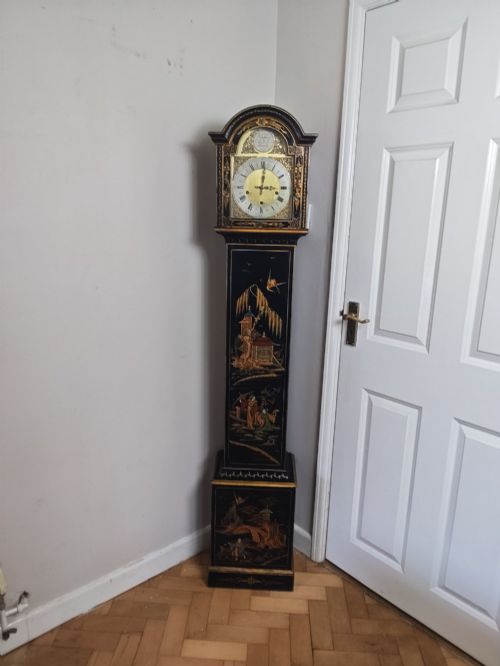
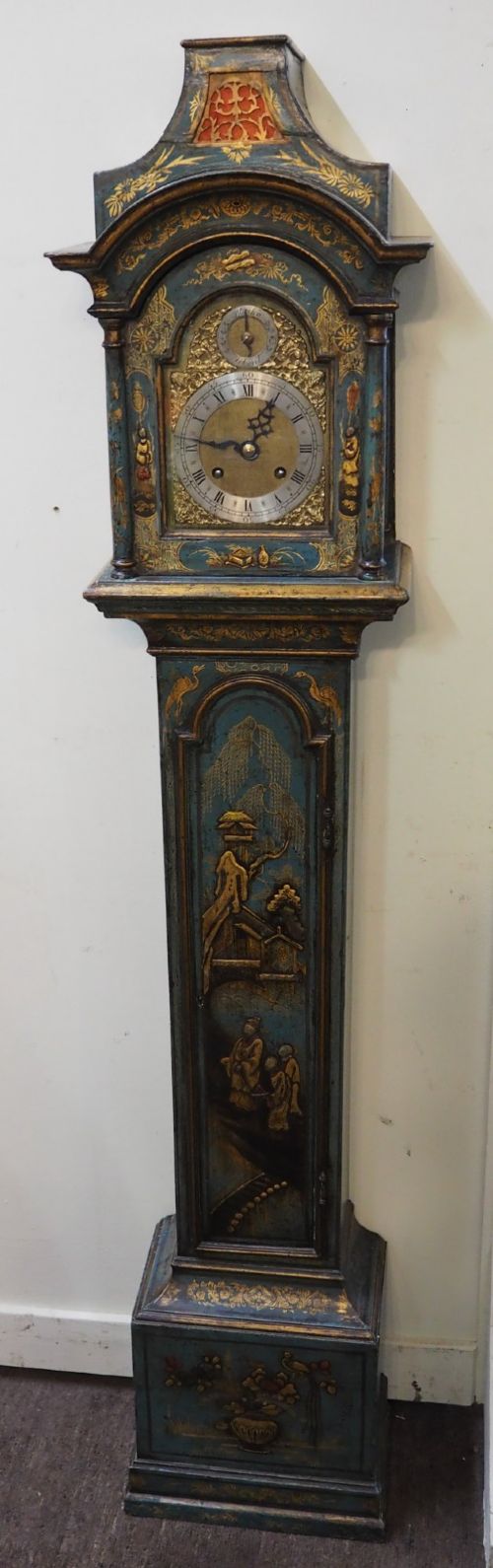
A chinoiserie pendulum clock represents tall case horology adorned with ornate Eastern-inspired motifs, often standing tall in hallways or principal rooms. When you search for chinoiserie pendulum clock, you encounter slender longcase clocks enclosed in decorated wooden housings that tower above standard wall pieces.
The versions most commonly met on this page span from eighteenth-century Georgian origins through to later nineteenth-century pieces and nineteen-thirty revivals. These upright timepieces combine functional pendulum-driven movements with elaborate painted scenes depicting figures, pagodas, and landscapes.
How they were made
These clocks rely on solid wooden carcasses treated with layers of lacquer, varnish, and gold leaf to create deep, reflective dark green or blue decorative surfaces. Artisans applied raised japanned decoration by building up gesso reliefs before painting and gilding the intricate Orientalist vignettes.
Internal brass mechanisms govern the striking and timekeeping functions, often paired with swinging pendulums and occasionally complex automata or rocking figures. Glazed dial doors protect the face while allowing a clear view of the brass dial plates and hands.
Some clocks feature rocking figures like Father Time, keeping a watchful eye on every tick.
What varies in quality
Quality rests principally in the execution and preservation of the painted lacquer surface, where finer examples display crisp, detailed gold leaf work and rich colour depth. The complexity of the movement also dictates standing, with musical capabilities or rocking automata representing superior horological ambition.
Proportion and case integrity separate standard pieces from exceptional survivals, particularly when original japanned surfaces remain undisturbed by heavy restoration. The refinement of the brass dial engraving and the balance of the longcase proportions complete the assessment.
Robert Berry
The Chinoiserie Pendulum Clock Glossary
- Japanned wood
- European wood finished with varnishes and paints in imitation of East Asian lacquerware. This technique creates the distinctive raised glossy surface seen on many tall clocks.
- Longcase clock
- A tall, weight-driven pendulum clock enclosed in a wooden case with a base and a hood. These pieces are frequently referred to as grandfather or grandmother clocks.
- Georgian
- Pertaining to the reigns of the British monarchs from seventeen-fourteen to eighteen-thirty. Pieces from this era exhibit characteristic classical proportions alongside decorative lacquer work.
Chinoiserie Pendulum Clock: Frequently Asked Questions
What is a chinoiserie pendulum clock?
It is a tall standing clock driven by a pendulum and housed in a wooden case decorated with European interpretations of Chinese art. These pieces combine mechanical timekeeping with elaborate painted and gilded finishes.
They serve as both functional timepieces and striking decorative furniture pieces. The tall wooden trunk protects the swinging pendulum and weights while displaying intricate surface artwork.
How do I date an 18th-century clock?
Dating relies on examining the construction of the wooden case, the style of the painted japanning, and the technical characteristics of the brass movement. Eighteenth-century examples often feature hand-engraved brass dials and specific cabinet proportions.
Comparing the decorative motifs and signature styles of known makers helps narrow down the decade of production. Documentation or hallmarks on the movement plates provide further chronological clues.
Where should I place a longcase clock?
These tall clocks require a stable, level floor and a secure wall attachment to ensure the pendulum swings truly without interference. Hallways, landings, and reception rooms provide the necessary vertical clearance and ambient stability.
Avoid placing them in areas subject to extreme temperature fluctuations or direct sunlight, which can harm the delicate lacquer and gilt finishes over time.