


Japanned Tallcase Clock
These japanned tallcase clocks bring vibrant chinoiserie decoration and striking vertical presence to any interior.
Japanned Tallcase Clock
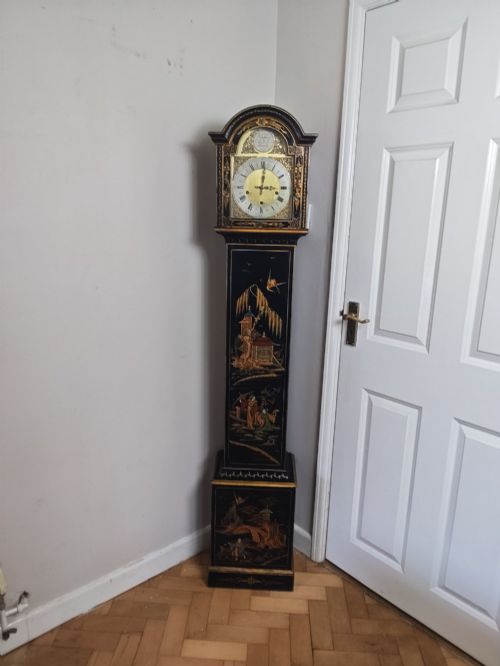
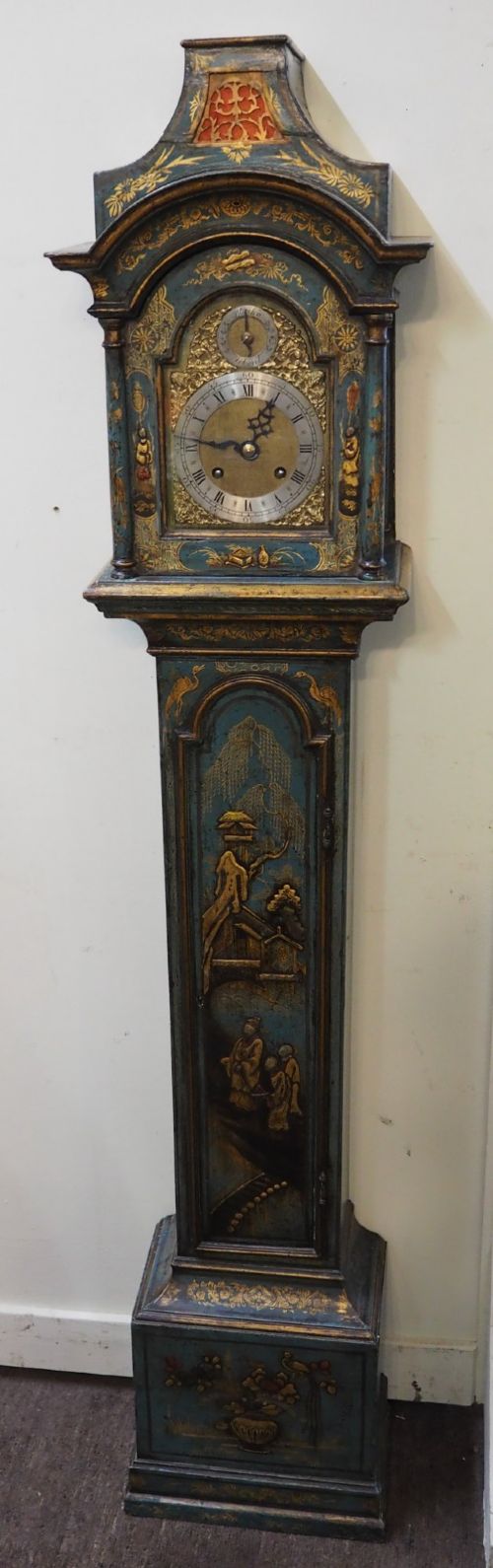
A japanned tallcase clock combines a tall wooden case with painted orientalist decoration and a precision timekeeping movement. When you search for a japanned tallcase clock, you encounter upright timepieces spanning the Georgian era and the 1930s revival period.
The selection ranges from full-size grandfathers down to more compact grandmother clocks. Common colourways include dark green, blue, and cream lacquered wood finished with gold leaf accents.
Many examples hail from the 18th century, featuring regional makers from London, Reading, Edinburgh, and Yarmouth. Later 1930s interpretations offer similar chinoiserie motifs in smaller scales.
How they were made
Wood carcasses receive layers of lacquer to build a smooth base before undergoing decoration. Artisans apply gilt and gold leaf to render intricate chinoiserie scenes of figures, pavilions, and landscapes.
Brass dials and glass hood doors protect the mechanical movements within. Certain pieces incorporate specialised musical mechanisms or automata such as rocking figures.
Some clocks feature a rocking Father Time to remind everyone that even the finest lacquer cannot halt the hours.
What varies in quality
The refinement of the hand-painted chinoiserie decoration sets superior examples apart. Crisp detailing in the gold leaf and depth within the lacquered wood surface indicate higher craftsmanship.
The original integrity of the case and the regional provenance inscribed by makers influence the standing of each clock. Finer movements, such as those featuring automata or musical capabilities, elevate the piece further.
William Kipling London·Wise of Reading·Thomas Utting of Yarmouth·Robert Berry
The Japanned Tallcase Clock Glossary
- Japannan
- European imitation of traditional East Asian lacquerwork, created using layered varnishes and decorative painting.
- Chinoiserie
- European interpretation and imitation of Chinese and East Asian artistic traditions, prominent in furniture and clock decoration.
- Grandmother clock
- A colloquial term for a slender, reduced-scale longcase clock that stands shorter than a traditional grandfather clock.
- Automaton
- Moving mechanical figures incorporated into the clock dial or arch, such as a rocking Father Time.
- Longcase clock
- A weight-driven pendulum clock housed inside a tall wooden case designed to stand on the floor.
Japanned Tallcase Clock: Frequently Asked Questions
What is a japanned tallcase clock?
A tall pendulum clock housed in a wooden case decorated with lacquer and painted orientalist motifs. These pieces serve as both functional timekeepers and striking decorative focal points.
They appear in various sizes, from grand 18th-century floor clocks to more compact 1930s grandmother clocks.
How do I spot a 1930s revival clock?
Revival pieces often present as grandmother clocks with lighter cream or pastel lacquer finishes. The construction methods and internal components typically reflect 20th-century standardisation.
Compare the timber ageing and dial characteristics against 18th-century Georgian exemplars to determine the era.
Where were these clocks made?
Many originate from major workshops in London alongside regional centres such as Reading, Edinburgh, and Yarmouth. Makers signed their dials, anchoring the pieces to specific British towns.
Regional variations appear in both the cabinet proportions and the complexity of the movement.
What maintenance do they need?
Mechanical movements require professional servicing and careful weight winding to maintain accurate time. The lacquered wooden surfaces benefit from stable room environments away from direct sunlight.
Gentle dusting preserves the delicate gold leaf and painted chinoiserie details over generations.