

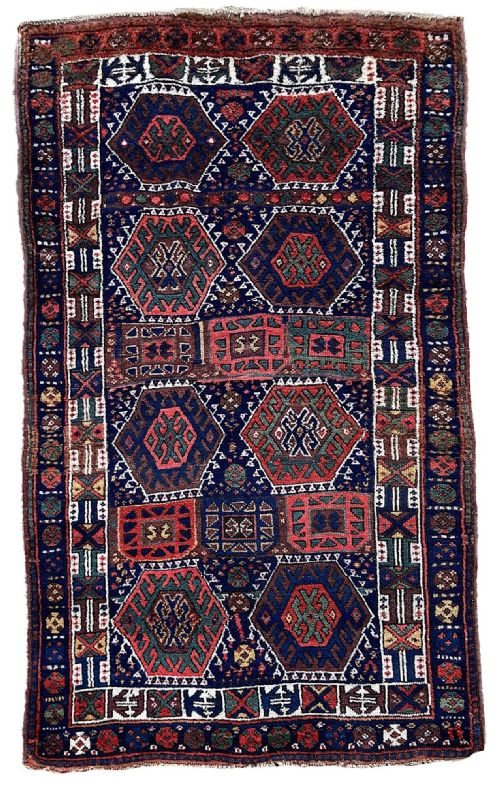
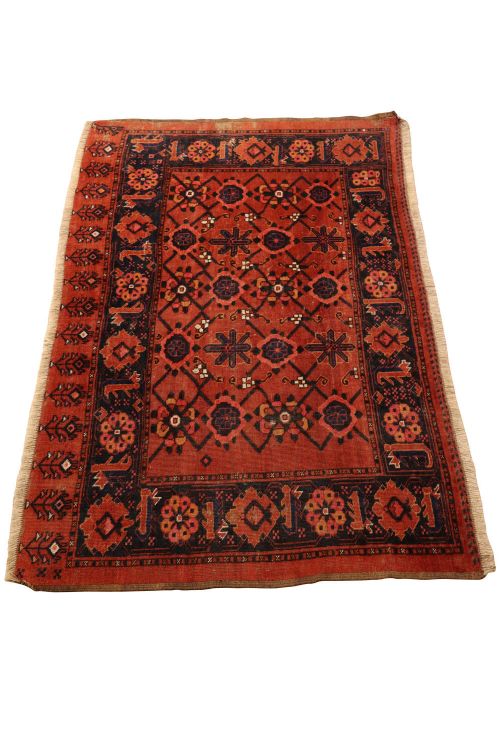


Kurdish Woven Rug
When you handle a kurdish woven rug, you touch dense wool knotted by nomadic and village hands across Persian and Anatolian lands.
Kurdish Woven Rug
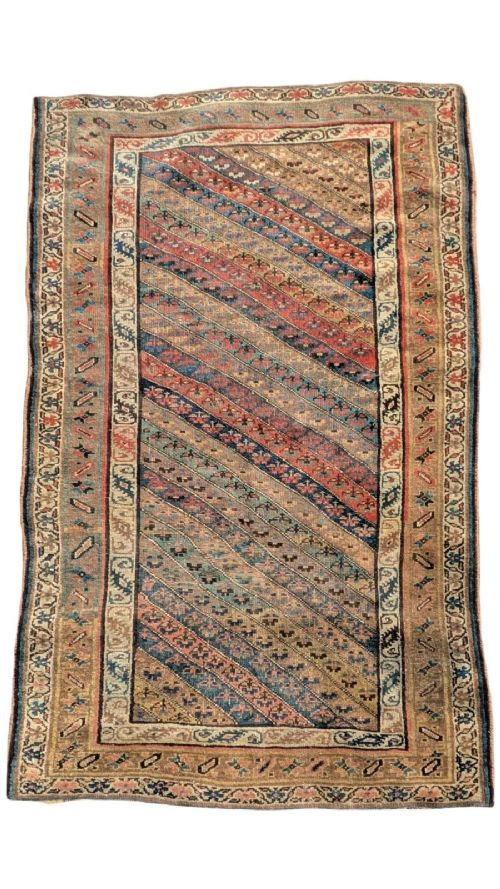
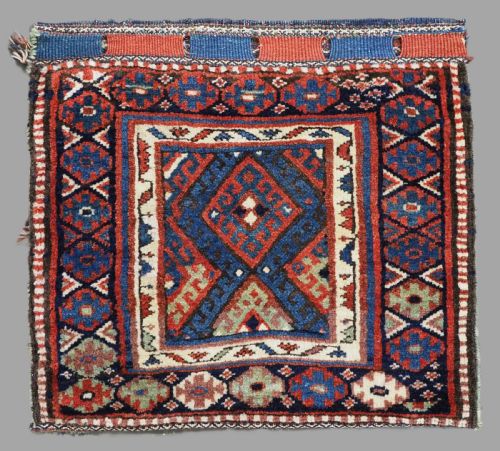
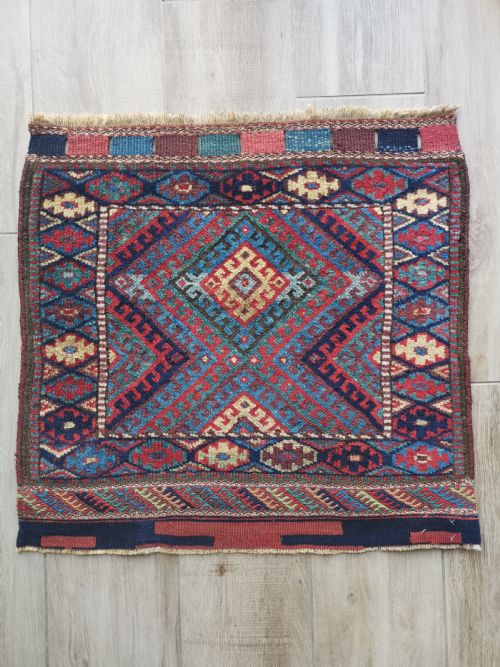
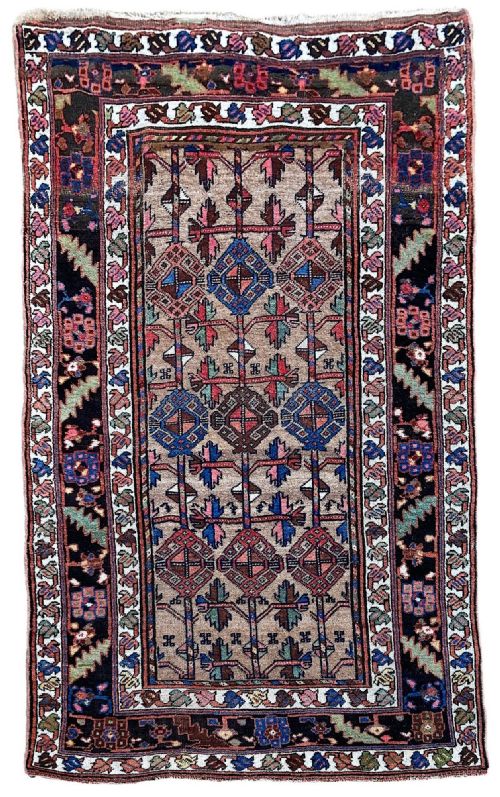
Most examples you encounter date from the nineteenth and early twentieth centuries, capturing traditional formats like the rug bag, wheat sack, and room rug. These textiles reflect centuries of tribal design vocabulary, moving from geometric gul motifs to shrub patterns on yellow or lemon grounds.
How they were made
The construction relies heavily on hand-spun wool and cotton, often utilising goat hair for sturdy selvedges and structural support in bags and runners. Weavers knotted the fleece onto wool or cotton foundations, building resilient piles designed to withstand daily nomadic camp life or village floor use.
Natural dyes provide the palette, yielding deep tones and contrasting grounds that age gracefully over decades of light and wear.
The site listings feature pieces dated from the mid-nineteenth century through the 1920s, constructed primarily from wool, cotton, and goat hair.
What varies in quality
Quality rests in the handling of the wool, the clarity of the natural dyes, and the fineness of the knotting across the field. Tighter structures and more precise geometric execution distinguish master village work from coarser utility weaving.
The survival of complete bag backs, original plain weave sections, and crisp border proportions elevate individual examples above heavily worn counterparts.
The Kurdish Woven Rug Glossary
- Chanteh
- A small tribal vanity bag or container woven by nomads. These portable textiles often feature intricate pile work on the face and plain weave backs.
- Kelleh
- A long rectangular carpet format traditionally suited to the proportions of Persian domestic interiors. They offer expansive fields for repeating tribal motifs.
- Gul
- A medallion or repeating floral-octagon motif found across oriental carpets. In these pieces, specific gul types help identify tribal origins.
- Bidjar
- A Persian town and district known for exceptionally dense, heavy carpets woven by Kurdish artisans. These pieces are frequently called the iron rugs of Persia.
- Senneh
- A style of fine Kurdish weaving originating from Sanandaj, known for delicate boteh patterns and precise knotting on cotton foundations.
Kurdish Woven Rug: Frequently Asked Questions
What is a kurdish woven rug?
A kurdish woven rug is a textile created by Kurdish tribes and villagers in regions spanning Persia, Anatolia, and the Caucasus. These pieces include floor carpets, long runners, and functional bags.
Weavers utilised durable wool, cotton, and natural dyes to produce robust floor coverings and storage items featuring distinct geometric and tribal patterns.
How were these rugs used?
Nomadic and village communities used these textiles for ground cover inside tents and houses, as well as for practical storage. Bag faces and larger sacks served to transport belongings during seasonal migrations.
Smaller pieces functioned as saddlebags, cushions, and grain containers before entering the collector market as decorative objects.
How do I tell different regional styles apart?
Regional attribution relies on examining the foundation materials, knotting density, and specific design vocabulary. Bidjar pieces often present extreme density, while Jaf items frequently display repeating geometric panels.
Colour palettes also offer clues, with certain valleys favouring yellow or lemon grounds alongside traditional indigo and madder reds.
How do I live with an antique rug?
Living with these textiles involves placing them in areas with moderate foot traffic to preserve the wool pile. Using a quality underlay prevents slipping and reduces internal friction on the foundation.
Keep them away from direct, harsh sunlight to protect the natural dyes, and shake or vacuum them gently without a rotating brush.