
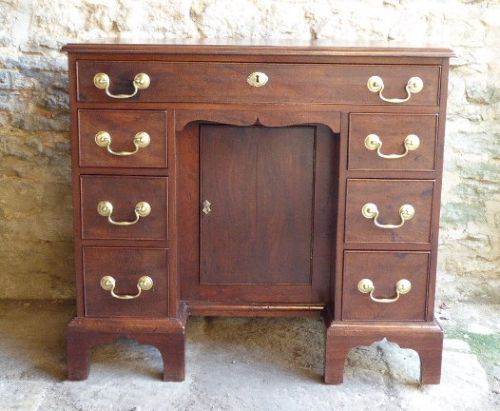
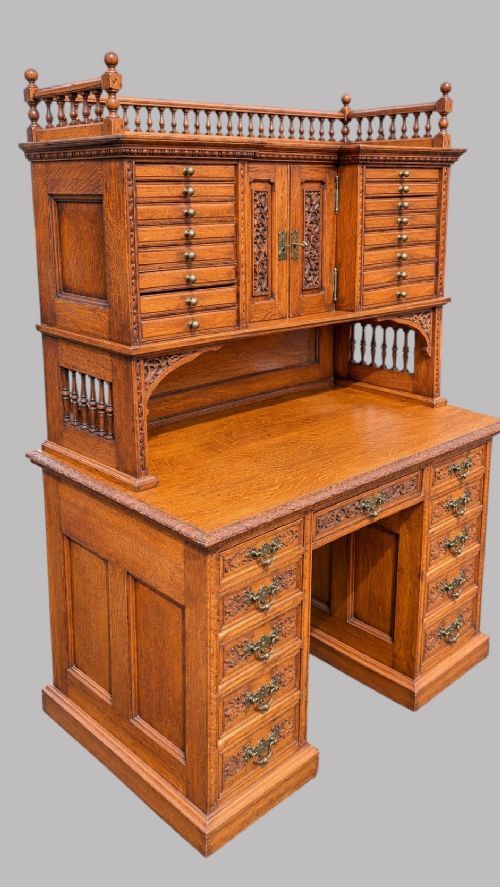
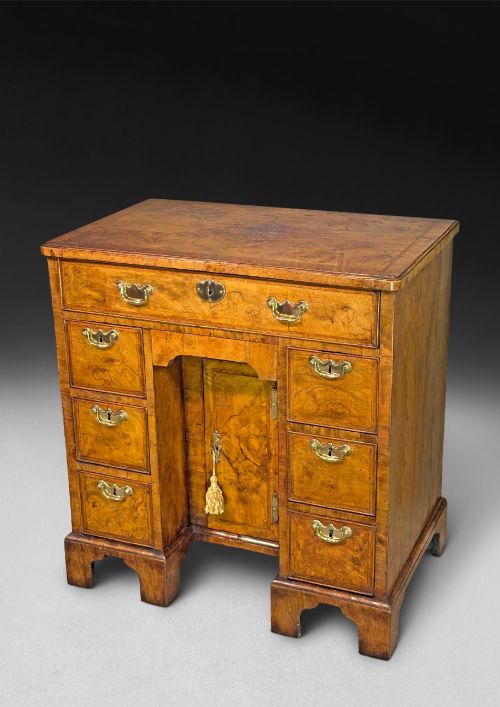
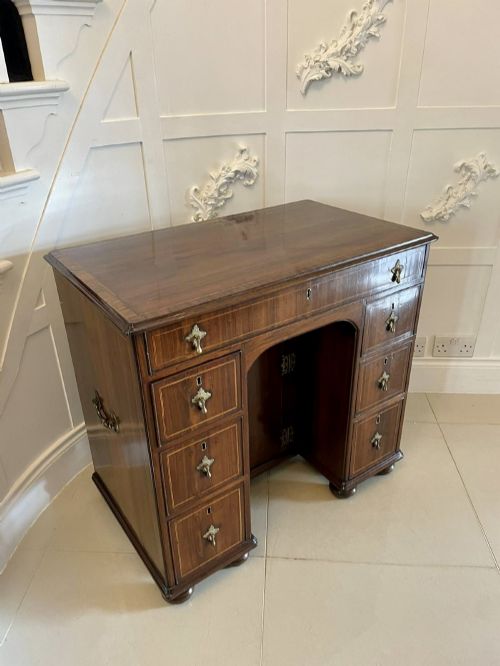
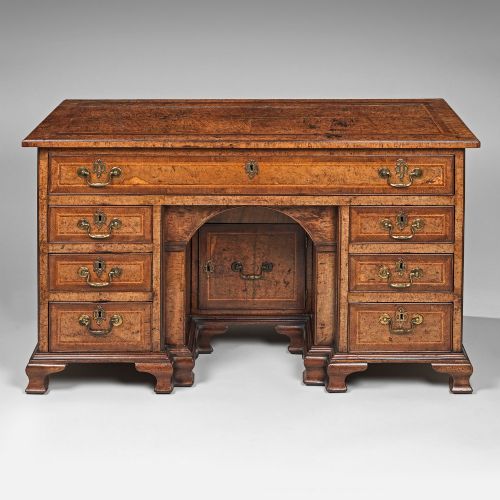
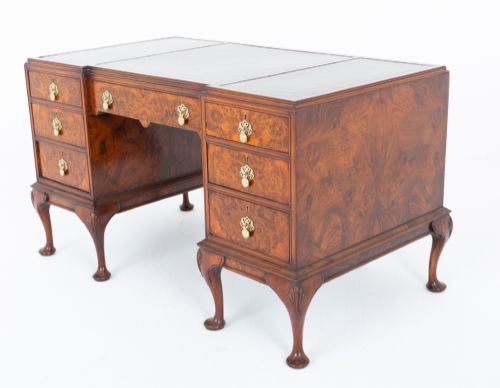
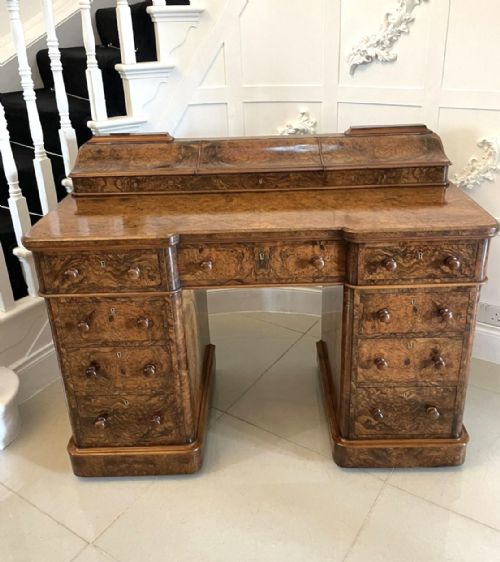
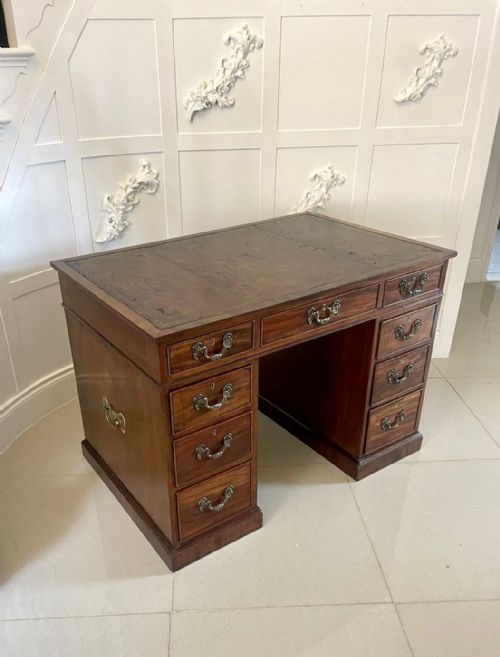
Kneehole Pedestal Bureau
A kneehole pedestal bureau is a compact writing desk with twin stacks of drawers flanking a central recess, offering practical workspace and refined storage.
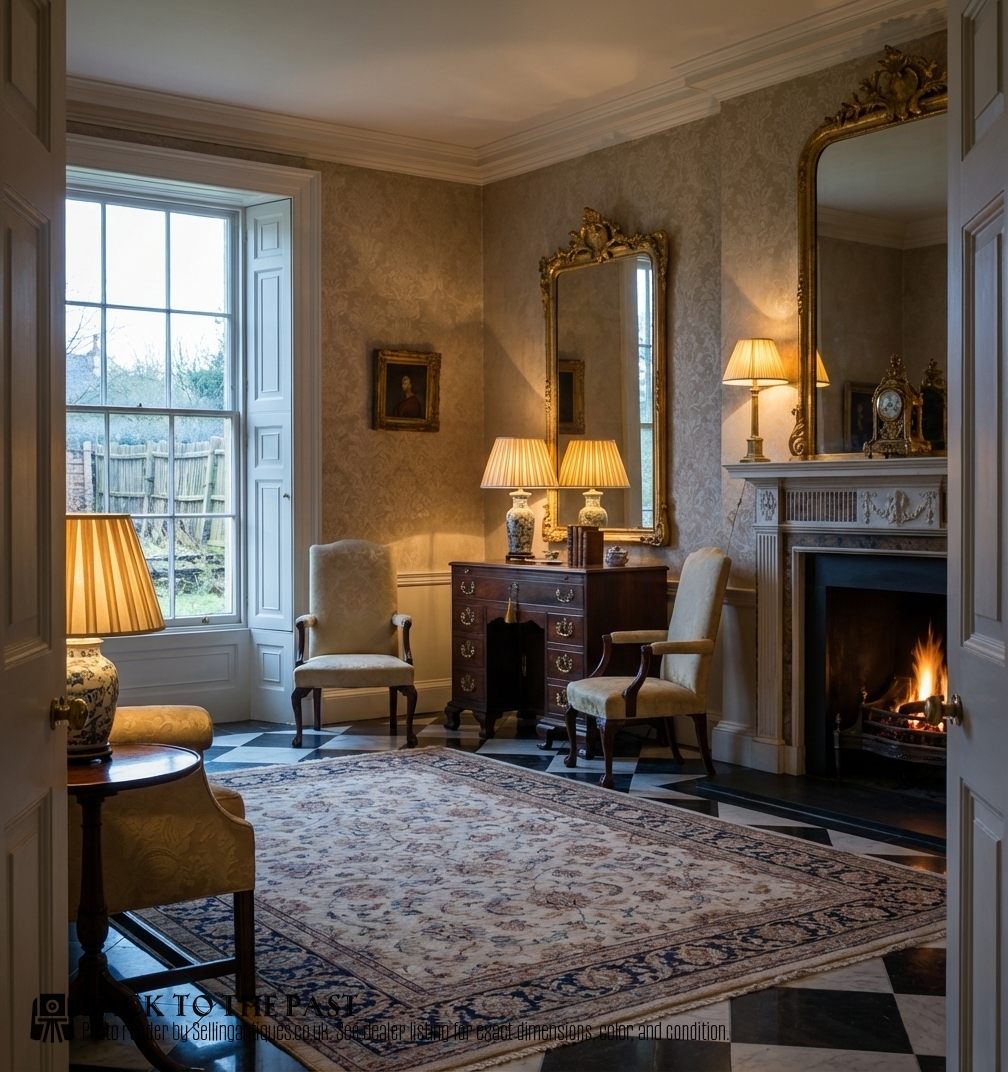
Kneehole Pedestal Bureau
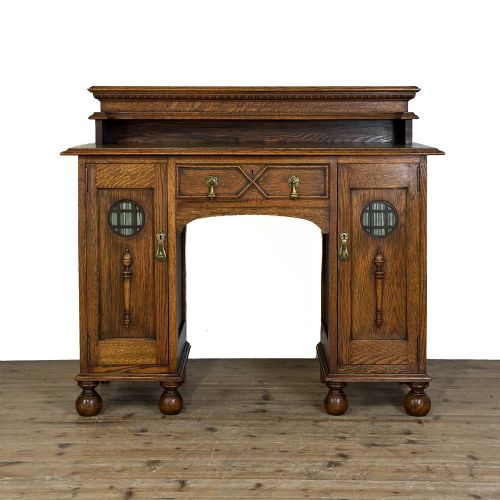
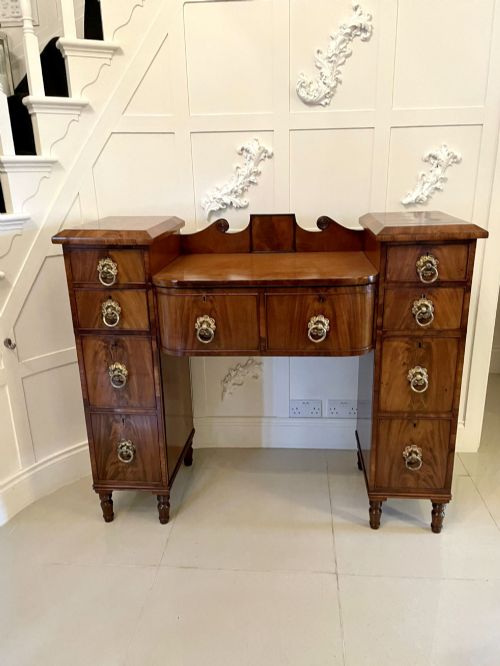
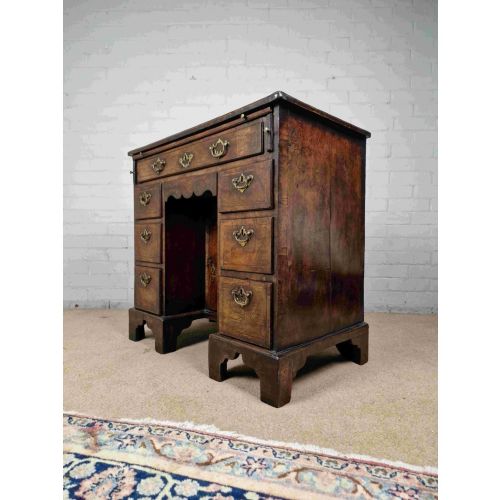
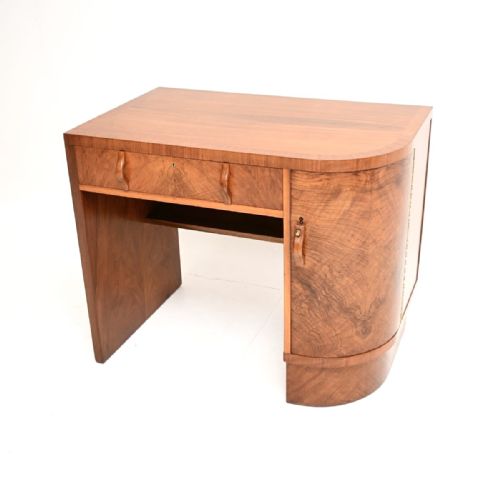
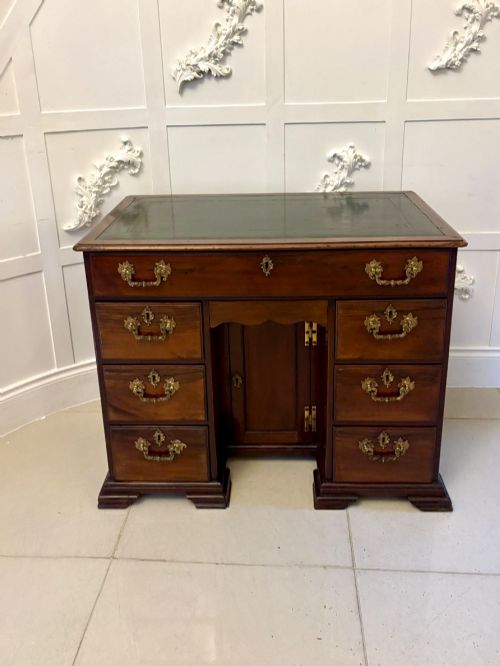
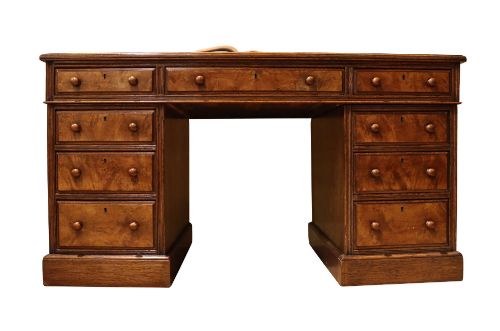
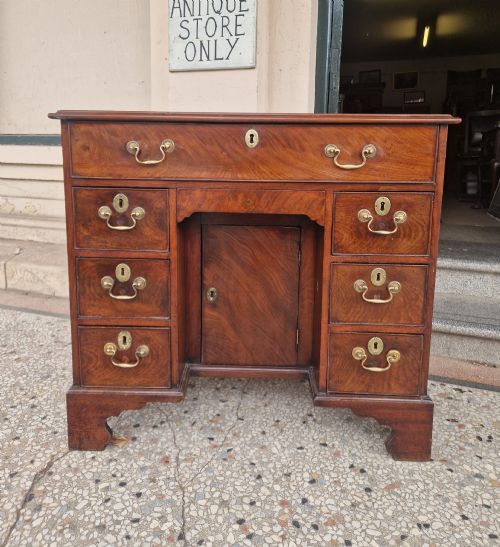
The kneehole pedestal bureau combines a flat top and a central recessed space with drawers arranged in pedestals on either side. These pieces span periods from the eighteenth century through the Georgian and Victorian eras, alongside later Edwardian and Art Deco interpretations.
Mahogany and walnut dominate the listings, frequently appearing in forms described as desks, writing tables, or dressing tables. The eighteenth-century and Georgian examples emphasise figured grains and compact proportions suited to domestic studies.
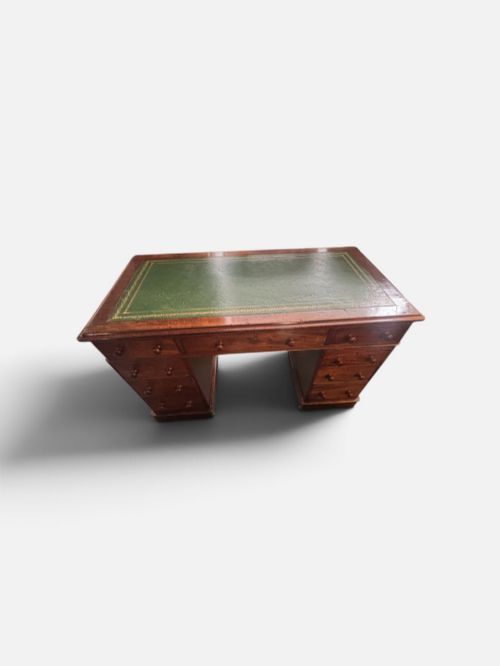
Victorian and Edwardian variations incorporate oak, burr walnut, and pedestal configurations with multiple drawers. Later twentieth-century iterations include Art Deco designs and walnut veneer surfaces with leather writing inserts.
Materials and Construction
Cabinet makers utilised dense hardwoods such as mahogany, oak, and walnut, often applying decorative veneers like burr walnut, burr elm, and fiddleback walnut to primary surfaces. These timbers provided both structural stability and rich visual grain patterns.
Hardware typically comprises brass for handles and key escutcheons, while secondary materials such as leather provide writing surfaces for specific desks. Joinery methods involve traditional drawer construction and pedestal assembly designed to support daily writing tasks.
Certain compact models were once affectionately dubbed Davenport companions, though purists insist on strict pedestal geometry.
Assessment of Quality
Quality rests upon the selection of timber figure, such as highly figured walnut or fine mahogany, and the precision of the cabinet work in the drawer configuration and pedestal joinery. Superior examples maintain balanced proportions and intact original brass hardware.
The integration of secondary decorative details, including crossbanding, inlay, or specialised leather writing surfaces, distinguishes finer desks from simpler utility pieces. Structural integrity across the central kneehole recess and flanking drawer stacks further indicates workshop capability.
Maple and Co·Étienne Kohlmann
The Kneehole Pedestal Bureau Glossary
- Kneehole
- A recessed space beneath the desk top designed to accommodate the user's legs when seated. This arrangement allows pedestals of drawers to flank both sides.
- Pedestal desk
- A freestanding desk constructed with two supporting columns or stacks of drawers on either side of a central opening. This form provides substantial storage capacity while maintaining a compact footprint.
- Burr walnut
- Timber obtained from the gnarled growths of walnut trees, yielding intricate swirling grain patterns. Cabinet makers prized this material for veneering prominent drawer fronts and top surfaces.
- Fiddleback walnut
- A figured wood grain displaying undulating transverse patterns resembling the back of a violin. It appears on select eighteenth-century and Georgian furniture.
- Crossbanding
- A border technique where thin strips of veneer are laid perpendicular to the main grain direction. This frames the primary timber surface of drawer fronts and desk tops.
- Slide
- A pull-out shelf positioned above the drawers to extend the working surface of the desk. It provides additional space for writing without enlarging the overall footprint.
Kneehole Pedestal Bureau: Frequently Asked Questions
What is a kneehole pedestal bureau?
A kneehole pedestal bureau is a compact writing desk featuring a central recessed space flanked by two pedestals of drawers. It provides dedicated workspace and drawer storage within a structured footprint.
Such desks evolved through various periods, incorporating different woods like mahogany and walnut alongside decorative veneers and brass hardware.
How were these desks used?
These pieces served primarily for correspondence, writing, and administrative tasks in private studies or bedrooms. The central kneehole allowed a person to sit comfortably while accessing flanking drawers for papers and writing implements.
Some variants also doubled as dressing tables, utilising the top surface and drawer configuration for personal grooming items.
How do I distinguish eighteenth-century pieces?
Eighteenth-century and Georgian desks typically display solid timber construction, understated brass handles, and figured mahogany or walnut grains. Proportions tend to be smaller and more refined compared to later nineteenth-century iterations.
Examination of the drawer linings, dovetail joints, and secondary woods helps confirm the period of manufacture.
How do I care for a walnut desk?
Walnut and mahogany surfaces benefit from placement away from direct heat sources and strong sunlight to prevent timber movement and fading. Regular dusting with a soft, dry cloth preserves the finish of the wood and any applied veneers.
Leather writing inserts require gentle cleaning suitable for leather without excessive moisture.