
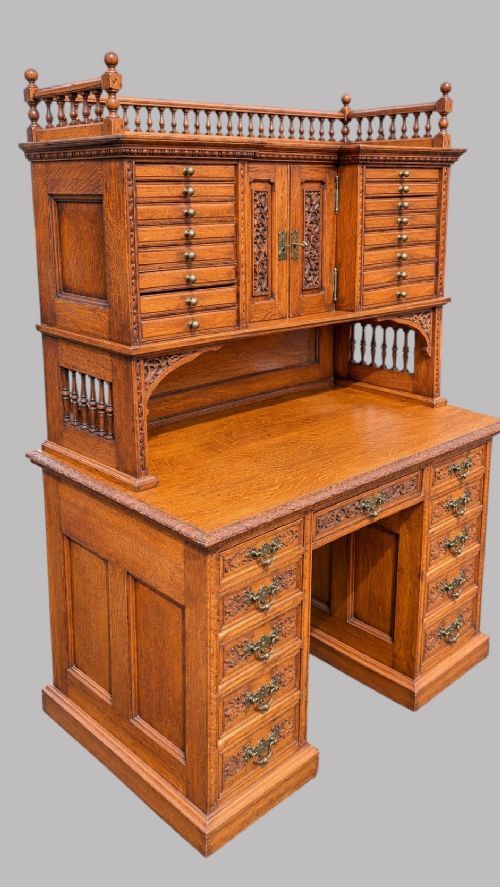
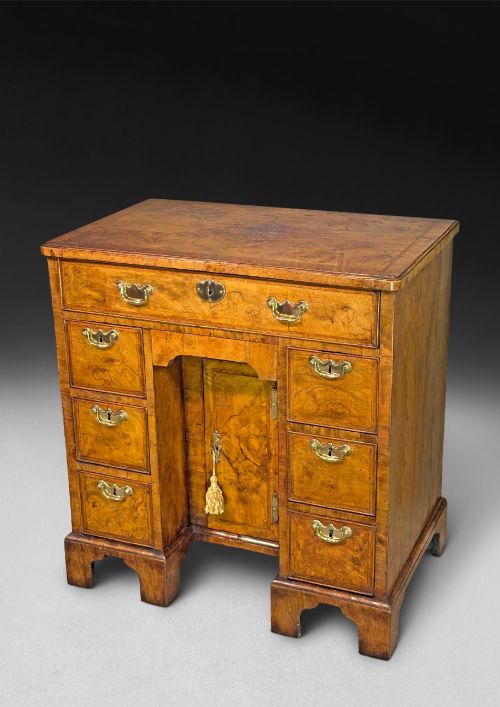
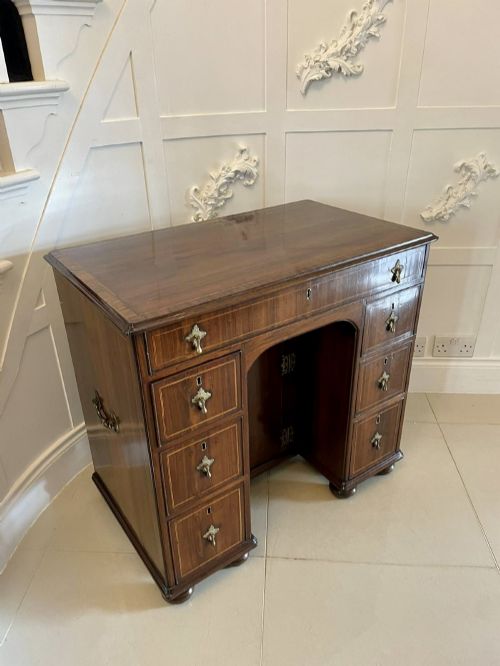
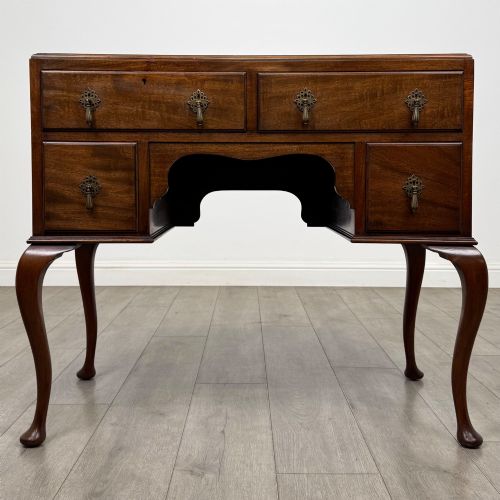
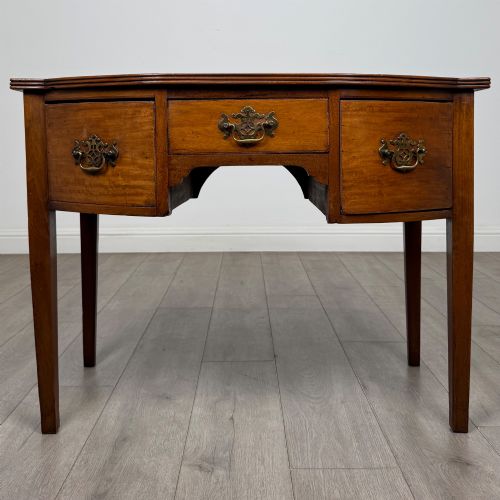
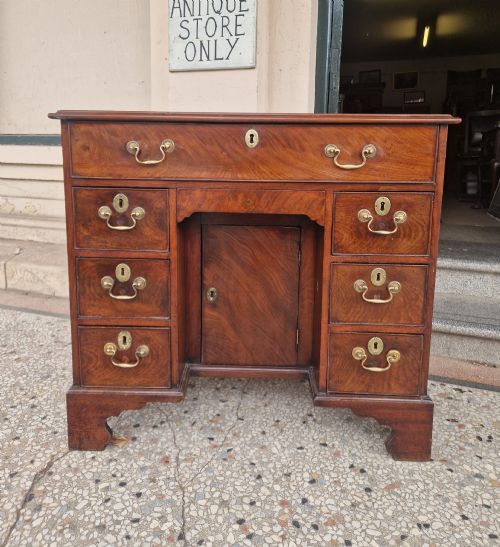
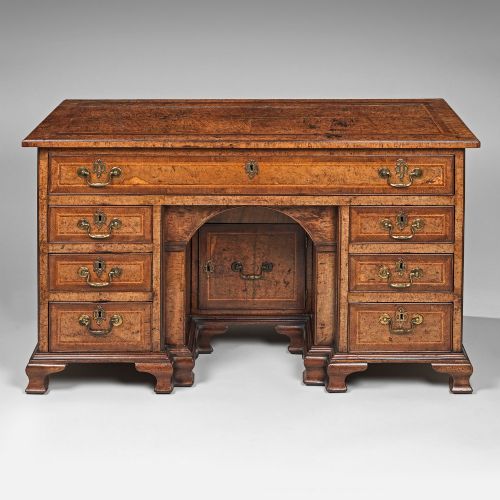
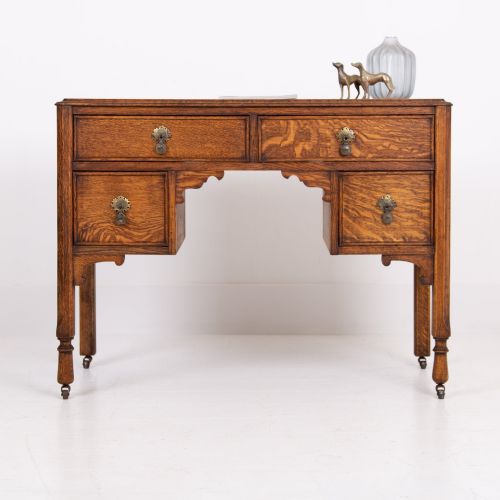
Kneehole Bureau Desk
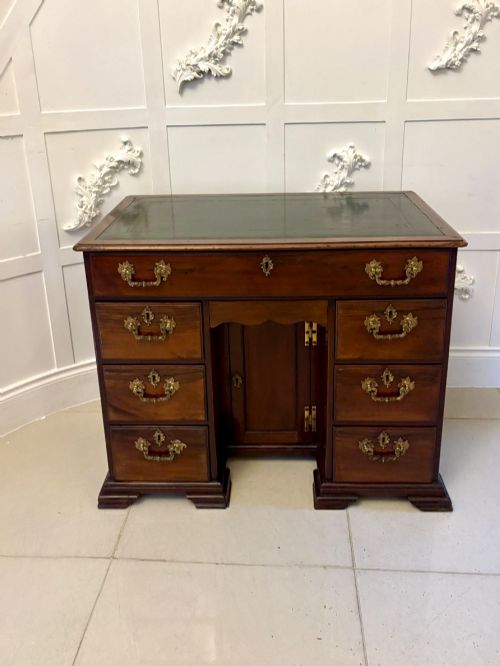
A kneehole bureau desk offers compact writing storage with pedestals either side, combining practical drawers with a central recessed space for the legs.
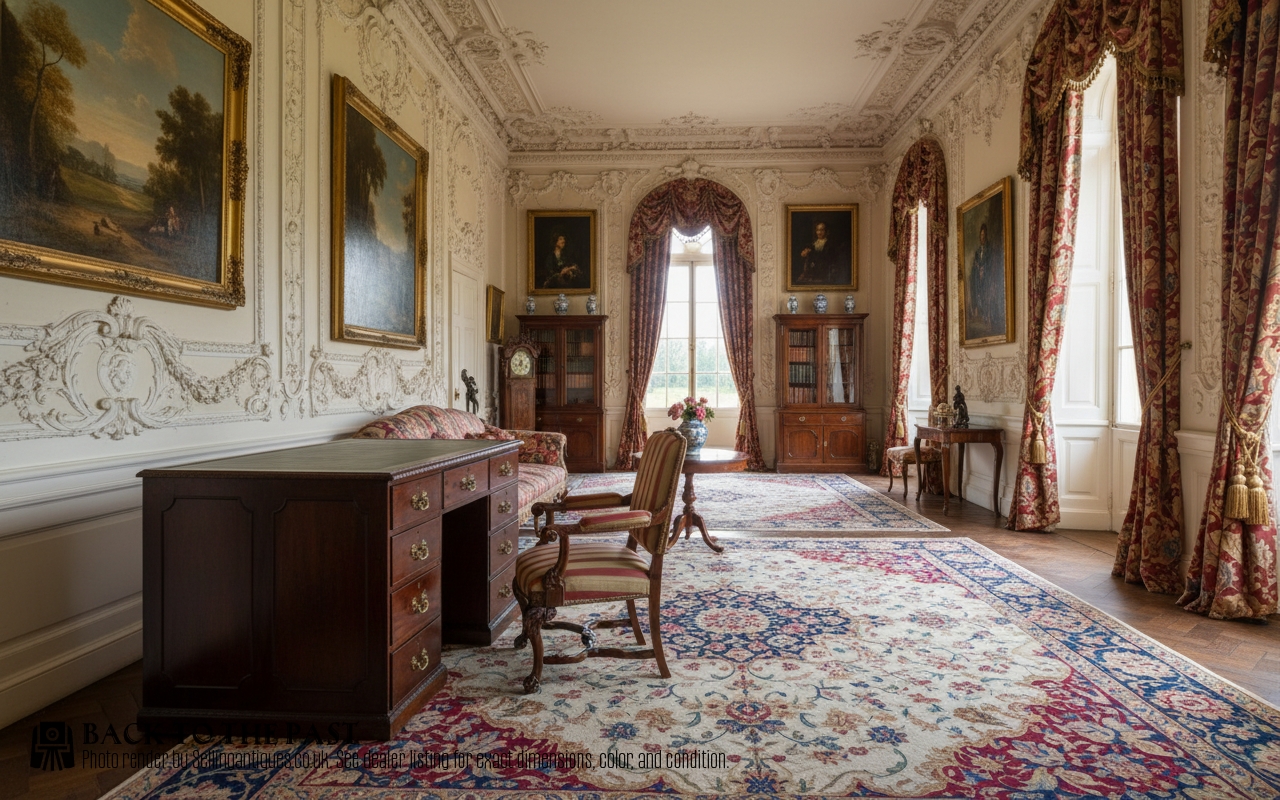
Kneehole Bureau Desk
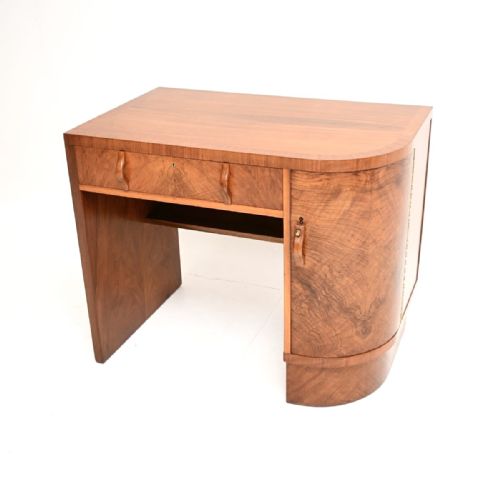
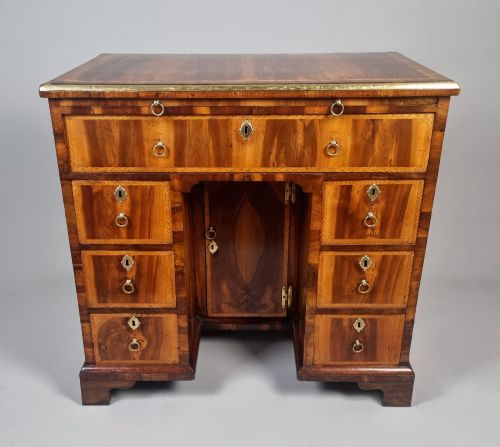
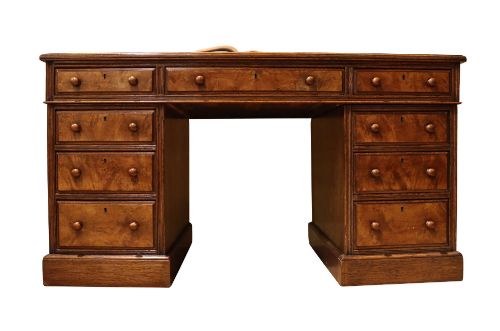
A kneehole bureau desk provides a dedicated writing space supported by two pedestals of drawers with a central recess. These pieces appear across multiple eras, ranging from 18th Century and Georgian examples to Victorian, Edwardian, and 1930s designs.
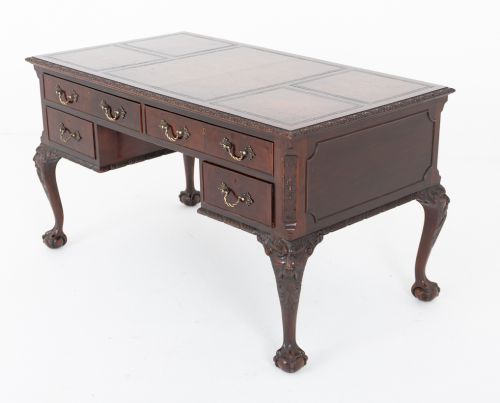
The form adapts to various aesthetic movements, including Queen Anne Style, Chippendale Revival, and Art Deco. Buyers frequently encounter both compact proportions and larger pedestal variants tailored for library or study use.
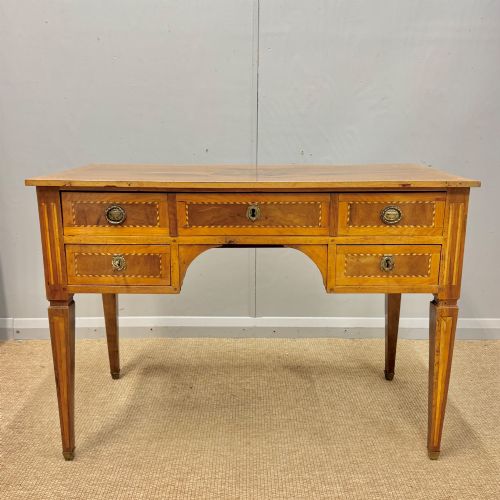
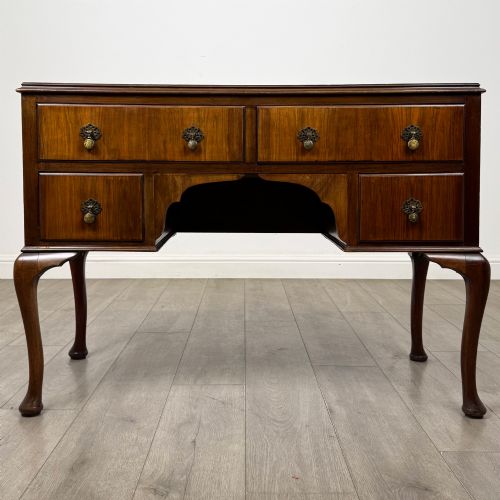
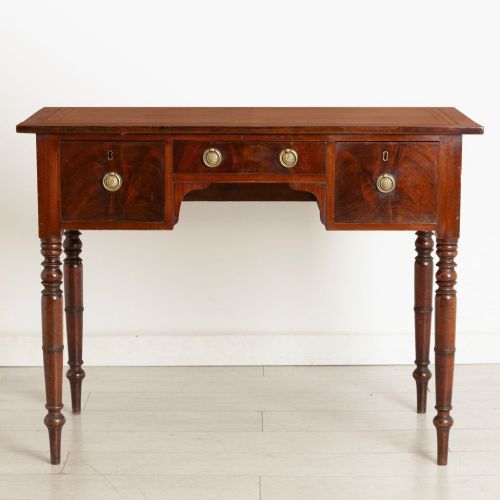
Origins span British workshops as well as continental and Chinese export furniture. Common secondary forms include dressing tables and writing tables sharing the signature kneehole configuration.
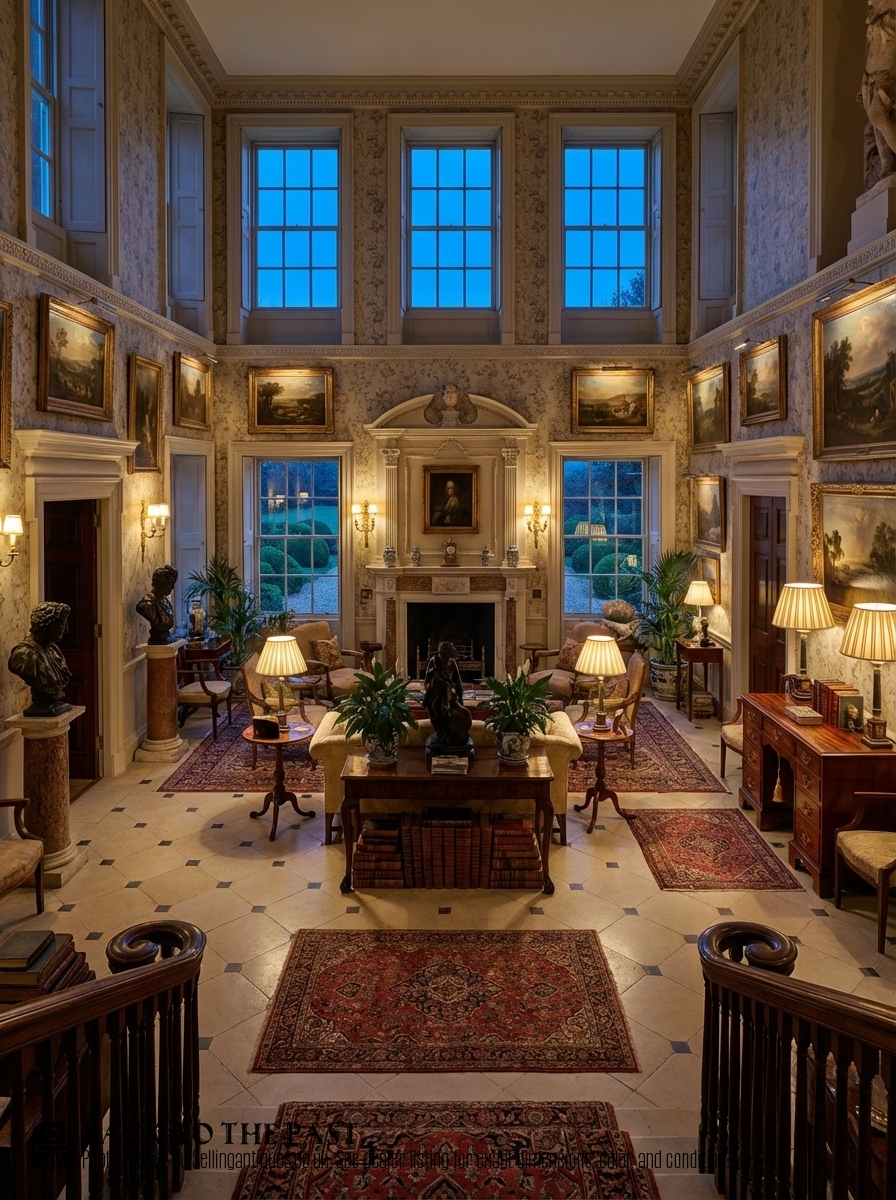
Materials and construction
Cabinetmakers constructed these pieces primarily in timber, utilising solid mahogany, oak, walnut, burr walnut, fiddleback walnut, yew wood, amboyna, and ebony. Veneers such as burr walnut and walnut veneer allowed craftsmen to display striking grain patterns across flat drawer fronts and tops.
Fittings typically incorporate brass handles, escutcheons, and original brasses alongside inset leather writing surfaces. Secondary framing relied on robust native hardwoods to support heavy drawer loads and freestanding configurations.
Kneehole Bureau Desk Retail Price Guide 2026
Typical asking prices for kneehole bureau desk among the pieces listed under this phrase on Sellingantiques today, from the lower quarter to the upper quarter. They describe what is for sale here now, not the wider market.
Listings feature woods spanning mahogany, walnut, burr walnut, oak, yew wood, amboyna, and ebony.
Assessing craftsmanship and finish
Quality rests in the selection of figured timbers and the precision of the cabinetmaking. Fine examples display carefully matched veneers and secondary woods that indicate superior workshop standards.
The presence of original brass hardware, fitted leather writing surfaces, and undisturbed patination elevates a piece. Structural integrity in the drawers and the crispness of carved details distinguish standard production from exceptional craftsmanship.
Maple & Co·Wylie & Lochhead Glasgow
The Kneehole Bureau Desk Glossary
- Kneehole
- A recessed space beneath the central part of a desk designed to accommodate the user's legs. This configuration allows for flanking banks of drawers.
- Pedestal desk
- A heavy writing desk consisting of two independent drawer columns supporting a single top. These often feature numerous small drawers flanking the central aperture.
- Burr walnut
- A highly prized timber figure obtained from the warted growths of walnut trees. Cabinetmakers sliced this wood into thin veneers to create decorative swirling patterns.
- Escutcheon
- A protective plate surrounding a keyhole. These metal fittings are frequently cast in brass and match the primary handles of the desk.
Kneehole Bureau Desk: Frequently Asked Questions
What is a kneehole desk?
A kneehole desk is a form of writing furniture featuring a central recess for the user's legs, flanked by pedestals containing drawers. This layout provides ample storage while maintaining a compact footprint.
Such desks emerged strongly in the 18th Century and continued through the Georgian, Victorian, and Edwardian periods in various woods and revival styles.
How do I date an old desk?
Dating relies on examining the timber species, construction methods, hardware, and stylistic traits. 18th Century and Georgian pieces often feature solid mahogany or figured walnut with hand-cut dovetails.
Later Victorian and Edwardian examples incorporate machine-sawn elements, varied secondary woods, and distinct revival motifs like Queen Anne Style or Chippendale details.
What woods were used?
Cabinetmakers utilised a wide selection of native and exotic timbers depending on the period. Mahogany and walnut dominate early examples, often enhanced by burr walnut veneers or fiddleback grain figures.
Oak appears frequently in Georgian, Victorian, and Edwardian pieces, while specialist items employ yew wood, amboyna, and ebony.
Where should I place it?
Freestanding models allow placement in the centre of a room since the back is finished with the same attention as the front. Standard pedestal versions fit neatly against walls or within libraries and studies.
Their compact proportions also suit smaller home office spaces or dressing room applications when paired with a matching mirror.